Thinking about installing a home EV charger in Tarrant County? Here's what it actually costs — and what drives the price up or down.
Share:
Summary:
You just bought an EV — or you’re about to — and now you’re trying to figure out what it’s going to cost to charge it at home. You’ve probably seen ranges like “$500 to $5,000” thrown around online, which tells you almost nothing. The truth is, what you’ll pay in Keller, Southlake, or anywhere else in Tarrant County depends on factors specific to your home, your panel, and your garage setup — not a national average. This post gives you a real breakdown of what electric charging installation costs in Tarrant County, what drives the price in either direction, and how to make sure the job is done right the first time.
For most homes in Tarrant County — whether you’re in Keller, Southlake, Grapevine, or the surrounding areas — a complete Level 2 EV charger installation typically runs between $1,300 and $2,500. That covers the charger hardware, labor, permits, and all associated electrical work.
The lower end of that range applies when everything lines up cleanly: your panel has available capacity, the wire run is short, and no conduit needs to be routed through finished walls. The higher end comes into play when the job is more involved — longer wire runs, outdoor weatherproof mounting, or a home where the panel is on the opposite side of the house from the garage.
Where it gets more expensive is when a panel upgrade is needed. Older homes in parts of Fort Worth, River Oaks, and Haltom City — areas where a lot of the housing stock dates back to the 1950s, 60s, and 70s — may still have 100-amp panels that simply don’t have the capacity for a Level 2 charger. In those cases, a panel upgrade adds $1,500 to $3,000 on top of the installation cost. That’s a real number, and it’s worth knowing upfront rather than finding out mid-project.

Not every EV charger installation involves a hardwired unit mounted permanently to the wall. A lot of homeowners in Tarrant County start with a NEMA 14-50 outlet — the same type of 240-volt outlet used for electric dryers and ranges — because it gives them flexibility. You plug in a portable Level 2 charging cable, and when you move or upgrade your charger, you’re not tearing out hardwired equipment.
The EV outlet installation cost for a NEMA 14-50 circuit is generally on the lower end of the overall range. If your panel is in or near the garage and there’s a clean path for the wire run, the labor and materials for a new 50-amp dedicated circuit can fall between $300 and $600. Add in permit fees — which in most Tarrant County cities run $50 to $300 for a residential electrical permit — and you’re often looking at a total EV outlet installation cost well under $1,000 for a simple setup.
The key word there is “dedicated.” Per NEC code, an EV charging circuit cannot share a breaker or circuit with other devices. That’s not a contractor preference — it’s a code requirement. Any installer who suggests sharing an existing circuit is cutting a corner that will either fail inspection or create a real safety issue over time.
It’s also worth noting that hardwired installations are often the better long-term choice for homeowners who want maximum charging speed and a cleaner finished look. A hardwired 48-amp Level 2 charger will charge faster than a plug-in unit on a 50-amp circuit, and it’s not going anywhere. The right choice depends on your vehicle, your daily driving habits, and how permanent you want the setup to be — all things worth talking through before you commit to either approach.
If you’re in one of the newer developments in Keller or Westlake, your home almost certainly has a 200-amp panel with room to add a 40- or 50-amp breaker without any upgrade. That’s the best-case scenario, and it’s more common across Tarrant County than people assume.
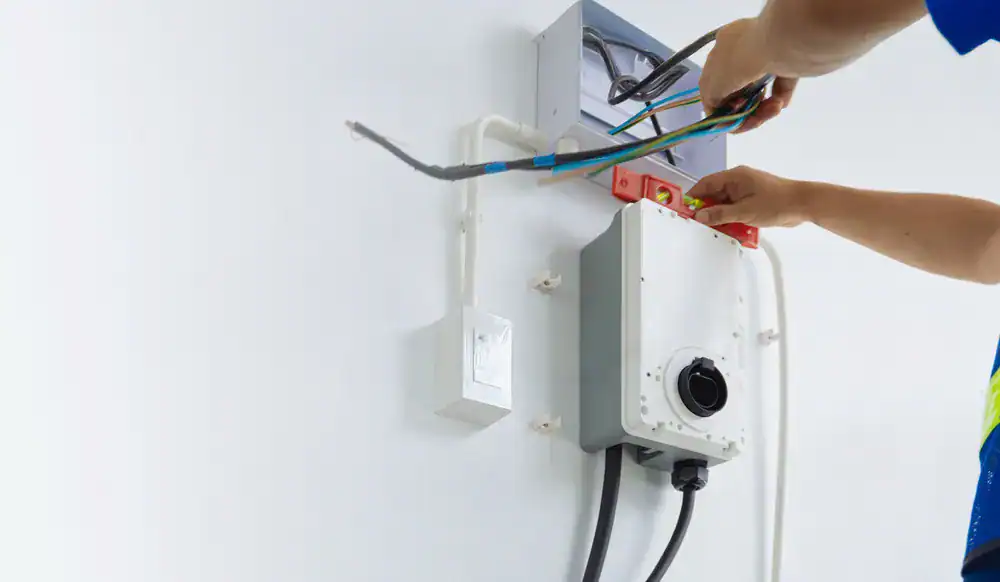
The Tesla Wall Connector is the most searched brand-specific charger in this market, so it’s worth addressing directly. The Gen 3 Wall Connector retails for around $400 to $500. Installation by a licensed electrician — running the dedicated circuit, mounting the unit, and getting it inspected — typically adds $500 to $1,200 depending on your home’s setup. For a straightforward install in a newer Tarrant County home, the total wall connector installation cost usually lands between $900 and $1,700.
One thing that trips people up: Tesla no longer requires a Tesla-certified installer for the Wall Connector. Any licensed electrician who knows 240-volt dedicated circuit work can install it correctly. What matters is that the person doing the work holds a valid Texas Electrical Contractor License — a TECL number issued by the Texas Department of Licensing and Regulation. That’s the credential that authorizes them to pull permits and perform licensed electrical work in this state. Ask for it before you agree to anything.
The same basic cost structure applies to chargers for Ford, GM, Rivian, and most other EV brands. Starting in 2025, most major automakers have adopted the NACS connector — originally Tesla’s standard — which means charger compatibility is increasingly consistent across brands. A properly installed Level 2 circuit works for virtually any vehicle on the market today. You don’t need a brand-specific installer; you need a licensed one.
What does vary by brand is the onboard charger capacity — the maximum rate at which your specific vehicle can accept a charge. Some EVs top out at 32 amps; others can handle 48 amps or more. Installing a higher-amperage circuit than your car can currently use isn’t wasteful — it’s future-proofing for your next vehicle. A knowledgeable installer will walk you through this before the work starts, not after.
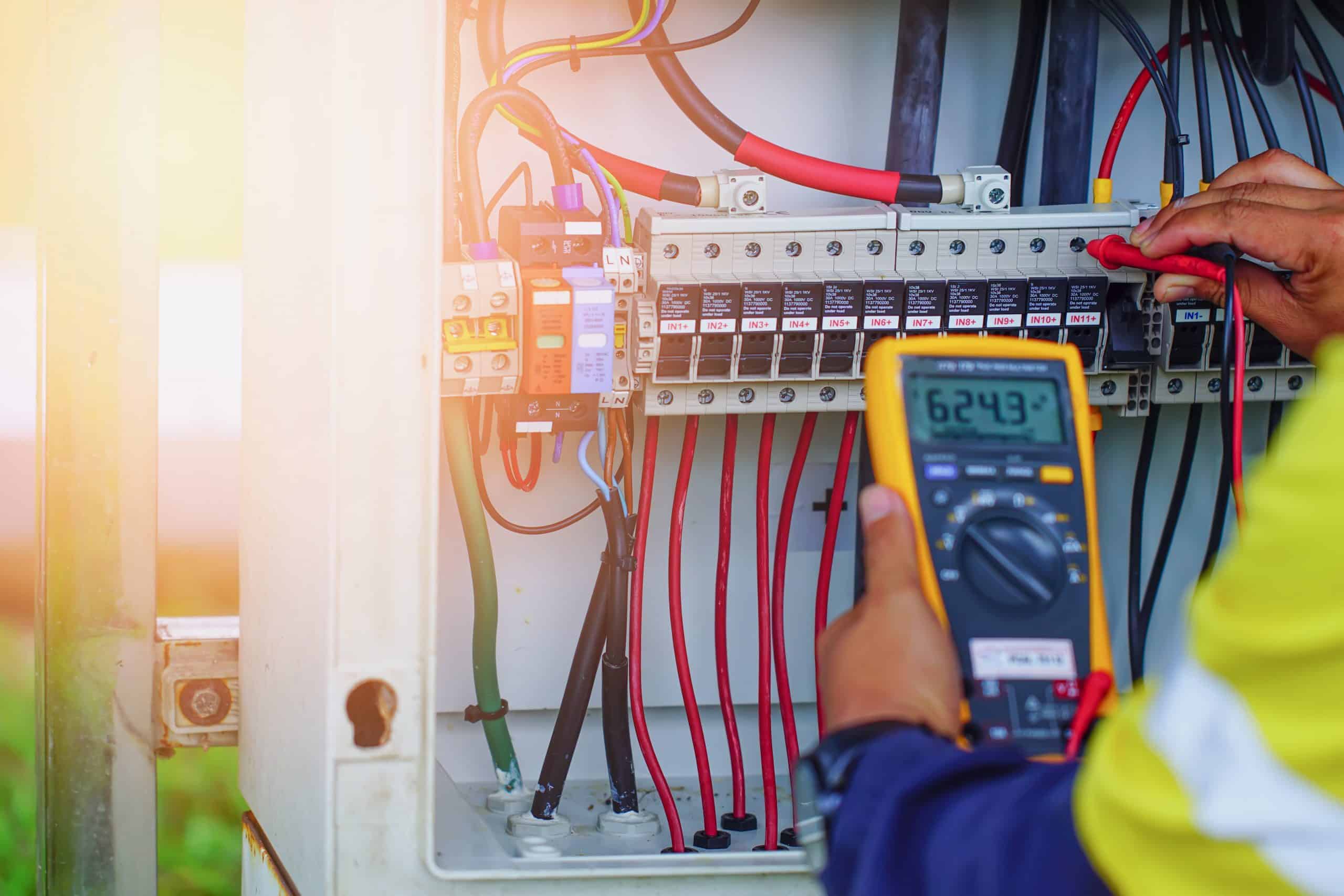
The actual installation process is more straightforward than most people expect — when it’s done right. It starts with an assessment of your home’s electrical system: panel capacity, available breaker slots, and the distance and routing path from your panel to where the charger will be mounted. That evaluation determines whether a panel upgrade is needed and what the wire run will actually cost for your specific home.
From there, a permit gets pulled with your city’s building department before any work begins. In Tarrant County, that means working with the relevant city — Fort Worth, Keller, Southlake, Grapevine, and surrounding communities all require electrical permits for new EV charging circuits. The permit isn’t a formality. It’s what ensures the installation gets inspected and meets code, which matters when you go to sell your home or file an insurance claim.

This is the question that stalls more installations than anything else. Homeowners hear “panel upgrade” and assume the worst — a $3,000 add-on they didn’t budget for. The reality is more nuanced, and it’s not something you can determine from a Google search.
Most homes in the newer developments across Keller, Colleyville, Southlake, and Grapevine were built with 200-amp panels. If yours is one of them and you’re not already running a heavy electrical load — no electric vehicle charging, no hot tub, no whole-home generator — there’s a good chance you have the capacity for a Level 2 charger without touching the panel. A load calculation will tell you for certain.
Where it gets more complicated is in older neighborhoods. Parts of Fort Worth and the smaller cities along the western edge of Tarrant County have housing stock from the 1950s through the 1980s, and a lot of those homes still have 100-amp panels. A 100-amp service can struggle to support a Level 2 charger alongside a modern home’s existing electrical load — air conditioning, appliances, lighting — especially during a Texas summer when the AC is running hard. In those cases, upgrading to a 200-amp panel before adding a charging circuit isn’t just recommended; it’s the only safe way to do the job.
The only way to know which situation you’re in is to have someone look at your panel and run the numbers. That’s exactly what a free assessment is for — you get a clear answer before any money changes hands, and the quote you receive reflects your actual home, not a national average.
The Tarrant County market has no shortage of people willing to install an EV charger. The gap in quality between them is significant, and the consequences of a bad installation aren’t always obvious until something goes wrong — a failed home inspection at resale, a homeowner’s insurance dispute, or a tripped breaker every time you plug in.
Here’s what actually separates a legitimate installation from a shortcut job. First, ask for the contractor’s TECL number. Texas requires a TDLR-licensed master electrician for all permitted residential electrical work. The TECL number is public record — you can verify it at tdlr.texas.gov in about thirty seconds. If a contractor can’t give you one, or deflects the question, that tells you everything you need to know.
Second, ask whether they pull the permit. In virtually every city in Tarrant County, a new EV charging circuit requires an electrical permit and inspection. A contractor who skips the permit is saving themselves time at your expense — you’re the one who owns the home and bears the risk of unpermitted work. A good contractor handles the permit entirely, including scheduling the inspection and making sure the work passes the first time.
Third, ask what materials they use. An EV charger draws a continuous high electrical load — by code, it’s sized at 125% of the full load charging capacity. That’s not the same as plugging in a lamp. The wire gauge, breaker rating, and enclosure all need to meet the demand. Residential-grade components on a continuous-load application aren’t just a quality issue; they’re a safety issue over time.
We’ve been doing electrical work in Tarrant County homes for over 25 years, and we hold Texas Electrical Contractor License TECL 25420. We pull every permit, use commercial-grade UL-listed materials, and warrant all work on both parts and labor. We also handle the Oncor rebate paperwork conversation — most Tarrant County homeowners don’t realize that Texas utility rebates of $250 to $1,200 may be available for Level 2 EV charger installation, and the federal tax credit covers 30% of hardware and labor costs up to $1,000. That’s real money left on the table if nobody mentions it.
The cost of electric charging installation in Tarrant County is real and knowable — it’s not a mystery. For most homes with a modern panel and an attached garage, you’re looking at $1,300 to $2,500 for a complete, permitted Level 2 installation. Older homes that need a panel upgrade will pay more, but a free assessment tells you exactly where you stand before any commitment is made.
What matters most isn’t finding the lowest quote — it’s making sure the job is done with the right license, the right permit, and materials that can handle a continuous load night after night. Charging your EV at home costs roughly $4.56 per full charge. At that rate, a properly installed Level 2 charger pays for itself faster than most people expect.
If you’re in Keller, Southlake, Grapevine, Fort Worth, or anywhere else in Tarrant County and want a straight answer on what installation will cost for your specific home, Carroll Service Co is ready to take a look — no pressure, no guesswork, just an honest assessment and upfront pricing from there.
Article details:
Share:
Continue learning: