Power strips and whole-home surge protection aren't the same thing — and the gap between them could cost you thousands. Here's what you actually need to know.
Share:
Summary:
You’ve got surge protectors. The power strip behind the TV, the one under the desk, maybe one in the bedroom. So when an electrician recommends a whole home surge protector, it’s natural to wonder if they’re just padding the invoice. That’s a fair question — and it deserves a straight answer. The honest truth is that power strips and whole-home protection aren’t two versions of the same thing. They work differently, protect different parts of your home, and one of them has a failure mode most homeowners never see coming. Let’s walk through what’s actually going on.
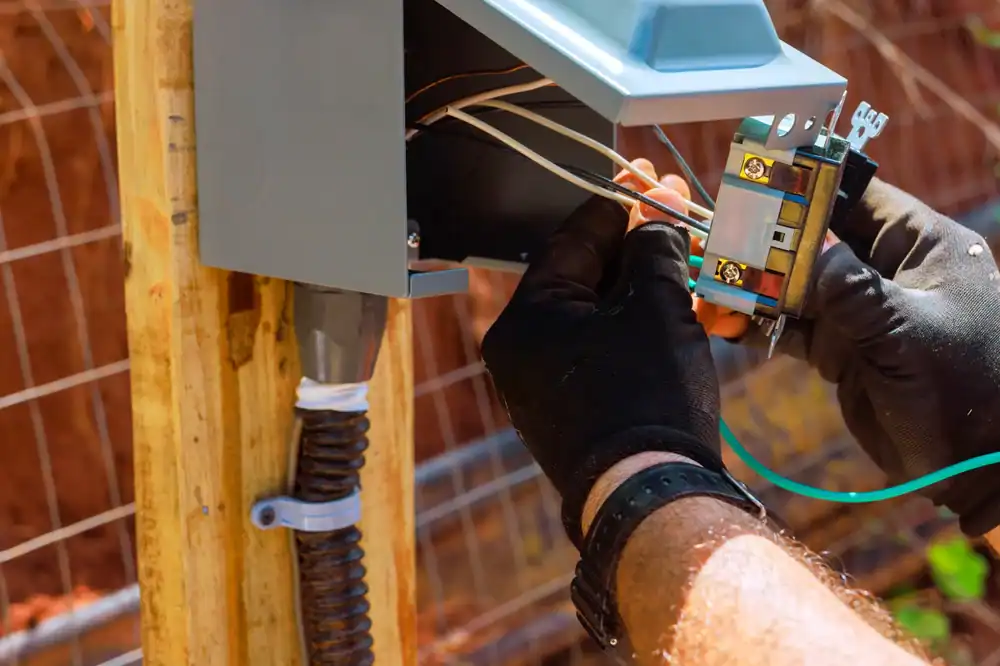
A whole house power surge protector — technically called a surge protective device, or SPD — installs directly at your main electrical panel. When a voltage spike hits your home, the device intercepts it at the source and redirects that excess energy safely to ground before it ever branches out to your circuits. Every outlet, every appliance, every hardwired device in the home gets that layer of protection simultaneously.
That’s the key distinction. A power strip protects whatever is plugged into it. An SPD at the panel protects everything downstream from it — which is your entire home.

Power strips work through components called Metal Oxide Varistors — MOVs. When a surge hits, the MOV absorbs the excess energy and clamps the voltage before it reaches your devices. That works, up to a point. The problem is that MOVs have a finite capacity. Every surge they absorb — whether it’s a big lightning-induced spike or a small one from your AC compressor cycling on — chips away at that capacity. Eventually, the MOV fails. And here’s the part that catches most people off guard: it fails silently. The strip still lights up. The outlets still work. There’s no warning light, no alarm, no indication that it’s now just a glorified extension cord.
So that power strip you’ve had behind the entertainment center for six years? It may be offering zero protection right now, and you’d have no way of knowing.
Beyond the degradation issue, there’s a more fundamental limitation: hardwired appliances. Your HVAC system, water heater, refrigerator, garage door opener — none of these are plugged into a power strip. They’re wired directly into your home’s circuits. A power strip at the outlet does nothing for them.
In Tarrant County, where summer heat means your AC compressor is running almost continuously from June through September, that compressor is generating small voltage spikes on your circuits every single time it cycles on or off. Those internal surges are constant, invisible, and entirely unaddressed by any plug-in device.
A panel-mounted SPD sits upstream of all of that. It catches surges before they fan out to individual circuits — which means your HVAC, your refrigerator, your smart thermostat, and your home theater all benefit from a single installation. That’s a fundamentally different kind of protection, not just a bigger version of what a power strip does.
Most people assume surges come from lightning. Lightning is real, and North Texas takes it seriously — Texas leads the nation with over 42 million lightning strikes annually, and Tarrant County averages more than 50 thunderstorm days per year. Fort Worth’s position in lightning alley isn’t just a phrase; it’s a geographic reality that means your home faces above-average exposure to weather-related surge events through Oncor’s utility lines.
But here’s what most homeowners don’t know: roughly 80% of damaging power surges don’t come from outside at all. They originate inside the home. Every time a large appliance — your HVAC system, your refrigerator, your washer — starts up or shuts down, it creates a voltage spike on the circuit. These internal surges are smaller than a lightning strike, but they’re constant and cumulative. Over time, they degrade sensitive electronics, shorten the lifespan of appliances, and can cause sudden failures in smart home systems and high-efficiency HVAC equipment.
There’s also a Texas-specific factor worth understanding. Texas runs on ERCOT — its own isolated electrical grid, separate from the rest of the country. When ERCOT experiences a grid event or Oncor restores power after an outage, the voltage restoration process can send a surge into every home on the circuit simultaneously.
After Winter Storm Uri in 2021, and through the summers since, we’ve seen grid stress events that demonstrate this risk firsthand. When power comes back on after an outage, that moment of restoration is itself a surge event — and only a device positioned at the service entrance can intercept it before it reaches every circuit in your Tarrant County home at once.
One of the most common things we hear when we recommend whole-home surge protection during a panel upgrade is some version of: “Is this really necessary, or is this just an add-on?” It’s a fair question. And the answer, since the 2020 National Electrical Code, is that it’s required.
NEC Section 230.67 mandates that all dwelling unit services — including panels being replaced or upgraded — be equipped with a Type 1 or Type 2 surge protective device. This isn’t a recommendation. If your panel is being replaced, surge protection is part of the code, not padding on the invoice.

Yes — and the code requirement is only part of the reason. The more practical answer goes back to what power strips can and can’t do. Even if every outlet in your home had a brand-new, high-quality power strip plugged into it, your HVAC system, water heater, and other hardwired appliances would still have zero surge protection. Those devices aren’t plugged into anything — they’re wired directly into your panel. The only way to protect them is with a device that’s also connected at the panel level.
There’s also the question of surge magnitude. A large external surge — from a nearby lightning strike, an Oncor switching event, or a post-outage power restoration — can carry far more energy than any power strip is rated to handle. A strip with a high joule rating might absorb a small internal surge just fine. But a major external event can overwhelm it entirely, leaving whatever’s plugged in fully exposed.
The honest answer — and we’d rather give you the honest answer than oversimplify this — is that the right approach is layered protection. A panel-mounted SPD is your first line of defense, stopping large surges at the source before they reach any circuit. Point-of-use strips at computers, home theater equipment, and other sensitive electronics provide a secondary layer for smaller, residual transients that get through. Neither one replaces the other. We recommend both, because that’s what actually works.
For Tarrant County homes specifically, this matters more than it might in other parts of the country. Between the lightning exposure, the ERCOT grid dynamics, and the concentration of high-value smart home systems and HVAC equipment in communities like Keller, Southlake, and Colleyville, the financial exposure from a single unmitigated surge event is significant. A surge event can cause thousands of dollars in equipment damage in seconds. A panel-mounted SPD, installed correctly by a licensed electrician, is a fraction of that cost.
A properly installed whole-home SPD typically lasts between five and ten years before it needs replacement. That lifespan depends on how many surge events it absorbs over time — a home in a high-lightning area that experiences several significant storms per season will wear through an SPD faster than a home in a calmer climate. In Tarrant County, with 50-plus thunderstorm days per year, it’s worth keeping that lifespan in mind.
The good news is that quality SPDs don’t fail silently the way power strip MOVs do. Most panel-mounted units include an LED status indicator — a simple light that tells you whether the device is actively protecting your home. Green means it’s working. If the indicator changes or goes out, that’s your signal that the unit needs to be replaced.
We install to a minimum 40,000-amp capacity rating, which means the device is sized to handle the surge loads that North Texas weather actually produces — not just the minimum spec that looks good on a product sheet.
One question we get occasionally is whether a whole-home SPD will protect against a direct lightning strike on the house itself. The honest answer is no — not entirely. SPDs are designed to mitigate indirect surges: the induced voltage spikes that travel through utility lines, the switching transients from Oncor’s equipment, the internal surges from your own appliances. A direct strike on the structure is a different category of event, and protecting against that requires a separate lightning protection system.
For most homeowners in Tarrant County, the real risk isn’t a direct strike — it’s the constant, cumulative surge exposure that happens every storm season and every time the AC kicks on. That’s exactly what a whole-home SPD is built to handle.
If your home was built before 1990 — which includes a significant portion of the housing stock in Fort Worth’s older neighborhoods — your panel may also need to be evaluated before an SPD can be installed. Older panels weren’t designed for today’s electrical loads, and adding surge protection to a panel that’s already undersized or outdated is something we assess before we recommend anything.
For most homes in this area, yes — and the reasoning is straightforward. You’re in one of the most lightning-active regions in the country, served by an isolated state grid that creates surge risks other states don’t face, with HVAC systems that run hard enough to generate internal surges on a near-daily basis from June through September. Power strips handle part of that picture. A panel-mounted SPD handles the rest.
The two aren’t competing products. They’re two layers of the same strategy, and the homes that are genuinely well-protected have both. If you’re replacing your panel, NEC 230.67 makes the decision for you — surge protection is now part of the code. If your panel is fine but your home has never had an SPD installed, it’s worth a conversation.
We’ve been doing this work in the DFW area since 1999. We’re based in Keller, we hold Texas Electrical Contractor License TECL 25420, and we back every installation with a warranty on both parts and labor. If you have questions about what your home actually needs — no pressure, no upsell — reach out to us and we’ll give you a straight answer.
Article details:
Share:
Continue learning: