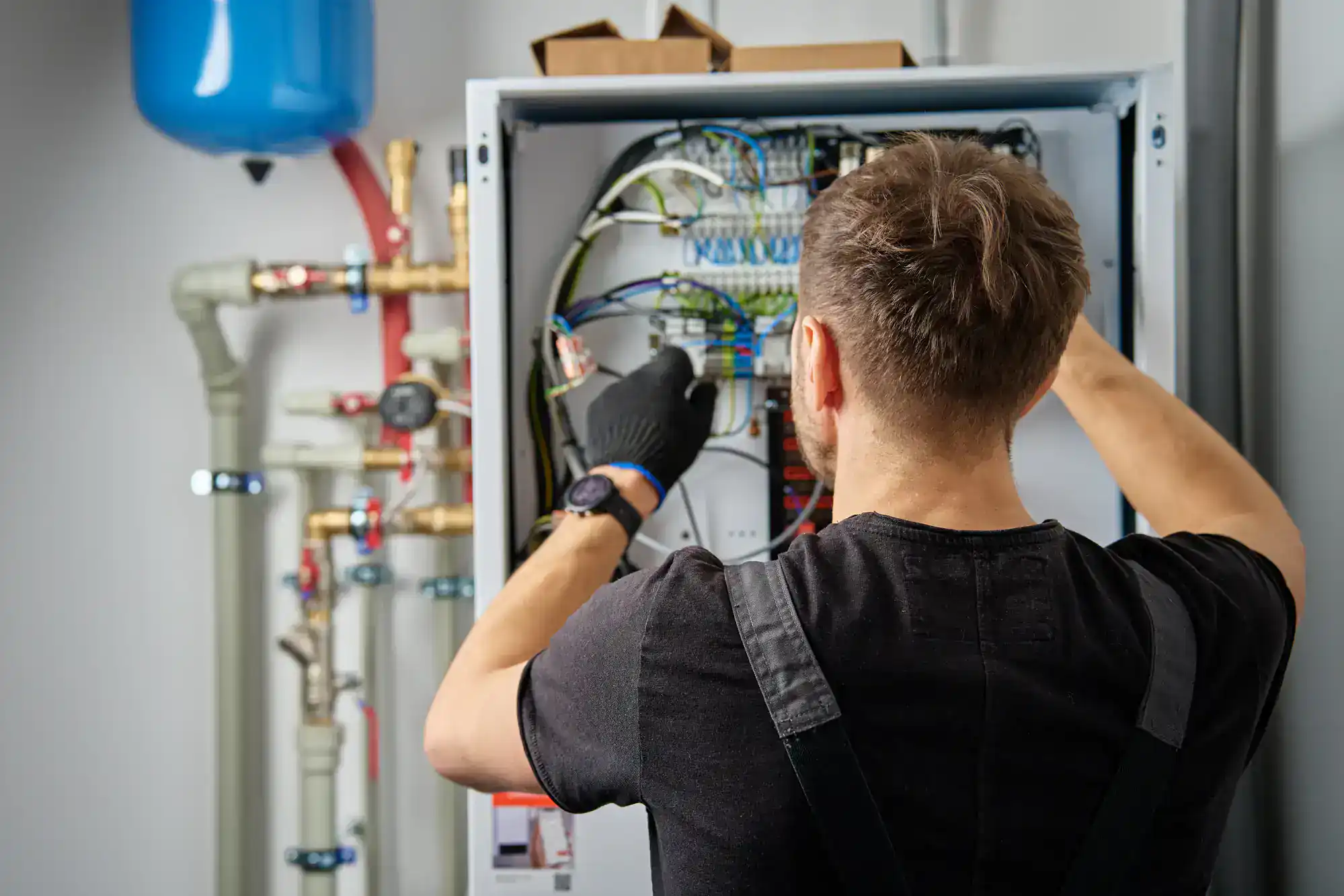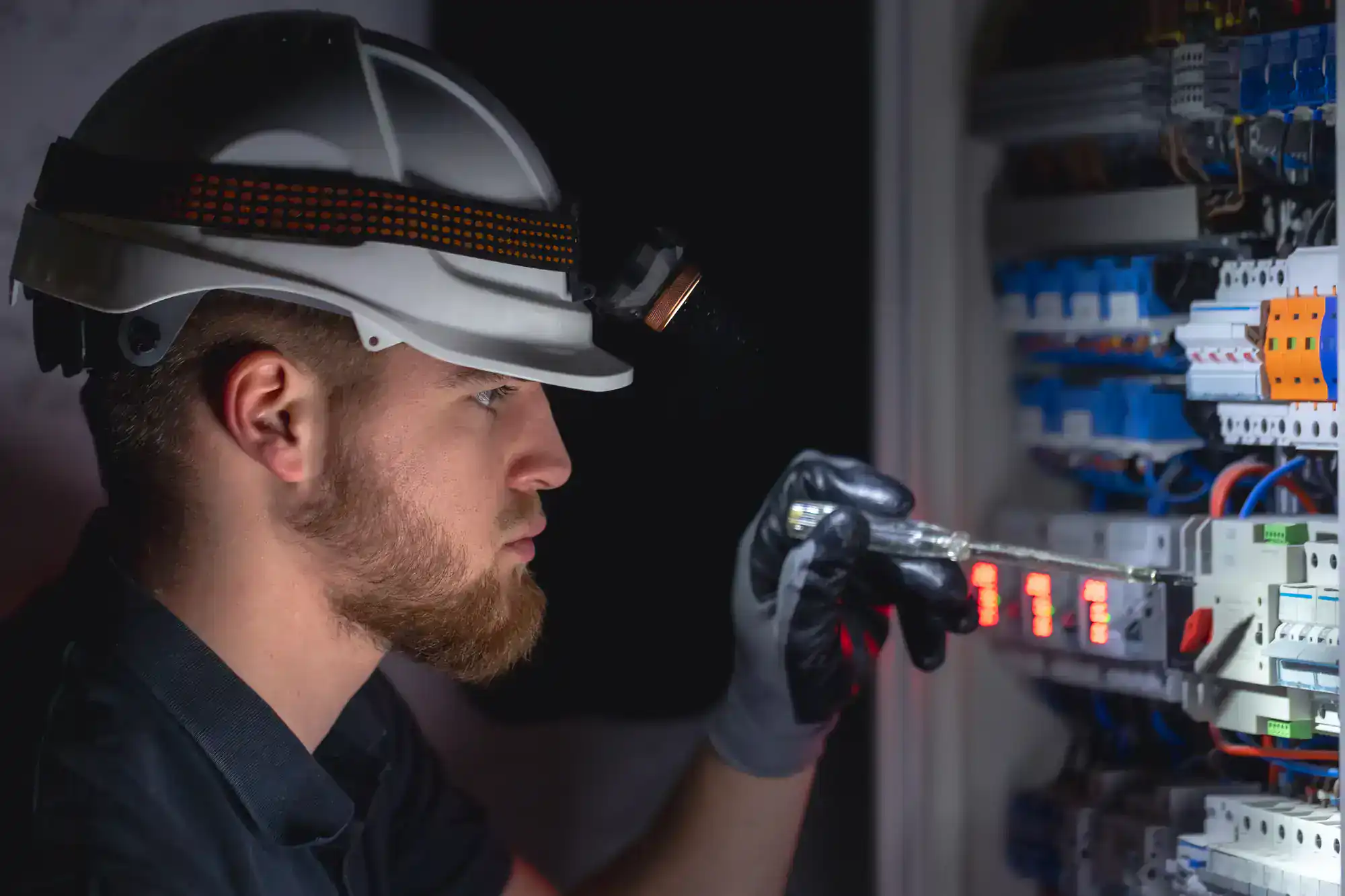
Flickering lights, tripping breakers, dimming rooms — your electric panel may be telling you something. Here's how to read the signs before they become real problems.
Share:
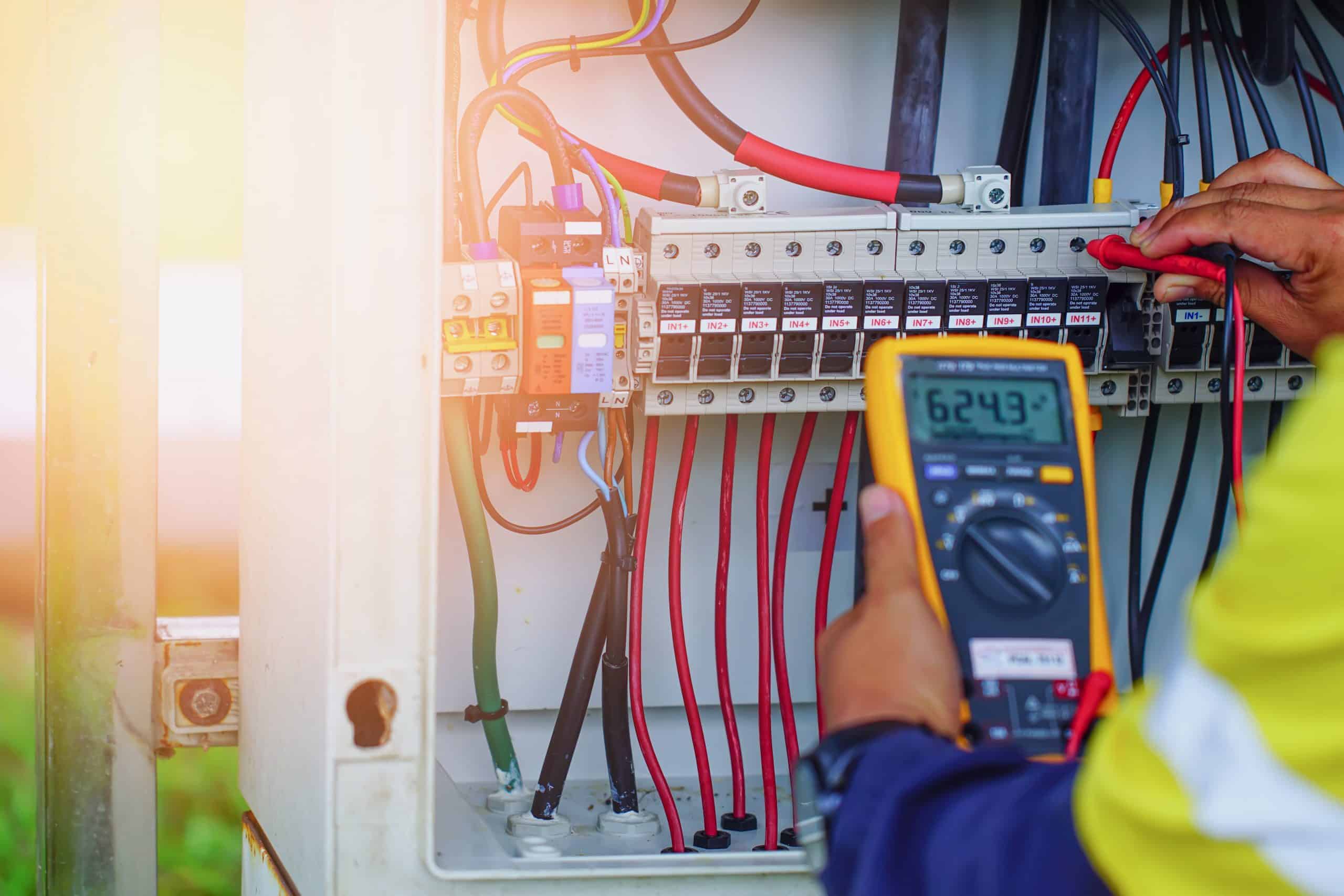
Summary:
Most homeowners don’t think about their electric panel until something goes wrong. A light starts flickering. A breaker trips for the third time this week. The whole room dims every time the washing machine kicks into its spin cycle. These moments feel like minor inconveniences — and sometimes they are. But sometimes they’re early warnings of a panel that’s quietly struggling to keep up with your home’s demands. This guide is for anyone who’s noticed something off and wants a straight answer about what’s actually going on — and what, if anything, needs to happen next.
Your electric panel — sometimes called a breaker box or breaker panel — is the point where power comes into your home from the utility and gets divided out to every circuit inside. Each breaker controls one circuit, and when that circuit draws more power than it’s rated for, the breaker trips to stop the flow. That’s the safety mechanism working as intended.
The problem is that most panels in Tarrant County homes were sized for a very different era. A home built in the 1980s or 1990s was designed around a 100-amp service, which made sense at the time. It didn’t need to run a smart HVAC system, an EV charger, a home office, and a whole-house generator simultaneously. Today’s homes are a completely different electrical environment — and a lot of older panels across the region are quietly struggling to keep pace.

LED flickering is one of the most commonly misread symptoms in residential electrical work. The easy assumption is that the bulb is defective or incompatible with the dimmer switch. And yes, sometimes that’s true — LEDs are sensitive to the type of dimmer they’re paired with, and an incompatible combination will cause a steady, low-level flicker that’s more annoying than dangerous.
But when the flickering correlates with something else happening in the house — the washing machine starting, the air conditioner kicking on, the hair dryer running — that’s a different story. That pattern points to voltage fluctuation at the panel level, not a bad bulb.
Here’s what’s actually happening in those cases. Large appliances draw a significant surge of power when their motors start up. If your panel is undersized, or if there’s a wiring issue between the panel and that circuit, the sudden load pulls voltage down across other circuits in the house. Your LED lights, which are very sensitive to voltage changes, respond by dimming or flickering. You might not notice it on incandescent bulbs — they’re more forgiving — but LEDs make the problem visible.
One specific cause worth knowing about is a loose neutral. The neutral wire is part of every circuit and carries current back to the panel after it’s done its work. When the neutral connection is loose — either at the panel itself or at an outlet along the circuit — voltage can fluctuate unpredictably across connected devices. Lights flicker. Some devices might run hot. In serious cases, sensitive electronics can be damaged. A loose neutral at the main panel is particularly dangerous because it affects multiple circuits at once, and the symptoms can look like several unrelated problems happening at the same time.
If your lights flicker when specific appliances run, or if the flickering is happening across multiple rooms, it’s worth having a licensed electrician take a look. That’s not a bulb problem.
This is the question most people don’t want to ask out loud, but it’s the right one to ask. The short answer is: not directly — but the underlying causes often can.
Flickering lights don’t start fires on their own. But the conditions that cause flickering — loose connections, overloaded circuits, degraded wiring, an undersized panel running hotter than it should — are documented contributors to electrical fires. The NFPA reports approximately 34,000 home electrical fires annually in the U.S., with wiring failures accounting for 29% of them. Those fires don’t announce themselves ahead of time. They develop in walls, in panel enclosures, in junction boxes — places you can’t see until there’s smoke.
The flickering light is the visible symptom of something happening inside the system. Ignoring it doesn’t make the underlying condition go away. It usually makes it worse, because the same load that’s causing the flicker is continuing to stress the same connection or the same undersized circuit every time you run that appliance.
In North Texas, this gets compounded by summer heat. When temperatures regularly push past 100°F in July and August, HVAC systems run hard and long. That sustained load on an aging or undersized panel creates heat inside the enclosure — and heat accelerates the degradation of wire insulation, breaker components, and connections. A panel that was marginal in spring can become genuinely problematic by mid-August.
The practical takeaway: if the flickering is occasional and isolated — one light, no correlation with appliance use — it’s probably a bulb or dimmer issue. If it’s happening across rooms, or consistently when certain appliances run, have it checked. The cost of an inspection is a fraction of what a wiring repair costs. And both are a fraction of what an electrical fire costs.
Not every panel problem requires a full replacement. A single failing breaker can often be swapped out. A loose connection at a terminal can be tightened. But there are situations where the panel itself has reached the end of its useful life — and patching it isn’t the right answer.
Electrical panels have a functional lifespan of roughly 25 to 40 years. Many homes in Tarrant County’s established neighborhoods — particularly in the mid-cities corridor from Keller through North Richland Hills, Hurst, and Bedford — were built in the 1980s and 1990s. That puts a lot of local panels right at or past the threshold where replacement becomes the more honest recommendation.

One of the biggest sources of anxiety around panel replacement is not knowing what to expect. The job sounds complicated, and the unknown is always more stressful than the reality. So here’s what actually happens.
First, a licensed electrical inspector will assess your current service — the amperage coming in from the utility, the number and type of circuits in your home, and whether your current panel is the right size for your actual load. This load calculation is required by the National Electric Code (NEC), and it’s the step that determines whether a 200-amp upgrade is appropriate or whether a different configuration makes more sense.
Once the scope is confirmed, the work involves shutting off power to the home, removing the old panel, installing the new one, reconnecting all circuits to the new breakers, and restoring power. A properly staffed crew can complete a standard panel replacement with the power off for only four to six hours. That’s a meaningful detail — it means you’re not losing a full day, and in most cases the work can be scheduled around your routine.
What also has to happen — and what not every contractor handles — is the permit. In Texas, panel replacement requires a permit pulled through the local building authority, and the work must be performed by or under the supervision of a licensed master or journeyman electrician. The permit triggers an inspection, which verifies that the installation meets current NEC 2023 code standards. We pull every permit and coordinate every inspection as part of the job. Homeowners shouldn’t have to navigate that process on their own, and skipping it creates real legal and insurance exposure down the line.
We upgrade panels to 200-amp service using NEMA-rated components and UL-listed materials — not consumer-grade parts. The warranty covers both parts and labor. And the entire process, from the initial assessment through inspection, is handled by our team under Texas Electrical Contractor License TECL 25420.
Panel capacity isn’t just a concern for old homes. It’s a concern for any home adding a significant new electrical load — and that category is growing fast in Tarrant County.
Hot tub electrical installation is a good example. A standard hot tub requires a dedicated 240-volt circuit, a specific breaker size, and GFCI protection — all installed to NEC code. Before any of that wiring gets run, the panel has to have the capacity to support it. If the panel is already running close to its limit, adding a hot tub circuit without upgrading the service is asking for problems. The same logic applies to EV chargers, which draw significant sustained current and are increasingly common in higher-income communities like Southlake, Colleyville, and Keller.
Whole-house generators are another major consideration. A home standby generator doesn’t just plug into an outlet — it connects to the home’s electrical system through a transfer switch, which allows it to take over from the utility when power goes out. That transfer switch connects at the panel, and the panel has to be in good enough condition to support the integration. If you’re planning a whole house generator installation in Tarrant County — and after Winter Storm Uri, a lot of homeowners are — the panel assessment happens first.
A whole home surge protector is also installed at the panel level. An electrical panel surge protector is categorically different from a power strip. It protects every circuit in the house simultaneously — including the HVAC system, the refrigerator, and anything else that’s hardwired. A home surge protector won’t help if the panel it’s connected to has compromised connections or degraded components. The panel has to be sound for the surge protector to do its job. Think of it this way: a home surge protector is only as effective as the panel it’s installed in.
All of these additions — the hot tub, the generator, the surge protector, the EV charger — connect back to the same question: is your panel ready to handle what you’re asking it to handle? That’s the conversation worth having before the installation, not after something trips or fails.
If your lights flicker consistently when appliances run, if your breakers trip more than occasionally, or if your panel is more than 25 years old, those are reasons to have a licensed electrician take a look — not necessarily to replace everything, but to understand what you’re actually dealing with.
Tarrant County’s housing stock, the region’s climate demands, and the pace of new electrical loads being added to existing homes all create a real need for panels that are up to the job. An honest assessment from a licensed electrical inspector is the right starting point. It tells you what’s actually going on, what can wait, and what shouldn’t.
Carroll Service Co has been doing this work in the DFW and Mid-Cities area for over 25 years. If you have questions about your panel, want to schedule an inspection, or need emergency electrical services, we’re available — and we’ll give you a straight answer about what your home actually needs.
Article details:
Share:
Continue learning: