North Texas heat waves create an invisible energy drain that can spike your electric bill by 30-50%. Learn what's really driving your costs and how to fix it.
Share:

Summary:
You set the thermostat to 78 degrees. You replaced the air filters. You even stopped using the oven during the day. But when your electric bill arrives in August, it’s still $100 higher than you expected.
If you’re a homeowner in Dallas, Fort Worth, or the Mid-Cities, you already know summer bills are brutal. What you might not know is that a significant chunk of that cost has nothing to do with how much you’re running your AC. Hidden electrical inefficiencies are quietly draining energy from your home every single day, and most people have no idea it’s happening. Here’s what’s really going on—and what you can do about it.
Summer electric bills in the Dallas-Fort Worth area aren’t just high—they’re often shockingly high. The average DFW household uses between 1,100 and 1,300 kilowatt-hours per month during moderate weather. But when June rolls around and temperatures climb past 100 degrees, that number can easily double to 2,000 or even 2,500 kWh for larger homes.
At current rates hovering around 15 cents per kilowatt-hour, that translates to monthly bills between $200 and $375 for many families. And in particularly hot summers, bills can exceed $400. The spike isn’t just about air conditioning, though that’s certainly part of it. Your entire electrical system is working harder, pulling more current, and wasting more energy than it should.
The real issue is that most homes aren’t electrically optimized for the kind of sustained, heavy load that North Texas summers demand. Your AC, refrigerator, pool pump, and other motor-driven appliances are all fighting against electrical resistance, poor power factor, and internal interference that forces them to consume far more electricity than necessary to do their jobs.

Air conditioning accounts for 50 to 70% of your summer electric bill in Texas homes. That’s not a typo. During the hottest months, cooling your home becomes the single largest consumer of electricity in your house, dwarfing everything else combined.
A typical 2.5-ton central AC unit in North Texas might run 8 to 10 hours per day during July and August. At that usage level, you’re looking at 500 to 630 kilowatt-hours per month just for cooling. That’s roughly $65 to $82 at average electricity rates, and that’s assuming your system is running efficiently.
Here’s where it gets expensive. If your AC is working harder than it should due to dirty coils, low refrigerant, weak capacitors, or duct leaks, it can consume 20 to 40% more electricity without you noticing any change in performance. The house still feels cool. The system still cycles on and off. But behind the scenes, it’s pulling excessive current and running longer cycles to achieve the same temperature.
Electrical components play a bigger role than most people realize. As capacitors age, they lose their ability to efficiently start compressor and fan motors. When that happens, your motors struggle and must pull additional current to overcome the deficiency. Oxidized wire connections create resistance at connection points, generating waste heat and requiring even more power to push electricity through degraded connections.
The cumulative effect is an AC system that appears to work fine but costs you an extra $30 to $60 per month in wasted electricity. Over a five-month cooling season, that’s $150 to $300 you’re spending on inefficiency alone. And because the system still cools your home, you have no idea the waste is even happening.
Beyond your air conditioner, there’s an entire category of energy waste that happens invisibly inside your walls. It’s called poor power factor, and it’s costing you money every single month.
Most motorized appliances in your home—air conditioners, refrigerators, freezers, washers, dryers, dishwashers, pool pumps, and furnace blowers—operate most efficiently when they’re running at full capacity. When they’re not, they pull more energy than they actually use. The difference is wasted.
The average American home operates at a power factor of around 0.77. What that means in plain English is that 23% of the electricity being delivered to your home is wasted by motorized appliances that aren’t running efficiently. You’re paying for that wasted electricity every month, even though it’s doing absolutely nothing for you.
In a home using 1,500 kWh per month, poor power factor could be wasting 345 kWh. At 15 cents per kWh, that’s about $52 per month going straight down the drain. Over a year, you’re looking at over $600 in waste that most homeowners don’t even know exists.
Then there are internal power surges. Most people think of surges as something that happens during thunderstorms. In reality, 80% of power surges originate inside your own home. Every time your AC compressor kicks on, your refrigerator cycles, or a large motor starts up, it creates electrical disturbances that ripple through your home’s wiring.
These aren’t the dramatic surges that blow out electronics instantly. They’re small, repetitive hits that slowly degrade sensitive components in your TVs, computers, smart home devices, and appliances. Over time, this constant electrical noise shortens the lifespan of everything plugged into your walls and forces your electrical system to work harder than it should.
Dirty air filters contribute to the problem more than most people realize. A clogged filter restricts airflow, forcing your HVAC system to work harder to circulate air. That added strain can raise your electricity usage by up to 15%. The harder your fan motor works, the more current it draws, and the more money you spend for the same amount of cooling.
Lowering your electric bill during a North Texas summer isn’t about suffering through the heat or making your home uncomfortable. It’s about eliminating waste and making your electrical system work the way it’s supposed to.
The most impactful changes address the root causes of inefficiency: poor power factor, internal electrical noise, aging components, and systems that aren’t optimized for sustained heavy loads. When you fix those issues, your home uses less electricity to achieve the same level of comfort. You’re not sacrificing anything. You’re just stopping the bleeding.
Start with the biggest energy consumers first. Air conditioning is the obvious target, but the solution isn’t just turning up the thermostat. It’s ensuring your system runs efficiently at the electrical level, with clean power, proper capacitors, and optimized motor performance.
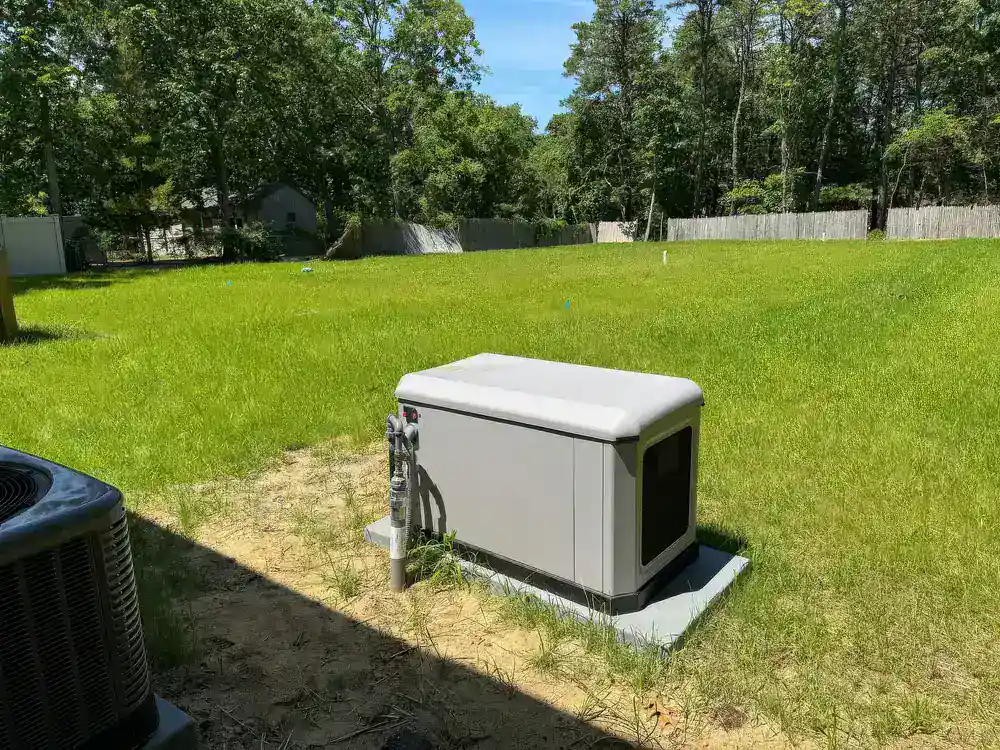
A whole-house energy management system like Powerworx addresses electrical inefficiency at the source by optimizing your home’s power factor and filtering out harmful electrical noise before it reaches your devices.
Powerworx systems install directly at your main electrical panel and work with your existing wiring. No rewiring needed. The system uses industrial-grade capacitors and metal oxide varistors to clean your home’s power supply, reducing the wasted energy that motor loads naturally create.
By improving your power factor from the typical 0.77 to 0.97 or 0.98, you’re dramatically reducing the amount of electricity your home pulls from the grid. Your air conditioner, refrigerator, pool pump, and other motor-driven appliances still do the exact same work, but they do it with less current. That translates directly into lower monthly bills.
The system also provides dual-mode surge protection. It alternates between two types of protection to handle both everyday electrical disturbances and massive surges like lightning strikes. Metal oxide varistors act as a pressure relief valve, diverting surges to neutral and ground lines. If a catastrophic surge attempts to pass through, the system switches into fail-safe mode, cutting off the flow of electricity and blocking the surge before it can damage your equipment.
Every Powerworx installation comes with a $25,000 equipment protection policy covering your electronics and appliances. If a surge or spike damages something in your home and the Powerworx system fails to arrest it, the insurer will pay up to $25,000 total, with $2,500 coverage per item. That coverage begins immediately after installation and system testing, at no additional cost to you.
Homeowners typically see energy savings of 8 to 15% on their monthly electric bills. In a home spending $250 per month on electricity, that’s $20 to $37.50 in savings every single month. Over a year, you’re looking at $240 to $450 back in your pocket. The system is built for 15 to 20 years of continuous operation, which means those savings compound significantly over time.
Motors also run about 10% cooler with clean, optimized power. Cooler operation means less wear, fewer breakdowns, and longer equipment life. You’re not just saving money on your electric bill. You’re extending the lifespan of every major appliance in your home.
Lighting accounts for 10 to 15% of your total electricity consumption, and it’s one of the easiest areas to improve. Switching to LED lighting is one of the fastest payback investments you can make in your home’s energy efficiency.
LED bulbs use 75 to 80% less energy than traditional incandescent bulbs. A 60-watt incandescent bulb can be replaced with a 9-watt LED that produces the same amount of light. If you have 30 bulbs in your home and each one is on for an average of 5 hours per day, switching to LEDs saves you about 765 kWh per year. At 15 cents per kWh, that’s $115 in annual savings.
LEDs also last 25 times longer than incandescent bulbs. A quality LED bulb can last 25,000 hours or more, which means you’re replacing bulbs far less often. Over the lifespan of a single LED, you’d go through 25 incandescent bulbs. The cost savings from reduced replacement alone often pays for the LED upgrade.
In Fort Worth and the DFW area, where homes are heavily air-conditioned for much of the year, LEDs provide an additional benefit: they produce far less heat than incandescent bulbs. Incandescent bulbs waste about 90% of their energy as heat. LEDs stay cool. That means your air conditioner doesn’t have to work as hard to offset the heat generated by your lighting, which creates even more savings during the summer months.
Recessed lighting, under-cabinet lighting, and outdoor fixtures are all excellent candidates for LED upgrades. Many homeowners also benefit from adding dimmer switches, which allow you to control light levels and further reduce energy consumption when full brightness isn’t needed.
Professional installation ensures your LED lighting is properly integrated with your home’s electrical system. We can recommend the right color temperature and brightness levels for each room, install compatible dimming controls, and make sure everything is wired safely and up to code. The result is better lighting quality, lower energy bills, and a system that lasts for years with minimal maintenance.
North Texas summers aren’t getting any cooler, and electricity rates aren’t going down. But you don’t have to accept sky-high bills as the cost of staying comfortable.
The invisible energy drains happening inside your home right now—poor power factor, internal surges, inefficient lighting, and aging electrical components—are fixable problems. When you address them, you lower your monthly costs without sacrificing comfort or convenience. You’re simply making your home’s electrical system work the way it should.
Whole-house energy management systems, LED lighting upgrades, and proper electrical maintenance aren’t luxuries. They’re smart investments that pay for themselves through lower bills and longer-lasting equipment. And in a region where summer electric bills routinely hit $300 or more, even a 10 to 15% reduction makes a real difference.
If you’re ready to stop overpaying for electricity and start protecting your home from electrical waste, we can help. With over 25 years of experience serving the Dallas-Fort Worth and Mid-Cities area, our licensed electricians specialize in energy-efficient solutions that deliver real, measurable results.
Article details:
Share:
Continue learning: