Most EV owners don't realize their standard outlet will take over 40 hours to charge their car. Here's what actually works in Tarrant County, TX homes.
Share:
Summary:
You bought an EV because it made sense. Lower fuel costs, less maintenance, better for the environment. Then you plugged it into your garage outlet and realized it’ll take nearly two days to fully charge. That’s when the questions start: Can my electrical panel handle a faster charger? Do I need a permit in Fort Worth, TX? What’s a load calculation, and why does everyone keep mentioning it? Here’s what actually happens when you install Level 2 EV charging at home in the DFW and Mid-Cities area—and what your electrical system needs to make it work safely.
Level 1 charging uses your standard 120-volt household outlet. The same one you plug your phone charger into. It’s convenient because it requires zero installation, but it’s painfully slow.
We’re talking 40 to 50 hours to charge a battery electric vehicle from empty to 80 percent. That’s not a typo. If you drive your EV on Monday and plug in when you get home, you might have a full charge by Wednesday night. Maybe.
For plug-in hybrids with smaller batteries, Level 1 can work. But if you’re driving a full EV with any kind of regular commute in Fort Worth, Keller, or Arlington, you’ll spend more time worrying about your battery level than you ever did about gas. That’s where Level 2 EV charger home installation becomes the local standard in Tarrant County, TX and across the Mid-Cities.

Level 2 chargers run on 240 volts, the same power your electric dryer uses. The difference in charging speed is massive.
A Level 2 charger adds about 25 to 40 miles of range per hour, depending on your vehicle and the charger’s amperage. That means most EVs go from empty to full overnight, even if you’re starting with a nearly dead battery. You plug in after work, and by morning, you’re ready to go.
Compare that to Level 1, which adds around 4 to 5 miles of range per hour. If you drive 60 miles a day, you’re losing ground. You’d need 12 to 15 hours of charging just to replace what you used, and that’s assuming you don’t need the car for anything else.
This is why most EV owners in Keller, TX, Fort Worth, and Arlington eventually install a Level 2 charging station at home. It’s not about luxury. It’s about making your EV actually functional for daily life. Whether you need Tesla charger installation in Fort Worth or a universal Level 2 station, the process starts with understanding your home’s electrical capacity.
The installation requires a dedicated 240-volt circuit, which is where things get more technical. You can’t just plug a Level 2 charger into an existing outlet. Your electrical panel needs to support the additional load, and in many homes across Dallas County and Tarrant County, that’s not a given. Older homes, especially those built before 1990, often have 100-amp panels that are already running close to capacity.
That’s where the load calculation comes in. Before we install your charger, we evaluate how much power your home is already using and whether your panel can handle the extra 30 to 50 amps a Level 2 charger demands. If it can’t, you’re looking at a panel upgrade, which adds to the cost but keeps your home safe.
Let’s talk about real-world use. If your daily commute is 40 miles round trip, Level 1 charging might technically keep up. You’d need about 10 hours plugged in overnight to replace that range. But the moment you take an extra trip, run errands on the weekend, or forget to plug in one night, you’re behind.
Level 2 charging gives you breathing room. Even a modest 7.2-kilowatt charger can add 25 miles of range per hour. Plug in for 8 hours overnight, and you’ve added roughly 200 miles back to your battery. That’s more than enough for most people’s weekly driving, even with a few extra trips thrown in.
For households with more than one EV, Level 2 becomes essential. You can charge one vehicle, then switch to the other. With Level 1, you’d need days to charge both cars, which isn’t practical.
Charging speed also depends on your vehicle’s onboard charger. Some EVs can accept up to 11.5 kilowatts from a Level 2 station, while others max out at 7.2 kilowatts. Your car’s manual will tell you the maximum charging rate, and that helps determine which Level 2 charger makes sense for your setup.
Temperature matters too, especially in Texas. EV batteries charge more slowly in extreme heat or cold. During a DFW summer when your garage hits 110 degrees, your charging speed might drop slightly. It’s not a dealbreaker, but it’s something to keep in mind when planning your charging routine.
Most EV owners don’t charge from zero to 100 percent every night. You plug in when you get home, top off what you used that day, and unplug in the morning. Level 2 makes that simple. Level 1 turns it into a logistical puzzle.
Here’s the part that surprises most homeowners in Tarrant County, TX: installing a Level 2 EV charger isn’t like adding another appliance. It’s one of the largest electrical loads you can put on a residential panel, right up there with central air conditioning.
A Level 2 charger pulls around 7,200 watts of continuous power. That’s roughly three to four times what your air conditioner uses. And unlike your AC, which cycles on and off, an EV charger runs continuously for hours.
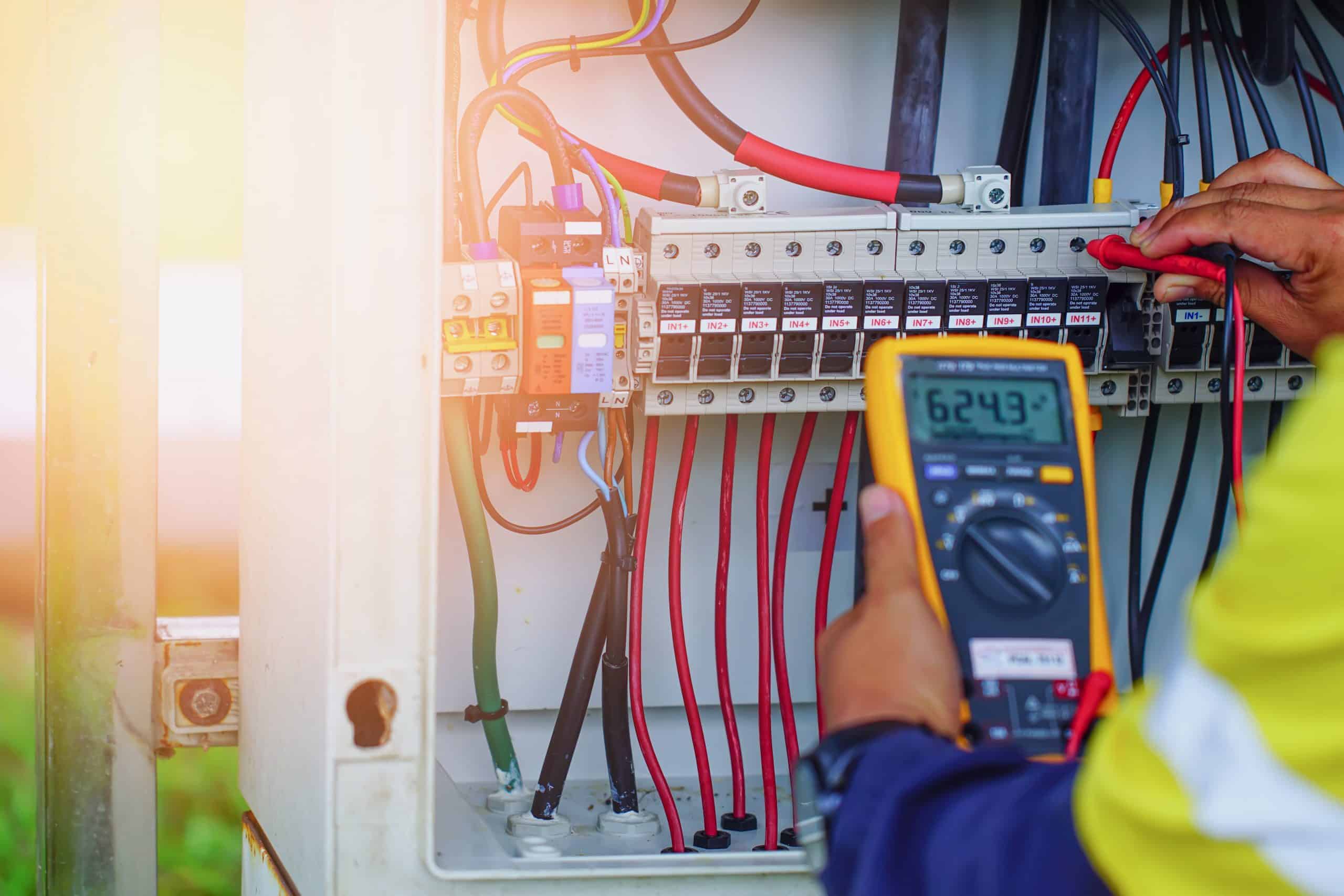
Before any installation happens in Fort Worth, Keller, or anywhere in the Mid-Cities, we perform a load calculation. This evaluates how much electricity your home is already using and whether your panel can safely handle the additional demand. Skip this step, and you risk overloading your system, tripping breakers, or worse.

A load calculation isn’t guesswork. It’s a detailed assessment based on the National Electrical Code, and it accounts for every major appliance in your home.
We look at your home’s square footage, which determines your baseline lighting and receptacle load. Then we add up the power used by your HVAC system, water heater, electric range, dryer, and any other hardwired appliances. Each one contributes to your total load.
Most homes in the DFW area have either a 100-amp or 200-amp main service panel. A 200-amp panel usually has enough capacity for a Level 2 charger, especially if you have gas heat and a gas water heater. A 100-amp panel is trickier. If your home is all-electric or you’ve added other high-draw appliances over the years, you might be close to your panel’s limit.
The calculation also factors in something called continuous load. EV chargers are considered continuous because they run for more than three hours at a time. The National Electrical Code requires electricians to calculate these loads at 125 percent of their rated amperage to maintain a safety margin.
For example, a 40-amp charger needs to be calculated as if it’s pulling 50 amps. That extra buffer prevents your panel from running at full capacity for extended periods, which can cause overheating and premature failure.
If your load calculation shows you’re over your panel’s safe capacity, you have a few options. You can upgrade to a larger panel, install a subpanel in your garage, or use a load management system that automatically reduces power to the charger when other appliances are running. Each option has trade-offs in terms of cost and convenience, and we’ll walk you through them.
Panel upgrades aren’t cheap, but they’re sometimes necessary, especially in older homes across Dallas County, Tarrant County, and Denton County. If your home was built in the 1970s or 1980s and still has the original 100-amp panel, there’s a good chance you’ll need an upgrade to safely install a Level 2 EV charger.
The cost for a panel upgrade in the DFW area typically runs between $1,500 and $4,000, depending on the scope of work. That includes the new panel, labor, permits, and inspection. It’s a significant expense, but it also future-proofs your home for other electrical upgrades you might want down the line.
Some homes don’t need a full panel replacement. If you have available space in your existing panel and your main service line can handle the load, we might be able to add a dedicated circuit without replacing the entire panel. That’s a much simpler and less expensive job.
Load management systems offer another option. These devices monitor your home’s total electrical usage in real time and automatically adjust how much power goes to your EV charger. If your air conditioner kicks on and pushes your home close to its capacity limit, the load manager temporarily reduces power to the charger. Once the AC cycles off, the charger ramps back up.
Load management systems cost less than a full panel upgrade, usually between $500 and $1,500 depending on the model and installation complexity. They’re a smart middle-ground solution for homes that are just slightly over capacity.
The key is getting an honest assessment upfront. We’ll tell you whether your panel can handle the charger, whether you need an upgrade, or whether a load management system makes more sense for your situation. There’s no one-size-fits-all answer, and anyone who gives you a quote without doing a load calculation first is cutting corners.
In Tarrant County, Dallas County, and Denton County, we’re familiar with the common panel types and wiring setups in local homes. We know which neighborhoods tend to have 100-amp panels, which builders used substandard materials in the 1990s, and which homes are likely to need upgrades. That local knowledge matters when you’re planning Tesla charger installation in Fort Worth or any Level 2 EV charger home install in the Mid-Cities.
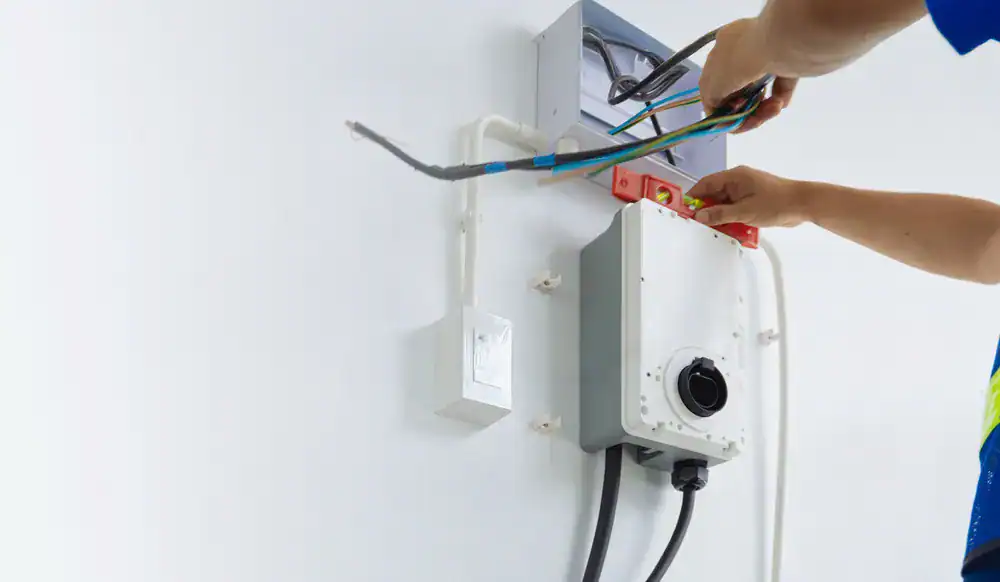
Installing a Level 2 EV charger at home isn’t complicated, but it does require someone who knows what they’re doing. You need a load calculation to confirm your panel can handle it. You need permits pulled and inspections scheduled in Fort Worth, Keller, Arlington, and the surrounding Mid-Cities. And you need an electrician who understands the National Electrical Code and local requirements across Tarrant County, Dallas County, and Denton County.
Most installations take four to six hours and are done in a single day. You’ll have a dedicated 240-volt circuit, a properly mounted charger, and the peace of mind that comes from knowing it was installed safely and to code.
If you’re ready to stop waiting two days for your EV to charge, we can help. With over 25 years of experience serving the DFW area, we’ve installed hundreds of EV charging stations and know exactly what local homes need to make it work.
Article details:
Share:
Continue learning: