If your Keller or Arlington home was built between 1980-1999, there's a good chance your electrical panel wasn't designed for how you live today—and that gap is costing you safety, money, and peace of mind.
Share:

Summary:
Your lights flicker when the AC turns on. The breaker trips when you’re running the microwave and the dishwasher at the same time. Maybe you’ve heard a faint buzzing coming from the wall near your electrical panel, or your home inspector mentioned something about “outdated electrical” during your last appraisal. If your home in Keller, Arlington, or anywhere in the Mid-Cities was built between 1980 and 1999, you’re not imagining things—and you’re definitely not alone. Those symptoms point to an electrical panel that’s struggling to keep up with how you actually live. What you’ll learn here is why that matters, what it’s costing you, and what a real solution looks like.
Homes built during the 80s and 90s across Keller and Arlington were wired for a completely different lifestyle. Back then, central air conditioning wasn’t running constantly through Texas summers. You didn’t have a home office with multiple monitors, a charging station for phones and tablets, smart home devices pulling power 24/7, or a garage fridge. Most families had one TV, maybe a window unit, and far fewer kitchen appliances.
The electrical panels installed during that era—typically 100-amp systems—were built to handle that lighter load. They met code at the time. But code minimums from 30 years ago don’t account for the reality of how North Texas families live today. You’re not asking too much of your home. Your panel just wasn’t designed for this.

When subdivisions were going up quickly in Keller and Arlington during the 1980s and 1990s, many builders installed what’s known as “builders’ grade” electrical panels. These weren’t necessarily bad panels when they were new—they just weren’t built with any buffer for future growth. They met the minimum code requirements for the time, and that was it.
Fast forward to 2026, and the average home is pulling significantly more power than it did in 1985. Your HVAC system alone draws more amperage than entire homes used back then. Add in modern kitchen appliances, multiple bathrooms with exhaust fans and heated floors, a two-car garage with power tools or a separate fridge, landscape lighting, and security systems, and you’re well beyond what a 100-amp panel was designed to handle.
The problem isn’t just capacity. It’s also about the breaker slots. Many of these older panels have limited space for additional circuits. As electrical code evolved through the 90s and 2000s, more dedicated circuits became required—one for the microwave, one for the dishwasher, separate circuits for bathrooms. Older panels often don’t have room to add those circuits without creative (and sometimes unsafe) workarounds like tandem breakers that cram two circuits into one slot.
When your panel is running at or near capacity, breakers get warm. Connections can loosen over time from the constant expansion and contraction caused by heat. Loose connections create resistance, and resistance creates more heat—which leads to that buzzing sound you might be hearing. It’s not something to ignore. It’s your electrical system telling you it’s working harder than it should.
And here’s what most homeowners don’t realize: even if your panel isn’t tripping breakers constantly, it might still be a problem. Some of the panels installed during this era—particularly Federal Pacific and Zinsco brands—have documented failure rates where the breakers don’t trip when they’re supposed to. That’s not a minor inconvenience. That’s a fire hazard sitting in your garage or utility room.
You don’t need to be an electrician to know when your electrical panel is struggling. Your home will tell you—if you know what to listen for. Flickering lights are one of the most common signs, especially if it happens when a major appliance kicks on. If your lights dim or flicker every time the air conditioner starts up, that’s not normal. It means your panel is having trouble managing the surge of power that appliance needs.
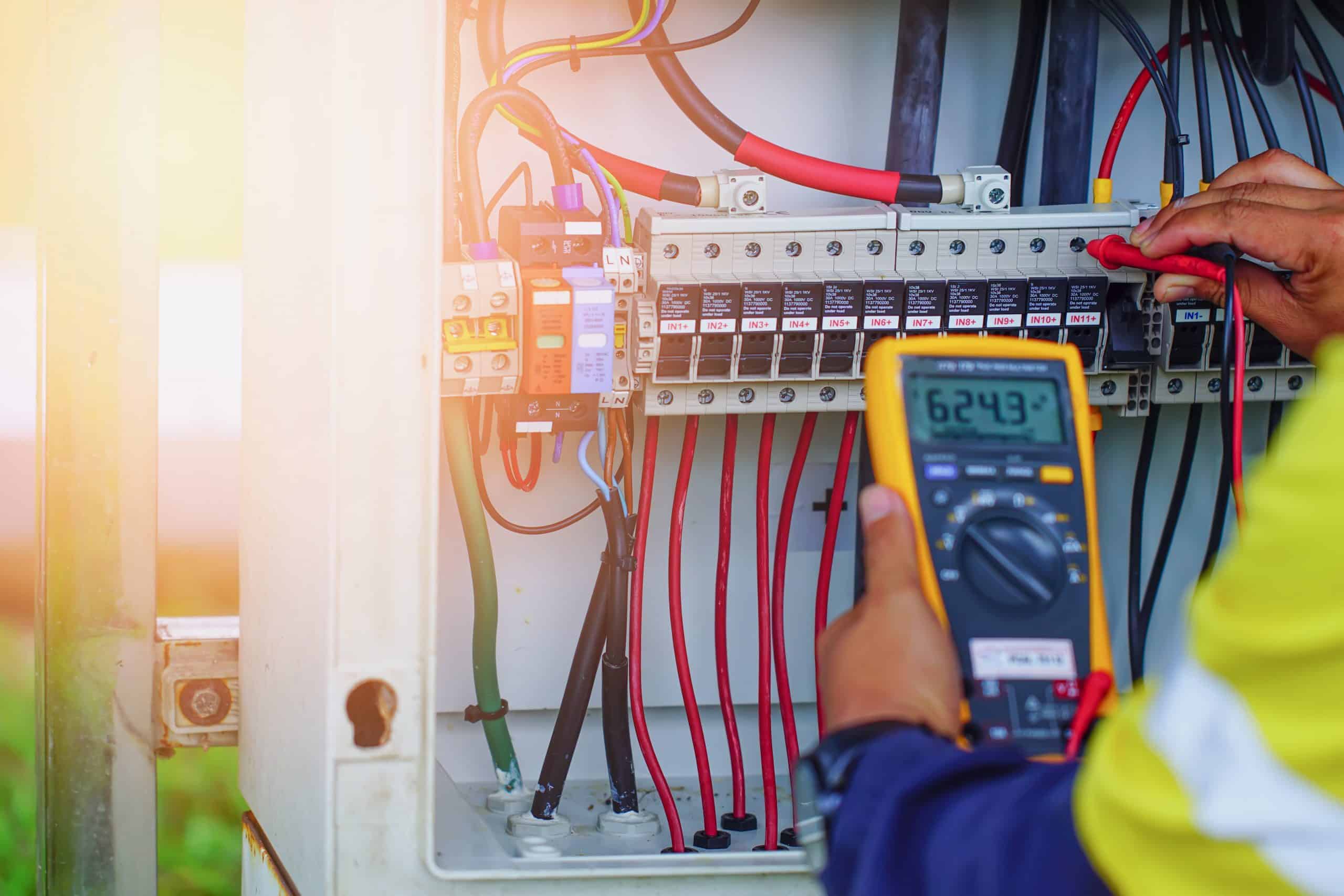
Buzzing or humming sounds coming from your breaker box are another red flag. A faint hum might be normal in some cases, but if you can hear a distinct buzzing—especially when certain appliances are running—that often points to a loose connection inside the panel. Loose connections allow electricity to arc, which creates heat and sound. Left unchecked, that arcing can damage the panel, melt wires, or start a fire.
Breakers that trip frequently are your panel’s way of protecting your home from an overload. But if you’re resetting breakers on a regular basis just to use normal household appliances, that’s a sign your system is maxed out. Some homeowners get used to it and just avoid running certain things at the same time. That’s not a solution—it’s a workaround for a system that needs an upgrade.
Warm or hot breakers are a serious concern. If you touch your breaker panel and it feels warm, or if individual breakers feel hot to the touch, that’s a problem. Breakers should not generate significant heat during normal operation. Heat indicates resistance, and resistance means something isn’t working correctly—whether it’s a failing breaker, a loose connection, or an overloaded circuit.
Burn marks, discoloration, or a burning smell near your panel are emergency-level warning signs. If you see any of these, don’t wait. Turn off power at the main breaker if you can do so safely, and call a licensed electrician immediately. These are signs of active electrical failure, and the risk of fire is real.
Finally, if your home was built in the 1980s or 1990s and you’ve never had the panel inspected or upgraded, age alone is reason enough to have it evaluated. Electrical panels don’t last forever. Components wear out. Connections loosen. Standards change. A panel that’s been in service for 30 or 40 years has done its job—but it’s time to make sure it’s still doing it safely.
One of the first questions homeowners ask is, “What’s this going to cost?” It’s a fair question, and the answer depends on a few factors—but for a standard 100-amp to 200-amp panel upgrade in Keller or Arlington, you’re typically looking at somewhere between $2,800 and $4,800 in 2026. That’s higher than the $1,500-$2,500 estimates you might find on older websites, and there’s a reason for that. Code requirements have changed. What used to be a straightforward panel swap now includes additional safety components that weren’t required even five years ago.
Those aren’t upsells. They’re code. And they’re there for good reason.

When you hire a licensed electrician in the DFW area to upgrade your panel today, the scope of work is more comprehensive than it used to be. You’re not just swapping out the old breaker box for a new one. You’re bringing your entire electrical service up to current National Electrical Code (NEC) standards—and in Texas, that means a few mandatory additions.
First, there’s the outside emergency disconnect. This is a requirement that became part of the 2020 NEC and has been adopted across most DFW municipalities, including Fort Worth, Keller, and Arlington. It’s a switch mounted on the exterior of your home that allows first responders to cut power to your entire electrical system without having to enter the building. In an emergency—a fire, a flood, or any situation where going inside isn’t safe—that exterior shutoff can be lifesaving. It’s not optional, and inspectors will look for it.
Second, whole-home surge protection is now required for new panel installations under the 2020 NEC. This isn’t a power strip you plug into the wall. It’s a surge protective device (SPD) installed directly at your panel that protects your entire home’s electrical system from voltage spikes, including lightning strikes. In North Texas, where severe thunderstorms are routine, this is genuinely valuable protection. The cost to include it typically adds $200-$400 to your project, and it’s worth every dollar when you consider what it’s protecting—your HVAC system, your appliances, your electronics, and everything else plugged into your home.
Third, arc-fault circuit interrupters (AFCI breakers) are required on a growing list of circuits in Texas—bedrooms, living areas, hallways, and more. Standard breakers detect overloads and short circuits, but they don’t detect arcing faults, which are the kind that start fires inside walls. AFCI breakers do. They cost more than standard breakers—$30-$60 per AFCI breaker versus $5-$15 for a standard breaker—but when you’re installing 10 to 20+ circuits in a full panel replacement, that adds up. It’s also non-negotiable if you want your work to pass inspection.
Then there’s the permit and inspection process. In Fort Worth, Arlington, and most DFW municipalities, electrical panel replacements require a permit. That permit triggers an inspection, and the inspector will verify that everything meets current code. If the outside disconnect isn’t there, the job fails. If surge protection is missing, the job fails. If AFCI breakers aren’t installed where required, the job fails. Some contractors try to save money by skipping the permit, but that’s a massive risk for you as the homeowner. Unpermitted electrical work can void your homeowner’s insurance, create serious liability if something goes wrong, and become a painful negotiating point when you try to sell the home.
Finally, there’s labor. A proper, code-compliant 200-amp upgrade isn’t a two-hour job. It takes a skilled crew—typically a Journeyman Electrician supervised by a Master Electrician—about 8 to 10 hours to complete. That’s 16 to 20 man-hours of work. In DFW’s competitive labor market, experienced Journeymen earn $30-$36 per hour, and the “burdened cost” of labor (what it actually costs a business to employ someone, including payroll taxes, insurance, vehicle costs, and training) is about double that hourly wage. This is why service rates for a two-person crew typically run $150-$225 per hour in DFW.
When you add it all up—the panel itself, the outside disconnect, surge protection, AFCI breakers, labor, permit fees, and inspection—the $2,800 to $4,800 range starts to make sense. You’re not just getting a new breaker box. You’re getting a significantly safer, more capable, code-compliant electrical system that’s built to handle how you live today and how you’ll live 20 years from now.
Beyond safety and functionality, there’s a financial reason to upgrade your electrical panel : it directly impacts your home’s resale value in the North Texas market. Buyers and their inspectors know what to look for, and an outdated or problematic electrical panel is one of the first things that gets flagged during a home inspection. If your home still has a Federal Pacific or Zinsco panel, or if it’s running on a 100-amp system that can’t support modern appliances, you’re going to hear about it—and it’s going to cost you.
In many cases, buyers will either walk away or demand that you replace the panel before closing. If you’re selling in a competitive market, that delay can mean losing other interested buyers. If you’re in a slower market, it gives buyers leverage to negotiate the price down—often by more than the cost of the upgrade itself. You end up paying for it anyway, but you don’t get the benefit of having lived with a safer, more reliable system.
Upgrading your panel before you list your home eliminates that negotiation point entirely. It signals to buyers that the home has been well-maintained and that they won’t be facing a major electrical expense right after moving in. That peace of mind has value, and it shows up in stronger offers and smoother transactions.
There’s also the insurance angle. More and more insurance carriers in Texas are refusing to write new policies on homes with Federal Pacific panels or requiring replacement within 30 days of closing. If a buyer can’t get insurance, they can’t close on the loan. If they can get insurance but it comes with a higher premium because of an outdated panel, that eats into their budget and makes your home less attractive compared to others on the market.
From a pure dollars-and-cents perspective, a panel upgrade can add several thousand dollars to your home’s resale value. But the bigger value is in what it prevents—lost deals, price concessions, delayed closings, and the stress of negotiating repairs during an already complicated process. When you’re ready to sell, you want your home to be move-in ready. A modern, code-compliant electrical panel is part of that package.
If you’re reading this and recognizing the warning signs in your own home—flickering lights, buzzing sounds, frequent breaker trips, or just the knowledge that your panel is 30+ years old—the next step is simple: get it evaluated by a licensed electrician who knows the local code requirements and understands the specific challenges of North Texas homes. Not every panel needs to be replaced immediately, but every panel should be inspected regularly, especially if it’s been in service since the 1980s or 1990s.
A proper evaluation will tell you exactly where you stand—whether your panel is still safe, whether it has the capacity to handle your current and future needs, and whether it meets the standards that insurance companies and home buyers are going to expect. From there, you can make an informed decision about timing, budget, and scope.
The investment in a panel upgrade isn’t just about avoiding problems. It’s about protecting your family, preserving your home’s value, and giving yourself the peace of mind that comes from knowing your electrical system is doing its job safely and reliably. If you’re in Keller, Arlington, Fort Worth, or anywhere in the DFW and Mid-Cities area, we’ve been handling these exact upgrades for over 25 years at Carroll Service Company . We know the local housing stock, the code requirements, and what it takes to get the job done right the first time.
Article details:
Share:
Continue learning: