
Solar home generators combine clean energy with real backup power. Here's what Tarrant County homeowners need to know before making the switch.
Share:
Summary:
If you lived in Tarrant County during Winter Storm Uri, you already know the feeling. The power goes out, the temperature drops, and suddenly you’re realizing how much you took the grid for granted. A lot of homeowners came out of that experience asking the same question: what can I actually do so this never happens again?
A solar home generator is one of the most practical answers to that question — and it’s evolved well beyond what most people picture. This page walks you through how these systems work, how they stack up against traditional generators, and what generator installation looks like for a home in the Fort Worth area.
At its core, a solar home generator combines solar panels, a battery storage system, and an inverter into one setup that can power your home when the grid goes down. During the day, the panels collect energy from the sun and charge the battery bank. When the grid fails, the system switches over automatically — usually within a few seconds — and your lights, refrigerator, and AC keep running like nothing happened.
What makes this different from just having solar panels is the battery. Most standard grid-tied solar systems automatically shut off during a blackout to protect utility workers making repairs. Without battery storage, your panels produce power you can’t use the moment the grid goes down. The battery is what closes that gap and makes the whole thing actually useful as a backup power source.

Think of a solar-charged battery system as a silent, fuel-free electric generator for home use. Instead of burning propane or natural gas to spin a turbine, it stores electricity from your solar panels in a lithium battery bank and releases it on demand through a built-in inverter that converts stored DC energy into the AC power your home runs on.
The practical difference is significant. Gas and diesel standby generators produce somewhere between 80 and 100 decibels when running — loud enough that your neighbors will know about it. A solar battery system operates closer to 30 decibels. That’s roughly the volume of a quiet conversation. For homeowners in Keller, Southlake, or North Richland Hills where houses sit close together, that distinction matters more than people expect.
There’s also the carbon monoxide issue. Gas generators cannot be run indoors or in an attached garage without serious ventilation, and every year people are injured or killed because of improper use. A solar battery system produces zero emissions, so it can be installed in a garage or utility room without any of those concerns.
On the cost side, whole-home solar generator systems typically run between $10,000 and $50,000 depending on the size of your home and how much of your electrical load you want covered. That’s a real number, and it’s worth putting in context. The 30% federal Residential Clean Energy Tax Credit applies directly to solar panels and battery storage — on a $20,000 system, that’s $6,000 back at tax time as a dollar-for-dollar reduction in what you owe, not just a deduction. Factor in monthly electricity savings, and the long-term math looks considerably different than the sticker price suggests.
Battery lifespan is another practical consideration. Most solar batteries are rated for 10 to 15 years, while the panels themselves typically last 25 years or more. That means you may need to replace the battery once over the life of the system, but the panels themselves are a long-term investment.
This is the question most homeowners want answered before anything else, and the honest answer is: it depends on system size and how your home’s electrical load is configured. A properly sized whole-home solar generator can run your central air conditioning, refrigerator, lighting, and essential outlets simultaneously. Larger systems can cover nearly the entire home. Smaller or mid-range setups are often designed around critical loads — the things you absolutely cannot lose power to — and let less essential circuits go dark during an outage.
The sizing process starts with a load calculation. That means looking at your HVAC system, your refrigeration, your water heater if it’s electric, any medical equipment, and your general lighting and outlet usage. A 20kW system typically handles most homes between 2,000 and 3,000 square feet with central air. Larger homes, or homes with electric vehicle chargers and high-draw appliances, may need 24kW or more. Getting this calculation right before installation is what separates a system that performs under pressure from one that leaves you short when you need it most.
For Tarrant County homeowners specifically, the HVAC question is the critical one. A power outage in Fort Worth during a July afternoon when temperatures are pushing 105°F isn’t just uncomfortable — it’s a health emergency, particularly for elderly family members or households with young children. Any solar home generator system installed in this climate needs to be sized with the air conditioner as a non-negotiable priority, not an afterthought.
One more thing worth knowing: many older Fort Worth homes — particularly in neighborhoods like Fairmount, Ridgmar, and Wedgwood — still have 100-amp electrical panels that were never designed to handle today’s electrical loads, let alone a solar battery system on top of them. If your panel is outdated, it needs to be upgraded before a solar home generator can be safely integrated. That’s not a complication — it’s just part of the process, and it’s something we assess during the initial walkthrough.
Most homeowners shopping for a home generator are weighing a few different options: a portable gas generator, a whole-home standby generator running on natural gas or propane, or a solar home generator system with battery storage. Each one has a different cost profile, a different set of trade-offs, and a different experience to live with day to day.
The right answer depends on your home, your priorities, and how long you realistically need to run on backup power. Here’s how to think through the comparison honestly.

Gas standby generators have a clear advantage in one area: extended runtime. As long as you have fuel, they keep running. For homeowners who went through a multi-day outage during Uri and want unlimited backup power, that’s a real selling point. A whole-home standby generator running on natural gas can operate continuously without any intervention on your part, assuming your gas supply stays intact.
The trade-offs are real, though. Gas generators require annual maintenance — oil changes, filter replacements, regular test runs — and if you skip that, the unit may not start when you actually need it. They’re loud, they produce exhaust, and they need to be installed away from windows and doors. Fuel costs add up over time, and unlike a solar system, a gas generator does nothing to offset your monthly electricity bill during normal operation.
Solar home generators work differently. They’re silent, require minimal maintenance, and reduce your electricity costs every month the sun is shining — which in Tarrant County is roughly 229 days a year. Texas sits in one of the sunniest regions in the country, with four to seven and a half peak sun hours daily. The panels are generating and storing energy constantly, so by the time an outage hits, your battery is already charged and ready.
The limitation is duration. If the grid stays down for five or six days with limited sun — think an ice storm rather than a summer thunderstorm — a solar-only system may eventually run low. That’s where hybrid systems come in. A hybrid setup pairs solar panels and battery storage with a traditional fuel generator as a last-resort backup. You get the efficiency and silence of solar for most situations, and the unlimited runtime of a generator when conditions call for it. For many Tarrant County homeowners who remember Uri, that combination is the most reassuring option available.
Installation isn’t something you hand off to just anyone. In Texas, any work that connects a solar or battery system to your home’s main electrical panel requires a licensed electrician — that’s state law, and your homeowner’s insurance may not cover damage from work done without the proper permits and inspections.
The process starts with a site assessment. We look at your existing electrical panel, your current load, your roof orientation and shading, and what you’re trying to accomplish — whether that’s full-home backup, critical load coverage, or a hybrid system that combines solar with a standby generator. From there, we size the system, walk you through the options and costs, and handle the permit process with the city.
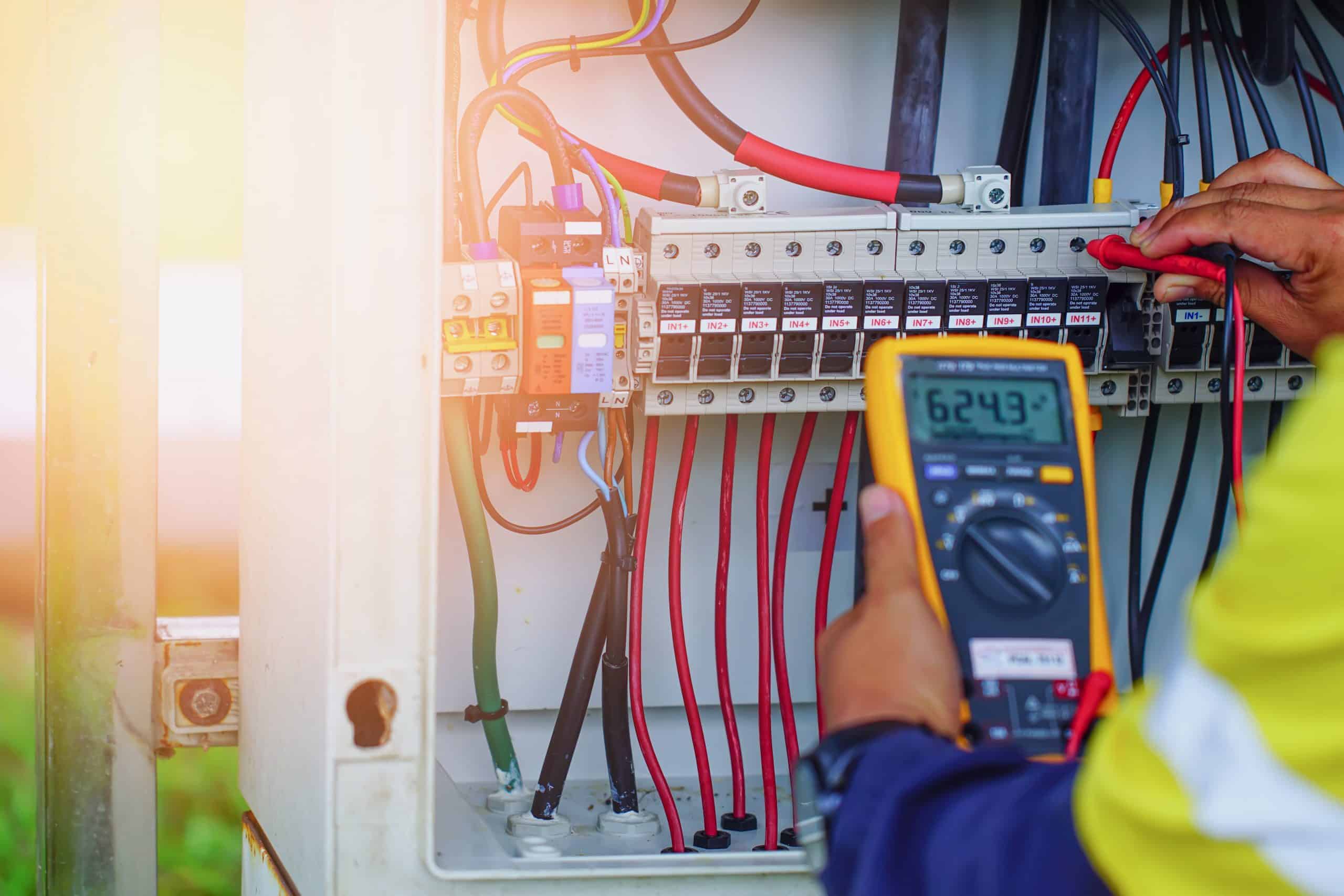
Installation typically involves mounting the solar panels, installing the battery storage unit (usually in a garage or utility room), wiring the automatic transfer switch that manages the handoff between grid power and battery power, and connecting everything to your panel. The transfer switch is what makes the switchover seamless — when the grid drops, it happens automatically, in seconds, without you touching anything.
After installation, we test the full system and walk you through how it works. That includes how to monitor your battery charge, what to expect during different weather conditions, and who to call if something needs attention. For homeowners in Watauga, Haslet, or anywhere else in our service area, that call goes to the same local team that installed the system — not a national call center.
We’ve been doing electrical work in the Fort Worth area for over 25 years. We’ve seen what happens when systems are undersized, improperly wired, or installed without permits. The goal of every installation we do is that you never think about it again — because it just works.
For most homeowners in this area, the answer is yes — with the right system and the right installation. Texas’s grid isn’t getting less stressed. Electricity demand on ERCOT grew 23% between 2021 and 2025, and summers aren’t getting cooler. The combination of abundant sunshine, real grid risk, and a 30% federal tax credit makes Tarrant County one of the strongest markets in the country for solar home generator systems.
The most important thing is getting the sizing and integration right from the start. An undersized system leaves you short when it matters most. A system installed without proper permits can create insurance and liability problems down the road. And a solar setup added to an outdated 100-amp panel is an accident waiting to happen.
If you’re ready to look at your options, we offer free assessments for homeowners across Fort Worth, Keller, Southlake, Watauga, Haslet, and North Richland Hills. We’ll give you a straight answer about what your home needs, what it will cost, and whether solar backup is the right fit — no pressure, no overselling.
Article details:
Share:
Continue learning: