
Thinking about a whole house generator? Here's exactly what the installation process looks like — from the first site visit to the moment it kicks on automatically.
Share:
Summary:
If you lived through Winter Storm Uri in February 2021, you don’t need anyone to convince you why a standby generator matters. You already know. What you might not know is what the installation actually involves — how long it takes, what requires a permit, whether your HOA can stop you, and how to make sure you’re not paying for more generator than your home actually needs.
This guide answers those questions directly. We’ve been installing whole house generators across Tarrant County for over 25 years, and the questions homeowners ask us most are almost always the same. Let’s start with the ones that matter most.
A standby generator is permanently installed outside your home, connected to your natural gas line and your electrical panel. When the power goes out, an automatic transfer switch detects the interruption and starts the generator — usually within 10 to 30 seconds — without you touching anything.
That’s the key difference between a standby generator and a portable one. A portable generator needs to be dragged out, fueled up, and manually connected every single time. A standby generator just handles it. And because it runs on natural gas through your Atmos Energy line, it doesn’t run out of fuel the way a gasoline-powered portable does. During Uri, the electric grid failed across Tarrant County — but the gas lines kept flowing.
This is the question where a lot of homeowners get steered wrong. The assumption is that bigger is always better — and some contractors are happy to let you believe that, because a larger unit means a larger sale.
We don’t operate that way. When we assess a home in Tarrant County, we’re doing an actual load calculation: looking at what you want the generator to power, what your electrical panel can handle, and what size unit is genuinely appropriate for your home. A 10kW generator covers essential circuits — lights, refrigerator, a few outlets, maybe a window unit. A 22kW generator can run most or all of a larger home, including central HVAC. Most homes in the 2,000 to 2,500 square foot range don’t need the biggest unit on the market, and buying one doesn’t make your home safer — it just costs more upfront and in fuel over time.
There’s also a mechanical reason to right-size: a generator that consistently runs well below its rated capacity can develop what’s called “wet stacking” — a condition where unburned fuel builds up in the exhaust system and causes long-term engine problems. Oversizing isn’t just a budget issue. It can shorten the life of the equipment.
When we give you a sizing recommendation, it’s based on your actual home — your panel, your square footage, your appliances, and what you told us you need to keep running during an outage. We’re not trying to sell you the biggest unit. We’re sizing it correctly for what you actually need.
Once you’ve decided to move forward, here’s what the process actually looks like from start to finish.
It begins with a site assessment. We come out to your property, evaluate your electrical panel, identify the best placement for the generator unit, and measure the distance from your gas meter. That last part matters because natural gas line installation adds $500 to $1,500 to the total project cost depending on how far the run needs to go. We give you that number upfront — not after the work is done.
From there, we handle the permits. In Tarrant County, a whole house generator installation requires electrical permits, and in Texas, those permits can only be pulled by a licensed master electrician. Our owner, Gabriel Carroll, holds a Master Electrician license and Texas Electrical Contractor License TECL 25420 — which means we can legally obtain the permits your installation requires. Contractors who skip this step are cutting corners that create real liability for you as the homeowner, including issues with your insurance and potential code violations when you go to sell.
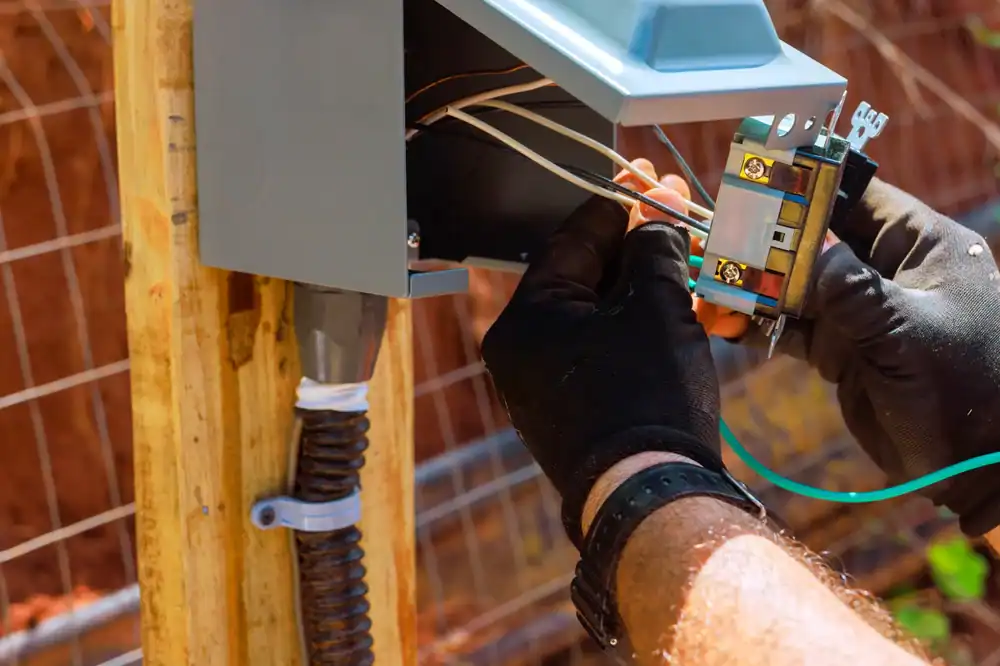
Once permits are approved, the physical installation begins. We pour a concrete pad to set the generator on — a proper, level foundation that keeps the unit stable and protects it from ground moisture. Then we connect the natural gas line, wire the generator to your electrical panel, and install the automatic transfer switch. The ATS is what makes the whole system work hands-free. It monitors your incoming utility power constantly, and the moment it detects an outage, it starts the generator and switches your home over automatically.
After everything is connected, we test the system completely before we leave. We want to confirm that the transfer switch responds correctly, the generator starts cleanly, and every circuit you’re counting on is actually live. The inspection follows, and once that clears, you’re done. The whole installation — from the day work begins to the day the inspector signs off — typically takes one day on-site, with the total timeline from first consultation to operational system running two to four weeks depending on permit processing and equipment delivery.
Generator installation cost varies more than most homeowners expect, and the range is wide enough that a number without context isn’t very useful. What actually drives the price is the size of the unit, the fuel connection distance, your panel configuration, and the complexity of your site.
What we can tell you is that we provide upfront pricing before any work begins. You’ll know the full cost before we schedule installation — no surprises at the end of the job. That’s not a marketing line; it’s how we’ve operated for over 25 years, and it’s what our customers in Tarrant County consistently mention in their reviews.

The generator unit itself is one part of the total cost. The installation — permits, concrete pad, gas line, transfer switch, labor — is the other part, and it’s where the real variation lives.
Generator size is the biggest single variable. A smaller unit that covers essential circuits costs less than a whole-home system that keeps your HVAC running. The distance from your gas meter to the generator placement also affects cost directly: that $500 to $1,500 range for natural gas line installation is real, and it’s determined by your specific property layout, not a flat fee.
Your electrical panel plays a role too. If your panel is older or already running close to capacity, there may be work needed before the generator can be properly integrated. We identify this during the site assessment so it doesn’t become a surprise after the job starts.
One thing worth knowing: the brands we install — Generac and Kohler — are the two most recognized names in residential standby power, and for good reason. They’re built to handle Texas weather extremes and come with manufacturer warranties that back up the unit itself. Our warranty covers the installation labor on top of that, so both sides of the job are protected.
A few questions come up repeatedly from homeowners specifically across Tarrant County, and they’re worth addressing directly.
The first is about HOAs. A lot of the communities in Southlake, Colleyville, Keller, and Westlake are HOA-governed, and homeowners assume their association can block a generator installation. In Texas, that’s not actually the case. Texas Property Code Section 202.019 protects your right to install a standby generator even in an HOA community. The HOA can require that all electrical, plumbing, and fuel line connections be performed by licensed contractors — which is already how we work — but they cannot prohibit the installation outright.
The second question is about permits and whether they’re really necessary. They are, and skipping them creates real problems. An unpermitted generator installation can void your homeowner’s insurance coverage for any outage-related damage, create complications when you sell your home, and leave you personally liable if something goes wrong. In Tarrant County, the permit process involves both the city and an inspection by a licensed official. We handle all of it.
The third question is about timing. Homeowners often ask how far out we’re booking, especially after a major storm event. The honest answer is that demand surges after outages, and lead times can stretch. If you’re reading this after a storm and thinking about finally pulling the trigger, sooner is better than later — not because of any artificial urgency, but because the permitting and equipment delivery timeline means you won’t be protected overnight regardless of when you call. Starting the process now puts you ahead of the next event, not scrambling during it.
The installation process is more straightforward than most homeowners expect — and far less disruptive. One day of work on-site, a proper permit, a concrete pad, a gas line connection, and a transfer switch that handles everything automatically from that point forward. The complexity is real, but it’s our complexity to manage, not yours.
What matters is that you end up with a system that’s correctly sized for your home, properly permitted, and installed by someone who’s been doing this work in Tarrant County long enough to know the local codes, the local utilities, and the local permit offices.
If you’re ready to get a straight answer on what this would actually look like for your home, reach out to Carroll Service Co. We’ll start with a site assessment, give you upfront pricing, and take it from there.
Article details:
Share:
Continue learning:

