Your electrical panel was built for a different era. Here's how to tell when it can no longer keep up — and what that means for your home.
Share:

Summary:
Most of the time, your electrical panel does its job quietly. You flip a switch, the light comes on. You run the dishwasher and the AC at the same time, and nothing happens. But for a lot of homes in Tarrant County — especially ones built in the 1960s, 70s, or 80s — that quiet reliability is hiding something. The panel isn’t actually keeping up. It just hasn’t failed visibly yet. Understanding the difference between “working fine” and “working fine for now” is what this page is about.
Electrical wiring is the network of conductors that carries power from your utility connection through your home to every outlet, switch, fixture, and appliance. It’s the infrastructure behind your walls — and your electrical panel is the hub that manages all of it.
The panel receives power from the utility, divides it into individual circuits, and uses breakers to protect each circuit from drawing more current than the wiring can safely handle. When a circuit pulls too much power, the breaker trips. That’s the system working as designed.
The problem is when the panel itself is too old, too small, or too worn to do that job reliably anymore.

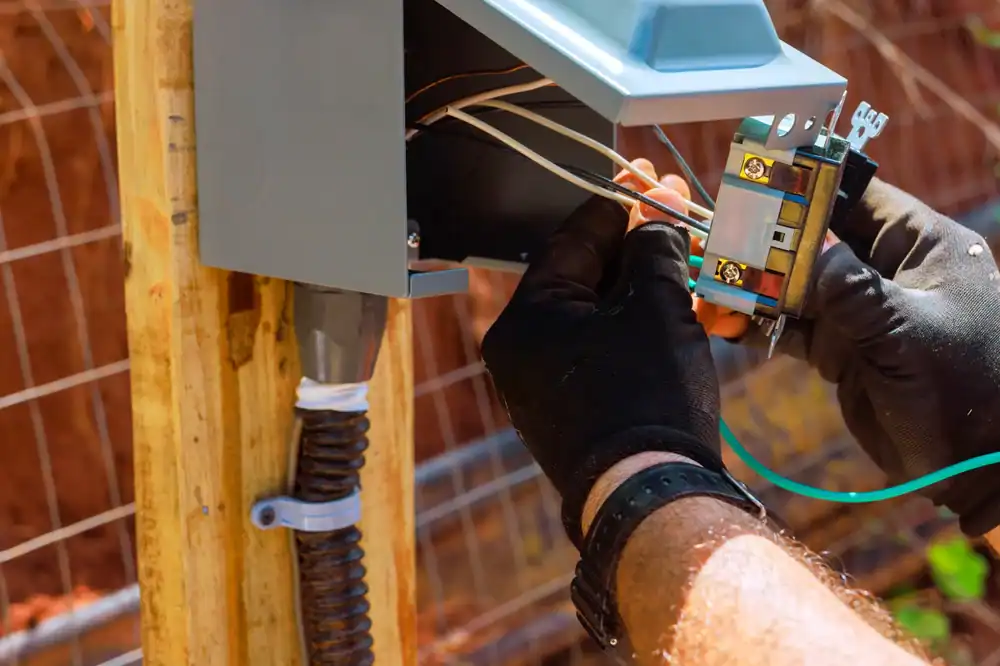
Upgrading an electrical panel means replacing the existing breaker box with a new one — typically moving from an older 100-amp panel to a modern 200-amp service. The process involves shutting off power to the home, removing the old panel, installing the new one, reconnecting the circuits, and restoring power. In most cases, the work is completed in a single day. You’re not looking at days without electricity — more like a few hours.
What makes the job more involved is what sometimes gets discovered along the way. Homes built before 1980 in areas like Haltom City, Euless, and older Fort Worth neighborhoods frequently have aluminum wiring, which was used widely from the mid-1960s through the mid-1970s as a substitute for copper. Aluminum wiring isn’t automatically dangerous, but it requires specific handling and compatible components. If an upgrade reveals aluminum wiring that hasn’t been properly maintained or terminated, that’s something a licensed electrician needs to address at the same time — not later.
In Texas, a panel replacement requires a permit and a follow-up inspection from the municipality. That’s not a hassle — it’s actually a protection for you. It creates a documented record that the work was done to code, which matters when you sell the home or file an insurance claim. Any contractor who suggests skipping the permit is doing you a disservice, not a favor.
The scope of the upgrade also depends on what you’re adding. If you’re installing a Level 2 EV charger, a new HVAC system, or a hot tub, those loads require dedicated circuits that a 100-amp panel often can’t accommodate. Upgrading the panel makes those additions possible and safe. It’s not always about the panel being broken — sometimes it’s simply that your home’s power demands have grown past what the original installation was ever designed to handle.
Tarrant County has a wide range of housing stock, and the electrical needs vary significantly depending on when and where a home was built. Fort Worth’s historic neighborhoods — Fairmount, Ryan Place, Mistletoe Heights — contain beautiful older homes that may still have original or partially updated electrical systems from the 1940s and 50s. Mid-century homes in Arlington, Haltom City, and North Richland Hills were built during a period when a 60- or 100-amp panel was considered sufficient. Keller, Colleyville, and Southlake have newer construction, but even homes built in the early 1990s are now 30-plus years old — which puts them squarely in the range where a panel inspection makes sense.
The practical reality is that a 100-amp panel was designed for a home with far fewer electrical demands than what we run today. Central air conditioning alone can draw 30 to 50 amps under load. Add a refrigerator, a washer and dryer, a home office setup, and the kind of sustained summer heat that pushes AC systems to run continuously for months — and a 100-amp panel is operating at or near its limit every single day from June through September.
That sustained load is hard on aging breakers. Breakers that are 25 or 30 years old may not trip when they should. And a breaker that fails to trip during an overload doesn’t just inconvenience you — it allows heat to build in the wiring behind your walls. That’s where electrical fires start. The National Electrical Code recommends a minimum 200-amp service for modern homes, and that standard exists for a reason.
There’s also the question of what you want to do with your home going forward. EV ownership is growing fast across DFW, and a Level 2 charger requires a dedicated 240-volt circuit that most 100-amp panels simply can’t spare. If you’re planning to add a charger, a new HVAC unit, or any significant appliance in the next few years, a panel upgrade now — rather than as an emergency later — makes the whole process cleaner and less expensive.
The most common reason homeowners call us is a symptom they’ve been living with for a while — breakers that trip when the AC kicks on, lights that dim or flicker when a large appliance starts, or outlets in older parts of the house that simply don’t work reliably. These aren’t quirks. They’re signals that the panel is being pushed past what it can safely manage.
Other times, the trigger is external. A home inspector flags the panel during a sale. An insurance company sends a letter questioning the home’s electrical system. A contractor installing a new appliance says the panel needs to be upgraded first. In each of these cases, the panel was already the problem — it just took something else to surface it.

Some warning signs are obvious. A burning smell near the breaker box is one of them — if you notice it, stop reading and call an electrician today. A warm panel cover, scorch marks around breakers, or breakers that feel hot to the touch are equally urgent. These are not “keep an eye on it” situations.
Other signs are subtler and easier to rationalize away. Breakers that trip frequently when you run multiple appliances aren’t just annoying — they’re telling you the circuits are consistently overloaded. Lights that dim when the AC starts up are showing you that the panel is struggling to distribute power evenly.
If you have a fuse box rather than a breaker panel, that’s a strong indicator the electrical system hasn’t been updated since before the 1970s, and it’s almost certainly undersized for what you’re running today.
One of the more counterintuitive signs is a breaker that never trips. You might assume that means everything is fine. But an old breaker that has lost its ability to trip under load is actually more dangerous than one that trips regularly, because it’s no longer doing its job. It’s allowing circuits to carry more current than the wiring behind your walls was designed for — silently, invisibly, over time.
If your home is more than 30 years old and you’ve never had the panel inspected, that alone is a reasonable basis for having a licensed electrician take a look. Not because something is necessarily wrong, but because you genuinely can’t know without an inspection. The panel is behind a metal door inside a box. You can’t see what’s happening in there from the outside.
**Do I need a permit to upgrade my electrical panel in Tarrant County?**
Yes. Fort Worth, Arlington, Keller, and every other municipality in Tarrant County require a permit for panel replacements and significant electrical installation work. The permit process includes a municipal inspection after the work is complete. This is a good thing — it means the work is verified by a third party, and you have documentation that it was done to code. We handle the permit as part of the job. You don’t have to navigate that process yourself.
**Can I upgrade my panel myself?**
No. In Texas, electrical panel work must be performed by a licensed electrical contractor. It’s not a legal gray area — it’s a requirement enforced by the Texas Department of Licensing and Regulation. Beyond the legal issue, DIY panel work voids your homeowner’s insurance and will fail inspection. This is one of those jobs where licensing exists specifically because the consequences of doing it wrong are serious.
**How long does a panel upgrade take?**
Most residential panel upgrades in Tarrant County are completed in a single day. Power is off for a portion of that time — typically a few hours — while the old panel is removed and the new one is installed and connected. It’s not a multi-day project, and it doesn’t require you to be out of the house.
**What size panel does my Tarrant County home need?**
The National Electrical Code recommends a minimum of 200-amp service for modern homes. If you’re planning to add an EV charger, a new HVAC system, or other high-draw appliances, that’s the baseline you want to start from. Homes with larger footprints or significant electrical loads may benefit from a 400-amp service or a subpanel addition. The right answer depends on your specific home and how you use it — which is exactly what an inspection and load calculation will tell you.
**Does a panel upgrade mean I also need to rewire my house?**
Not automatically, but the two are often connected in older Tarrant County homes. A panel upgrade in a pre-1980 home may reveal aluminum wiring or wiring that isn’t compatible with the new panel’s requirements. In those cases, targeted rewiring of specific circuits — rather than a full whole-house rewire — is often the practical solution. We’ll tell you what we find and what it means before any additional work begins.
The honest answer is that most homeowners in Tarrant County don’t know the condition of their electrical panel until something goes wrong or someone tells them. If your home was built before 1990 and the panel has never been replaced, it’s worth finding out where things stand — not because a problem is guaranteed, but because an aging panel in a Texas summer is under real stress, and the cost of finding out is a lot lower than the cost of what happens if you don’t.
We’ve been doing this work in the DFW and Mid-Cities area for over 25 years. We’re licensed under Texas Electrical Contractor License TECL 25420, fully insured, and we stand behind everything we do with a warranty on both parts and labor. There are no hidden fees — you know what the job costs before we start. If you’re not sure whether your panel needs attention, that’s exactly the kind of question we can help you answer.
Article details:
Share:
Continue learning: