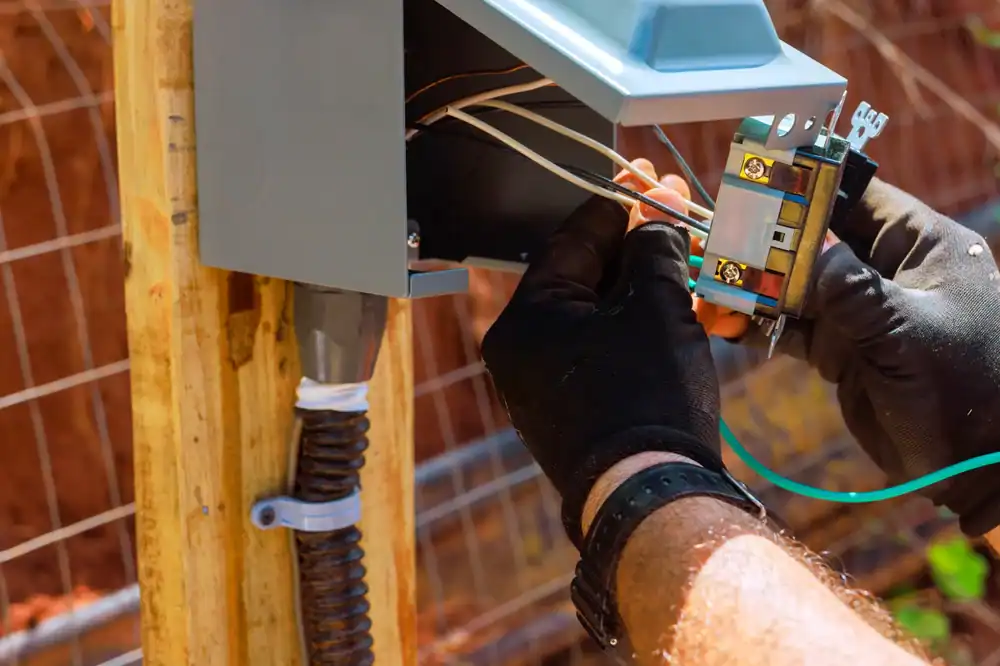
Before you pick up the phone, here's what electrical service repair actually costs in Tarrant County — and what drives the price up or down.
Share:

Summary:
Most people don’t think about their electrical system until something goes wrong. Then suddenly you’re Googling at 9 p.m., trying to figure out whether you’re looking at a $150 fix or a $3,000 problem — and whether the contractor you call is going to be straight with you about it.
That uncertainty is exactly what this guide is for. We’re going to walk through what electrical service repair actually costs in Tarrant County, what drives those costs up or down in DFW specifically, and what you should know before anyone sets foot in your home. No vague ranges, no scare tactics — just useful information.
Cost varies a lot depending on what’s broken, how old your home is, and how much diagnostic work is involved before the actual repair can even begin. That said, there are some reliable benchmarks worth knowing.
For common repairs — outlet replacements, GFCI installations, light fixture swaps, ceiling fan wiring — most homeowners in Tarrant County pay somewhere in the $141 to $419 range, with an average around $280. Electrician hourly rates in the DFW area typically run $40 to $100 per hour for standard work, with master electrician rates landing closer to $100 to $120 per hour.
Most contractors also charge a service call or first-hour fee — usually $75 to $125 — just to show up and assess the problem. Our service call fee is $75, which is on the low end of that range.
Larger jobs tell a different story. Panel upgrades and replacements typically run $1,100 to $1,300 or more. Generator installation averages around $4,000. These aren’t impulse purchases — they’re investments in the long-term safety and reliability of your home’s electrical system.

Where you live in Tarrant County matters quite a bit when it comes to what you’ll pay for electrical repairs.
The older Fort Worth neighborhoods — Ryan Place, Fairmount, Mistletoe Heights, the Near Southside — are full of homes built in the 1940s through 1970s. Many of them are still running on 60-amp or 100-amp panels that were never designed to handle modern electrical loads. Add central air conditioning, multiple refrigerators, home offices, and EV chargers, and you’ve got a system working harder than it was ever built to.
When those systems start showing signs of strain — tripping breakers, flickering lights, outlets that stop working — the repair often uncovers a deeper capacity problem underneath.
Then there’s aluminum wiring. Between roughly 1965 and 1973, aluminum was widely used in branch circuit wiring across DFW during a period of copper shortages. Homes built in that window — and there are a lot of them in Tarrant County — can have aluminum wiring that poses real fire hazard risks when connections loosen or corrode over time. Remediating aluminum wiring is not a simple repair. Depending on the scope, costs can range significantly, and it’s not something to patch over or ignore.
The Mid-Cities suburbs — Hurst, Euless, Bedford, North Richland Hills, Arlington — carry a heavy concentration of homes built in the 1970s through 1990s, most of them with 100-amp panels. That was adequate for the era. It’s often not adequate now. When a homeowner in one of those neighborhoods calls about a repeatedly tripping breaker, the breaker itself may be fine — the panel just doesn’t have the capacity for the load being asked of it. That changes the scope of the repair, and it changes the cost.
We’ve been working in these Tarrant County neighborhoods for over 25 years. We know which housing eras come with which complications, and we’re upfront about what we find before any work begins.
There’s a reason electrical repair calls spike in Tarrant County every June through August. When temperatures regularly push past 100°F and air conditioning systems run around the clock for months at a time, your home’s electrical system is under sustained, heavy load in a way that most other parts of the country never experience.
For homes with older or undersized panels, that sustained load accelerates wear. Breakers trip more frequently. Circuits that handled the load fine in the spring start struggling in July. What feels like an annoying inconvenience is often the electrical system telling you something is wrong — not just hot.
Texas also operates on its own power grid through ERCOT, which creates voltage fluctuation patterns that are unique to this market. When the grid strains during peak demand periods, or when power is restored after an outage, those fluctuations can damage appliances, electronics, and electrical components throughout the home. It’s one of the reasons whole-house surge protection has become a much more common conversation in DFW over the last several years — and one of the reasons post-storm and post-outage repair calls are a regular part of what we handle.
Understanding these local conditions matters because they directly affect both the type and frequency of electrical repairs Tarrant County homeowners deal with. A flickering light in a newer Southlake home with a 200-amp panel is a very different situation than the same symptom in a 1968 Bedford ranch house. Diagnosing the root cause — not just patching the symptom — is what keeps the repair from coming back.
A home electrical inspection is exactly what it sounds like — a licensed electrician evaluates your home’s electrical system to identify anything that’s unsafe, outdated, or out of code. It’s not the same as a repair call, and it’s not something to skip just because nothing has visibly gone wrong yet.
In Tarrant County’s active real estate market, inspections come up constantly — buyers want to know what they’re inheriting before they close, and sellers need to address flagged items before listing. But inspections aren’t just for home transactions. If your home is more than 25 years old and hasn’t been evaluated recently, or if you’ve added significant electrical load without upgrading your panel, an inspection is a reasonable and often overdue step.

A thorough electrical inspection goes well beyond checking whether the outlets work. A licensed electrician will evaluate your main panel and breaker box for capacity, signs of wear, and code compliance. We’ll look at the condition of visible wiring, check for proper grounding and bonding, test GFCI outlets in bathrooms, kitchens, and exterior locations, and assess whether your system can safely handle your current and anticipated load.
In older Tarrant County homes, an inspection often turns up things the homeowner didn’t know were there — double-tapped breakers, aluminum branch circuit wiring, outdated wiring types that are no longer code-compliant, or a panel that’s been modified by someone who wasn’t licensed to do it. None of that is fun to hear, but it’s far better to find it in an inspection than in an insurance claim.
The inspection also gives you a clear picture of what repairs are urgent versus what can be planned for over time. Not everything that’s flagged needs to be fixed immediately. A good electrician will tell you what’s a safety issue today and what’s more of a long-term upgrade to consider. That kind of honest assessment is what makes an inspection genuinely useful rather than just a list of things to worry about.
We pull permits for all work that requires them and coordinate inspections with the relevant city departments — whether that’s Fort Worth, Keller, Southlake, or any other municipality in Tarrant County. That’s part of the job, not an extra step.
Sometimes what starts as a repair conversation turns into an installation conversation — and that’s not a bait-and-switch. It’s just the reality of working on electrical systems that were built for a different era.
If a breaker keeps tripping and the root cause is an overloaded 100-amp panel, the repair isn’t replacing the breaker. The repair is upgrading the panel to something that can handle your actual load. If you want to add a dedicated circuit for a home office, an EV charger, or a new appliance, that’s an electrical installation — new wiring, new circuit, potentially a panel upgrade to accommodate it. These are distinct from simple device replacements, and the cost reflects that.
New circuit installation, wiring for additions or remodels, recessed lighting design and installation, whole-house surge protection systems, and backup generator wiring all fall into this category. They require permits, licensed work, and in many cases coordination with the city inspector. In Tarrant County, each municipality — Fort Worth, Keller, Southlake, and others — runs its own permit and inspection process. We handle all of that on your behalf.
On the materials side, we use commercial-grade and UL-listed components on every job, residential or commercial. Using quality materials means the installation lasts, passes inspection the first time, and doesn’t create problems down the road. All of our work is warrantied on both parts and labor, so if something we install or repair fails, you’re not paying again to have it looked at.
The distinction between repair and installation matters for budgeting, but the process of getting an honest assessment starts the same way regardless — with someone showing up, diagnosing what’s actually going on, and telling you what it’s going to cost before any work begins.
The most important thing you can do before hiring an electrician in Texas is verify their license. Every licensed electrical contractor in the state carries a TECL number — ours is TECL 25420 — and you can look it up directly through the Texas Department of Licensing and Regulation. If a contractor won’t give you their license number, that’s your answer.
Beyond licensing, look for a written estimate before any work starts, a clear warranty on both parts and labor, and a contractor who explains what they found and why it matters — in plain language, without pressure.
We’ve been serving Tarrant County homeowners and businesses for over 25 years, and our approach hasn’t changed — show up on time, diagnose the real problem, give you an honest price upfront, and back the work when it’s done. If you’re ready to get a clear picture of what your electrical repair or inspection is going to cost, Carroll Service Co is a good place to start.
Article details:
Share:
Continue learning: