Not sure whether to go with the Tesla Wall Connector or a universal Level 2 charger? Here's what Tarrant County homeowners actually need to know before deciding.
Share:
Summary:
You picked up your Tesla. You tried the standard outlet in your garage. And now you’re staring at a charging estimate that won’t get you through a normal week. That’s the moment most homeowners in Keller, Southlake, and Colleyville start asking the real question — not just “how do I charge faster,” but “which charger is actually right for my house?” The Tesla Wall Connector gets most of the attention, but it’s not automatically the right answer for every home or every household. Here’s a clear-eyed look at both options, what the installation actually involves in Tarrant County, and what to think through before you commit.
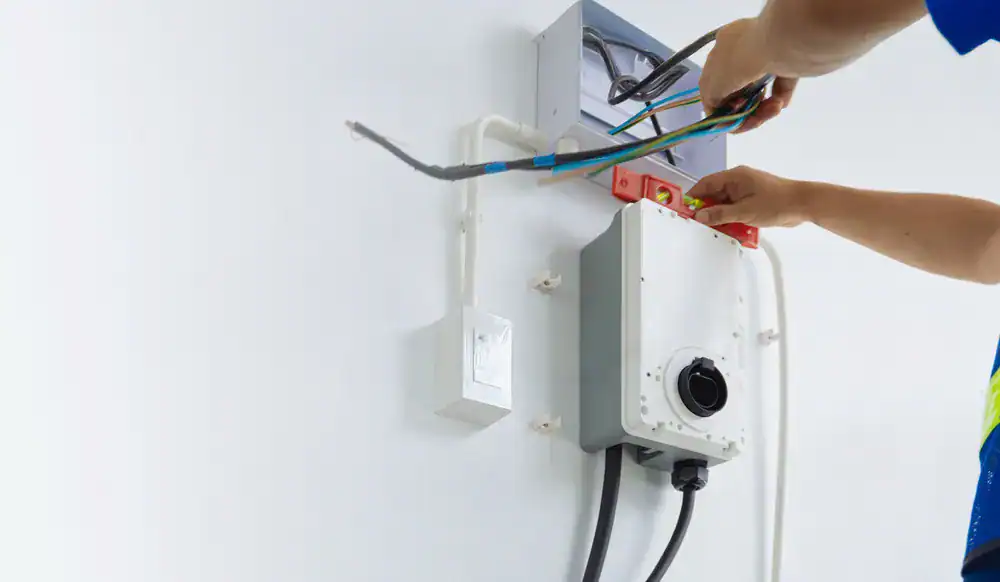
Tesla’s own Wall Connector is the most recognized home charging option for a reason. The Gen 3 Wall Connector delivers up to 48 amps and adds up to 44 miles of range per hour — a significant jump from the roughly 3 miles per hour you’d get from a standard 120-volt outlet. It’s purpose-built for Tesla vehicles, uses the NACS connector, and comes with a four-year residential warranty and a 24-foot cable.
But Tesla also makes the Universal Wall Connector, released in 2024, which adds a built-in J1772 adapter. That means it works with any North American EV — not just Teslas. Same 48-amp output. Same 44 miles of range per hour. The difference is flexibility.
Then there’s the broader category of universal Level 2 chargers from third-party brands. These use the J1772 connector standard, work with virtually every EV on the market, and are available at a range of price points and amperage levels. For a household that only owns a Tesla and plans to keep it that way, the original Wall Connector does the job. For households with two cars, different brands, or any uncertainty about what comes next, the conversation gets more nuanced.

This is the question that trips up a lot of buyers, and the answer has changed recently. The original Gen 3 Tesla Wall Connector uses the NACS connector — which works with Tesla vehicles and other EVs that have adopted the NACS standard, a growing list as major automakers shift over. But it does not natively work with older EVs or vehicles still using the J1772 connector without a separate adapter.
The Tesla Universal Wall Connector solves this by building the J1772 adapter directly into the unit. You don’t need to buy anything extra or keep track of a separate piece of hardware. It auto-senses which connector type is in use and adjusts accordingly. If your household runs a Tesla and a Rivian, or a Tesla today and something else in three years, the Universal Wall Connector handles that without any retrofitting.
This matters more in Tarrant County than some markets because households in Southlake, Keller, and Colleyville tend to run two or more vehicles. When one of those becomes an EV — and then another one does — the charger you installed for your Model Y needs to work for whatever comes next. The NACS connector is becoming the North American standard, but the transition isn’t complete, and not every EV in a two-car garage will be NACS-equipped.
There’s also a power-sharing feature worth knowing about. Up to six Tesla Wall Connectors can be linked together on a single installation to share available power across multiple charging points. For a household planning to electrify two vehicles over the next few years, that’s worth factoring into the initial installation design rather than treating it as a future add-on.
The bottom line: if your household is, and will always be, Tesla-only, the Gen 3 Wall Connector is a clean, capable solution. If there’s any real-world chance you’ll charge a non-Tesla EV at home, the Universal Wall Connector or a quality third-party Level 2 charger is the smarter long-term call.
One of the clearest arguments for home charging over public Superchargers isn’t about convenience — it’s about what you’re paying per charge. At a public Supercharger, you’re typically paying $0.30 to $0.50 per kilowatt-hour. At home in Texas, most homeowners pay $0.10 to $0.15 per kilowatt-hour. Over the course of a year, that gap adds up fast.
To put a real number on it: home charging costs roughly $4.56 per full Tesla charge. Compare that to what you’d spend at a Supercharger for the same result, and you’re looking at a significant difference in your annual fuel costs — especially if you’re commuting daily on SH-114 into Las Colinas, running down to Fort Worth on I-35W, or making regular trips to DFW Airport on SH-121.
The installation itself runs $1,200 to $2,500 for most homes in Tarrant County — that’s equipment plus labor plus permit. Equipment typically lands between $350 and $600, and licensed electricians in the DFW market bill at $100 to $150 per hour. If your panel needs an upgrade before the charger can be installed safely, that adds $1,500 to $3,000 to the project. More on that in a moment.
One thing worth knowing about rebates: Oncor, which serves all of Tarrant County, offers rebates through the SmartCharge Texas program for residential EV charger installation — ranging from $250 to $1,200 depending on eligibility. That’s real money and worth checking before your installation date.
As for the federal tax credit, be careful with what you’ve read online. The 30C Alternative Fuel Vehicle Refueling Property Credit offers 30% of installation cost up to $1,000 — but it requires the property to be in a non-urban or low-income census tract. Most of Southlake, Keller, and Colleyville do not qualify. An honest contractor will tell you that upfront rather than let you budget around a credit you can’t claim.
Installing a Level 2 charger isn’t complicated when your home is ready for it. But “ready” means more than having a garage wall to mount it on. It means your electrical panel has the capacity to support a dedicated 240-volt circuit at 40 to 48 amps without overloading your existing load — and in Tarrant County, that’s not a given.
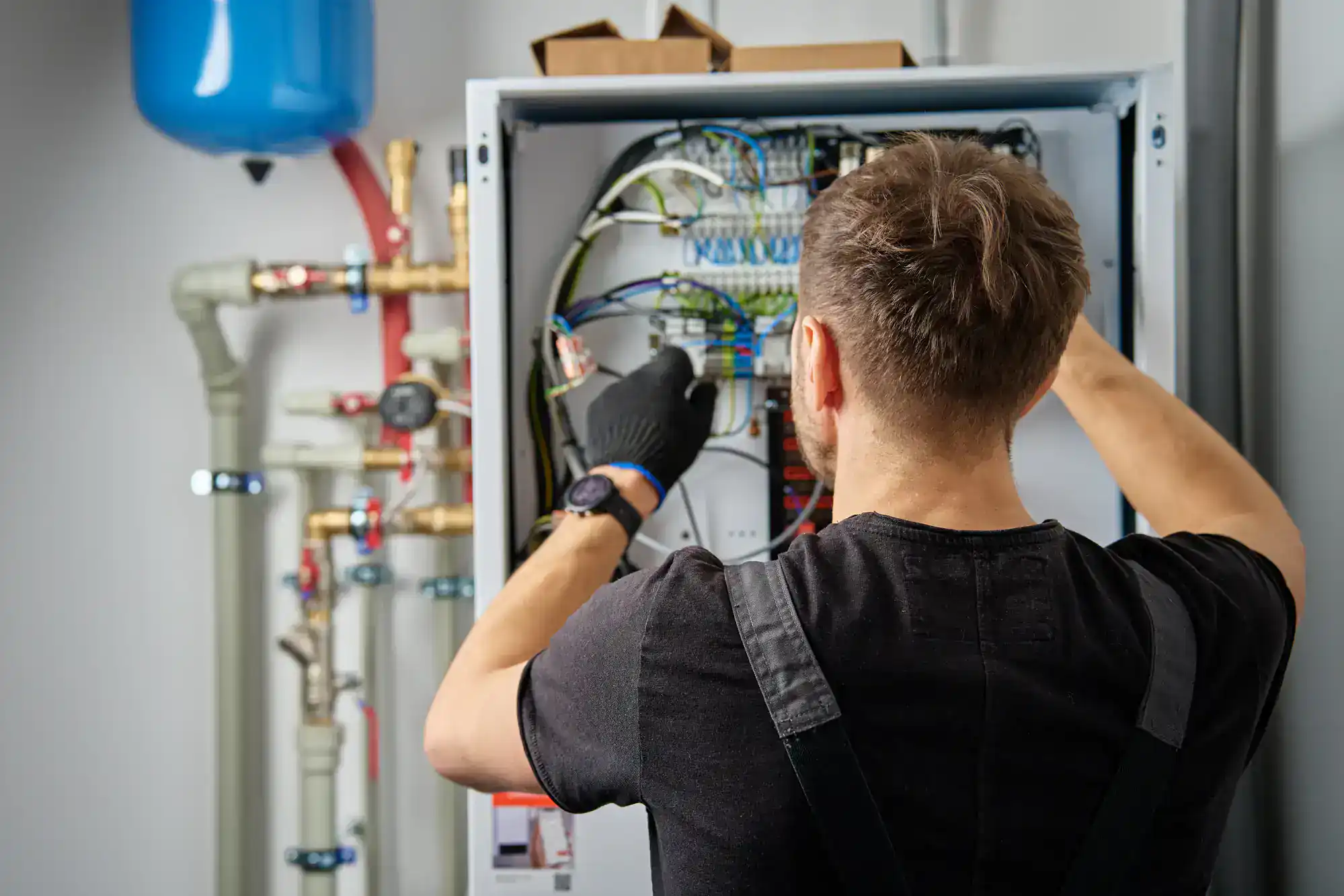
The installation process starts with an electrical panel assessment. From there, a licensed electrician installs a dedicated circuit, runs the appropriate wiring and conduit, mounts the charger in a weatherproof configuration if it’s outdoors, and connects everything to code. In Texas, all of this work requires a permit, and the permit requires a licensed electrician — specifically, a TDLR-licensed contractor — to perform and sign off on the work. After the installation, the city or municipality inspects it.

This is the question most homeowners don’t think to ask until they’re mid-project and facing an unexpected cost. Roughly one in four Texas homes need a panel upgrade before a 48-amp Level 2 charger can be safely installed. That number climbs significantly for homes built before 2000 — and a substantial portion of established neighborhoods in Keller and Colleyville fall squarely in that window.
Here’s why it matters: a 48-amp Level 2 charger requires a dedicated 60-amp circuit. If your panel is a 100-amp service — common in homes built through the 1990s — that single circuit represents a significant share of your total capacity. Add in the HVAC load during a Tarrant County summer, a full kitchen, and the rest of your home’s electrical demand, and the math often doesn’t work without an upgrade.
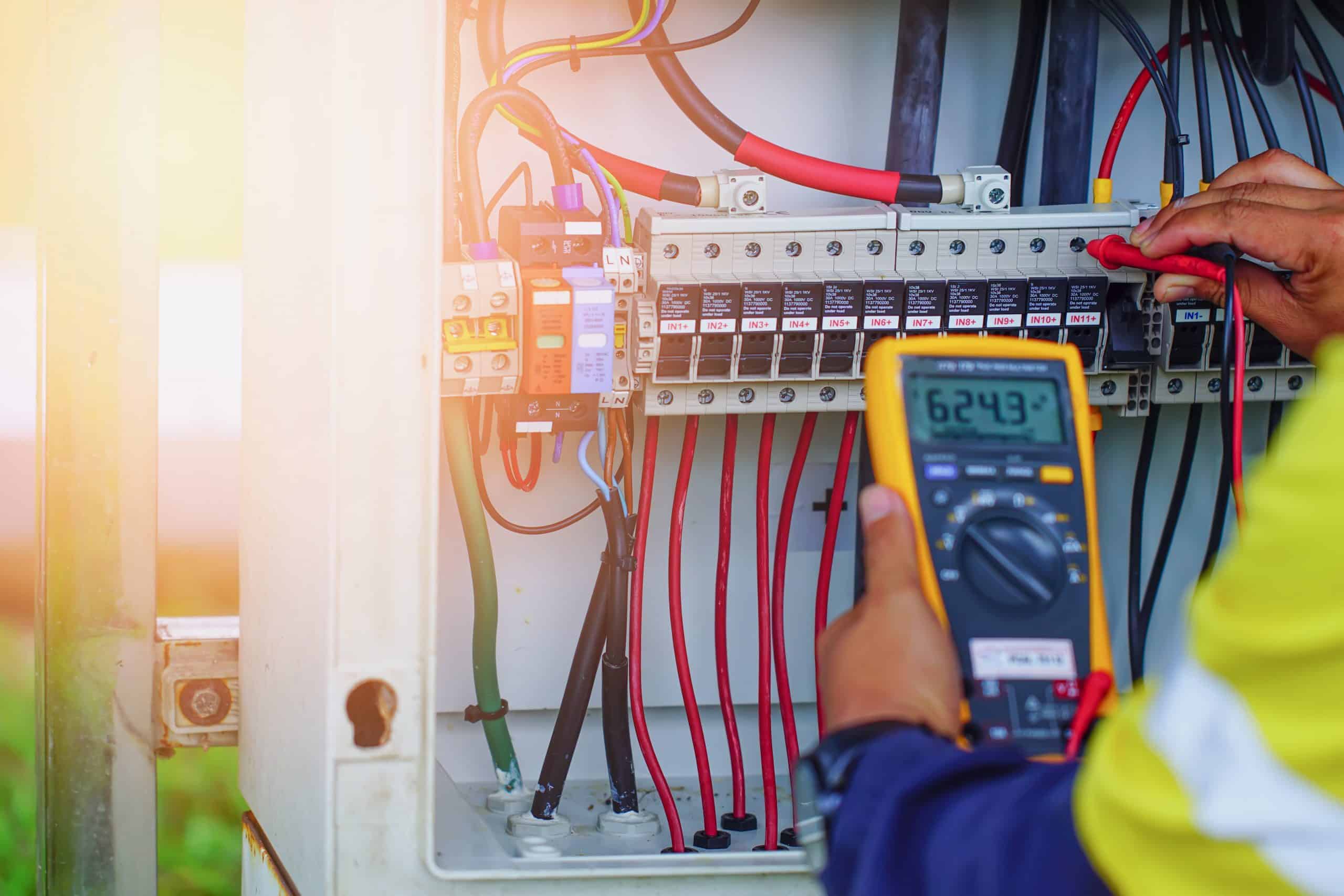
A proper panel assessment before installation isn’t an upsell — it’s the difference between a charger that works reliably and one that trips your breakers on a 105-degree afternoon in August when your AC is running at full capacity. A load calculation should be part of every EV charger installation quote. If a contractor skips it, that’s worth noting.
The good news is that a panel upgrade from 100 amps to 200 amps also future-proofs your home for whatever else comes next — a generator, additional HVAC zones, a second EV charger. Homes with 200-amp service are increasingly expected by buyers in the Southlake and Colleyville market, so the upgrade carries real long-term value even beyond the charger itself.
If your home was built after 2000 and you’ve already had a panel upgrade, you may be in good shape. But the only way to know for certain is a professional assessment — not an assumption.
In Texas, a permit is required for any new 240-volt circuit installation — which includes every Level 2 EV charger installation. Most municipalities throughout Tarrant County require the permit to be pulled before work begins, and the installation must pass a city or county inspection before it’s considered complete.
Texas law also requires the work to be performed by a TDLR-licensed electrician. This isn’t a technicality. An unlicensed installation is illegal, voids any utility rebate you might otherwise qualify for, and can create problems with your homeowner’s insurance and your home’s disclosure requirements when you eventually sell. The permit and the license requirement exist together for good reason.
The practical question is: who handles all of this? Some contractors install the charger and hand you a list of steps to complete on your own. Others pull the permit, coordinate the inspection, and handle the entire process from assessment to sign-off. For most homeowners in Keller, Southlake, and Colleyville — who are managing full schedules and don’t want to spend time navigating city permitting offices — the latter is the only version of the job that actually feels done.
We handle all permitting and inspections as part of every EV charger installation we do. That includes the panel assessment, the dedicated circuit installation, the weatherproof mounting if needed, the permit, and the post-installation testing. By the time we leave, the installation has passed inspection and you know exactly how to use it. No follow-up coordination on your end. No wondering whether it was done to code. The permit and the passing inspection are part of what you’re paying for — not an afterthought.
We hold Texas Electrical Contractor License TECL 25420, issued by TDLR, which is publicly verifiable. Every installation we do is backed by a warranty on both parts and labor — two to five years depending on the scope of the project. That covers the installation itself, not just the equipment manufacturer’s warranty.
The honest answer is: it depends on your panel, your household, and what you’re driving now versus what you might be driving in a few years. The Tesla Wall Connector is a strong choice for a Tesla-only household with a 200-amp panel and a straightforward install. The Universal Wall Connector or a quality third-party Level 2 charger makes more sense if there’s any chance your garage will eventually see a second EV that isn’t a Tesla.
What doesn’t change regardless of which charger you choose is the installation itself. A dedicated circuit, a proper load calculation, a pulled permit, and a passed inspection — those aren’t optional, and they’re not interchangeable with a faster, cheaper alternative.
If you’re in Keller, Southlake, Colleyville, or anywhere else in Tarrant County and you’re ready to stop guessing, Carroll Service Co is based right here in Keller and has been doing this work in DFW for over 25 years. Give us a call — we’ll start with an honest assessment of what your home actually needs, and go from there.
Article details:
Share:
Continue learning: