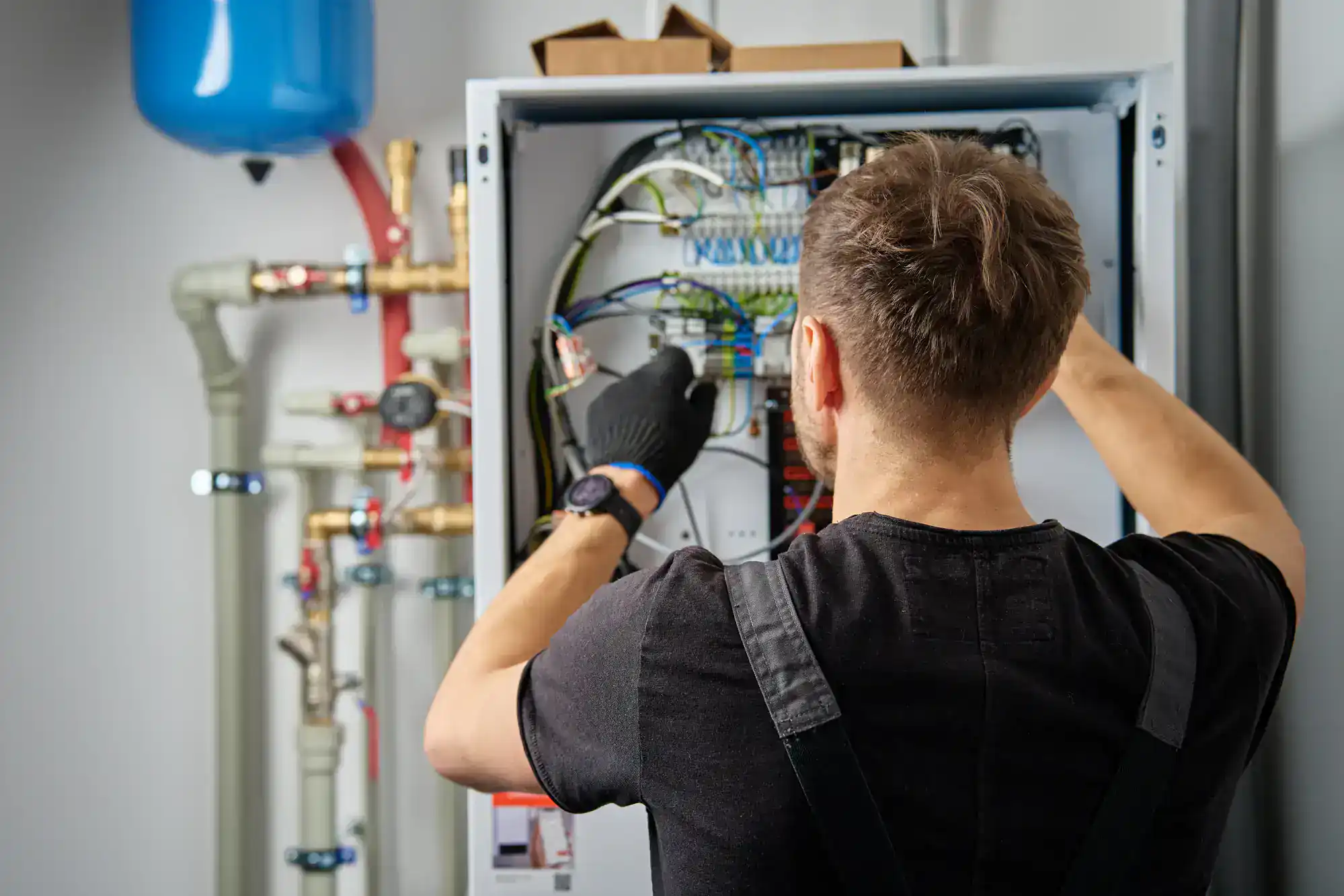
What rooms actually need GFCI outlets, what does installation cost, and when should you stop resetting and call a licensed electrician? Here's what Tarrant County homeowners need to know.
Share:

Summary:
A GFCI outlet that keeps tripping is annoying. One that’s wired incorrectly — and looks completely fine — is something else entirely. Most homeowners in Tarrant County don’t realize there’s a difference, and that gap is exactly where electrical safety problems hide.
Whether your home inspector flagged missing GFCI protection, you’ve got an outlet that won’t stop tripping, or you’re trying to figure out what’s actually required before a kitchen or garage renovation, we’ve got straight answers for you. What the code says, what it costs, what to watch out for, and when it makes sense to call in a licensed electrician rather than reach for a YouTube tutorial.
The National Electrical Code gets updated every three years, and the 2023 edition made some of the most significant changes to GFCI requirements in decades. If your home passed inspection in 2012 or even 2018, it may no longer meet current standards — not because anything broke, but because the rules expanded.
Understanding where GFCI protection is now required matters when you’re selling a home, pulling a permit for a remodel, or trying to understand why an inspector is asking for upgrades on a house that feels perfectly fine.

The traditional answer used to be bathrooms and kitchen countertops. That answer is now outdated. Under the 2023 NEC — which governs electrical work in Tarrant County municipalities including Fort Worth, Arlington, Euless, Bedford, Hurst, and North Richland Hills — GFCI protection is required in a significantly broader set of locations.
All kitchen receptacles now require GFCI protection, not just the ones near countertops. That’s a meaningful change. Previous code focused on receptacle placement relative to the sink; the 2023 update extends protection to the entire kitchen regardless of where outlets are positioned.
On top of that, specific appliances now require GFCI protection even when they’re on dedicated circuits — refrigerators, dishwashers, microwaves, wall ovens, and clothes dryers are all included under the expanded Section 210.8 requirements.
Outdoors, the 2023 NEC requires GFCI protection for all receptacles supplied by single-phase branch circuits rated 150 volts or less to ground and 50 amperes or less. If you have a patio outlet, a side-yard receptacle, or anything feeding an outdoor kitchen setup, it needs to be on a GFCI-protected circuit. Tarrant County’s summers push outdoor electrical use hard — patio fans, string lights, power tools, outdoor refrigerators — and the region’s heat and UV exposure accelerate wear on those outlets faster than most homeowners expect.
Basements, garages, crawl spaces, and boathouses have been on the GFCI list for years, but the 2023 code formalized and expanded those requirements as well. The total number of required GFCI locations in a dwelling unit increased from 11 to 12 with the 2023 update. For older homes in Fort Worth’s established neighborhoods — Fairmount, Ryan Place, Meadowbrook — where the electrical system hasn’t been touched in 20 or 30 years, that list of required locations can add up quickly.
One more change worth noting: the 2023 NEC replaced the term “ground-fault circuit-interrupter” with “listed Class A GFCI” in official code language. That’s mostly relevant if you’re reading permit documentation, but it’s worth knowing if you see that terminology on an inspection report.
Here’s the part most people don’t know, and it’s the most important thing on this page. A GFCI outlet can be installed in the wrong configuration and still appear to work perfectly. The test button responds. The reset button clicks. The outlet powers your appliances. And it provides absolutely no ground fault protection whatsoever.
This happens when the outlet is wired to the LOAD terminals instead of the LINE terminals. Every GFCI receptacle has two sets of terminals — LINE, which connects to the incoming power from the panel, and LOAD, which extends protection downstream to other outlets on the same circuit. If the wires going into the outlet are connected to LOAD instead of LINE, the GFCI’s internal protection mechanism is bypassed. The outlet functions as a regular receptacle. The test and reset buttons still operate mechanically. But the circuit interrupter never activates, because it’s never actually in the circuit.
This is the most common GFCI wiring error among DIYers, and it’s invisible without a proper outlet tester. You can’t detect it by pressing the test button. You can’t detect it by plugging something in. The only way to verify correct wiring is with a dedicated outlet tester that checks for this specific condition.
In Tarrant County’s 1980s and 1990s suburban housing stock — the kind of homes common throughout Euless, Bedford, Hurst, and North Richland Hills — GFCI outlets were often installed during renovations or by previous owners without professional oversight. Many of those outlets have never been tested properly. If your home is in that era and you haven’t had a licensed electrician verify your GFCI wiring, there’s a real chance you have outlets that look compliant but aren’t doing their job.
GFCI outlets also have a finite lifespan. Most manufacturers rate them for 7 to 15 years depending on usage and environment. An original GFCI outlet installed in 2005 is approaching the end of that range. One installed in 1998 is past it. Outdoor outlets in Tarrant County — exposed to 100-degree summers, UV radiation, and the occasional severe thunderstorm — tend toward the shorter end of that lifespan.
Cost is usually the first practical question, and the honest answer is that it depends on what you’re actually dealing with. A straightforward outlet replacement in a bathroom or kitchen is a different job than running new wiring to an outdoor location or upgrading a garage circuit to support an EV charger.
What the research consistently shows is that labor makes up roughly 70 to 80 percent of the total cost on GFCI work. The outlet itself is inexpensive. What you’re paying for is a licensed electrician’s time, expertise, and the warranty that comes with professional installation.
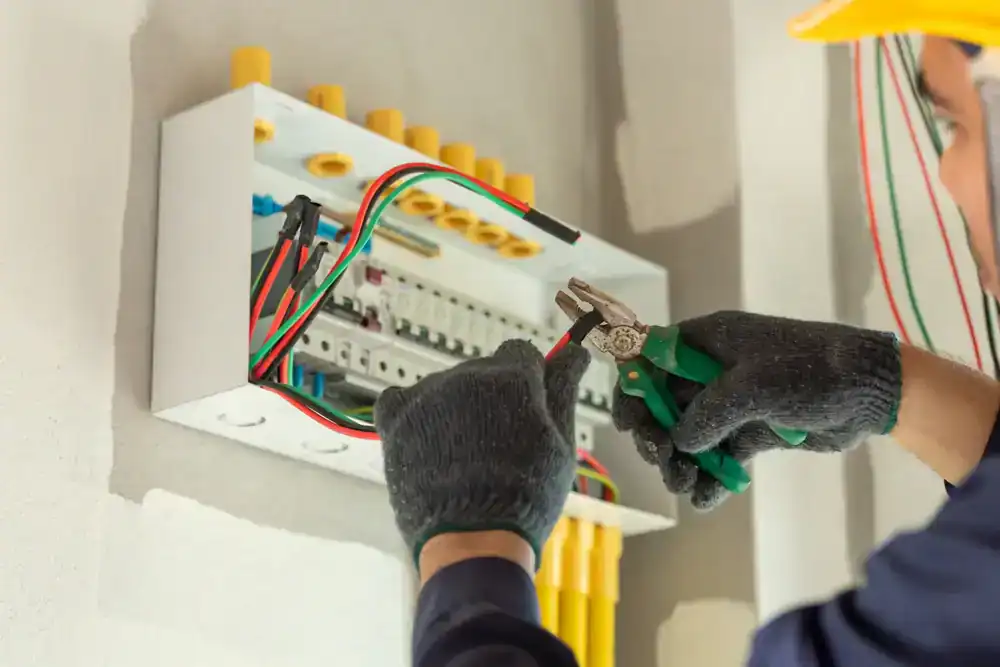
For a straightforward GFCI outlet replacement — swapping an existing outlet for a new GFCI receptacle in a location that already has wiring — the range is $90 to $200 per outlet, including parts and labor. A single indoor installation averages around $210. That’s for a licensed electrician, not a handyman, and it includes proper testing after installation.
New installations that require running wire to a location that doesn’t currently have an outlet cost more. Outdoor GFCI installations, which often involve longer wire runs, weatherproof covers, and in-use enclosures, typically range from $300 to $1,400 depending on how far the circuit needs to extend. New wiring runs cost approximately $27 per linear foot, and a full project involving new wiring usually lands between $500 and $1,200.
If you have multiple outlets that need replacement or installation, doing them in a single visit is significantly more cost-effective than scheduling separate trips. The service call fee is fixed regardless of how many outlets are addressed. If your home has aging GFCI outlets throughout the kitchen, bathrooms, and garage — which is common in Tarrant County homes built in the late 1990s — handling them all at once is the smarter financial move.
Electrician labor rates in the DFW area generally run $50 to $150 per hour, though most reputable contractors price GFCI work by the job rather than by the hour. That’s worth asking about upfront. A job-based quote gives you a fixed number before work begins; an hourly quote leaves the final cost open-ended.
In Tarrant County’s active real estate market, GFCI deficiencies are one of the most consistently flagged items on home inspection reports. Lenders often require these to be corrected before closing. Sellers who discover GFCI issues mid-transaction need a licensed electrician quickly — not in two weeks, but within days.
If you’ve received an inspection report flagging GFCI outlets, the path forward is straightforward: get a licensed electrician to assess the flagged locations, confirm what’s actually required under current code, and complete the work with documentation. That documentation matters because it gives the buyer, their lender, and the title company confirmation that the work was done properly by a licensed contractor.
A home electrical inspection — separate from a buyer’s home inspection — is also worth considering if you’re planning to sell and want to get ahead of these issues before listing. A licensed electrician can walk through your home, identify GFCI compliance gaps, check for the LINE/LOAD wiring error described above, and assess the overall condition of your outlets and panel. For homes in Fort Worth’s older neighborhoods or in the Mid-Cities suburbs built in the 1980s and 1990s, that kind of proactive electrical safety inspection often surfaces problems that would otherwise derail a sale.
There’s also a practical connection to EV charger installation worth mentioning here. Homeowners installing a Level 2 charger in their garage frequently discover during that project that their garage circuits don’t meet current GFCI requirements. Addressing GFCI compliance at the same time as the charger installation — rather than as a separate trip — is the efficient approach. If you’re planning a home charging setup and haven’t had your garage electrical assessed, that’s worth factoring into the project scope from the start.
We hold Texas Electrical Contractor License TECL 25420, which is publicly verifiable through the Texas Department of Licensing and Regulation. Every job we complete is backed by a warranty on both parts and labor, and we price work upfront with no hidden fees. Our discounted service call fee is $75 — half the standard rate — and we’re available for same-day service when the situation calls for it.
If your GFCI outlet keeps tripping, the answer isn’t to keep resetting it. Repeated tripping means the outlet is detecting a real ground fault condition — a wiring problem, moisture intrusion, or a failing appliance. Ignoring it doesn’t make the underlying issue go away.
If you’re not sure whether your existing GFCI outlets are wired correctly, the safest assumption for any home that hasn’t been professionally inspected is that they haven’t been tested. The LINE/LOAD wiring error is common enough that it’s worth verifying, especially in homes where previous owners did their own electrical work.
And if you’re dealing with a home inspection report, a garage upgrade for an EV charger, or a kitchen renovation that triggers code compliance questions, those are exactly the situations where having a licensed electrician involved from the beginning saves time, money, and headaches. Carroll Service Co. has been doing this work across Tarrant County since 1999 — reach out and we’ll give you a straight answer on what your home actually needs.
Article details:
Share:
Continue learning: