Tarrant County winters can turn dangerous fast. Here's how to know if your standby generator is actually ready — and what to do if it isn't.
Share:

Summary:
Most Tarrant County homeowners who went through Winter Storm Uri in February 2021 said the same thing afterward: never again. Five days without power in subfreezing temperatures has a way of making backup power feel less like a luxury and more like a basic necessity. If you already have a standby generator, the question isn’t whether you made the right call — it’s whether that unit will actually start when you need it. And if you’re still planning to get one, fall is the window that matters. Here’s what you need to know on both fronts.
A home standby generator is a permanently installed unit, mounted outside your house on a concrete pad, connected to your natural gas line and your electrical panel through an automatic transfer switch. When the power goes out, the transfer switch detects it and starts the generator automatically — typically within 10 to 30 seconds. Your lights stay on, your heat keeps running, and your refrigerator doesn’t skip a beat. You don’t have to do anything.
That’s the critical difference between a standby system and a portable generator. Portable units require you to go outside, pull-start an engine, run extension cords, and store gasoline — which, during Uri, was nearly impossible to find once every station in the Tarrant County area lost power too. Standby generators run on natural gas, which means they draw from the same line that feeds your stove and water heater. As long as gas service holds, they run indefinitely.

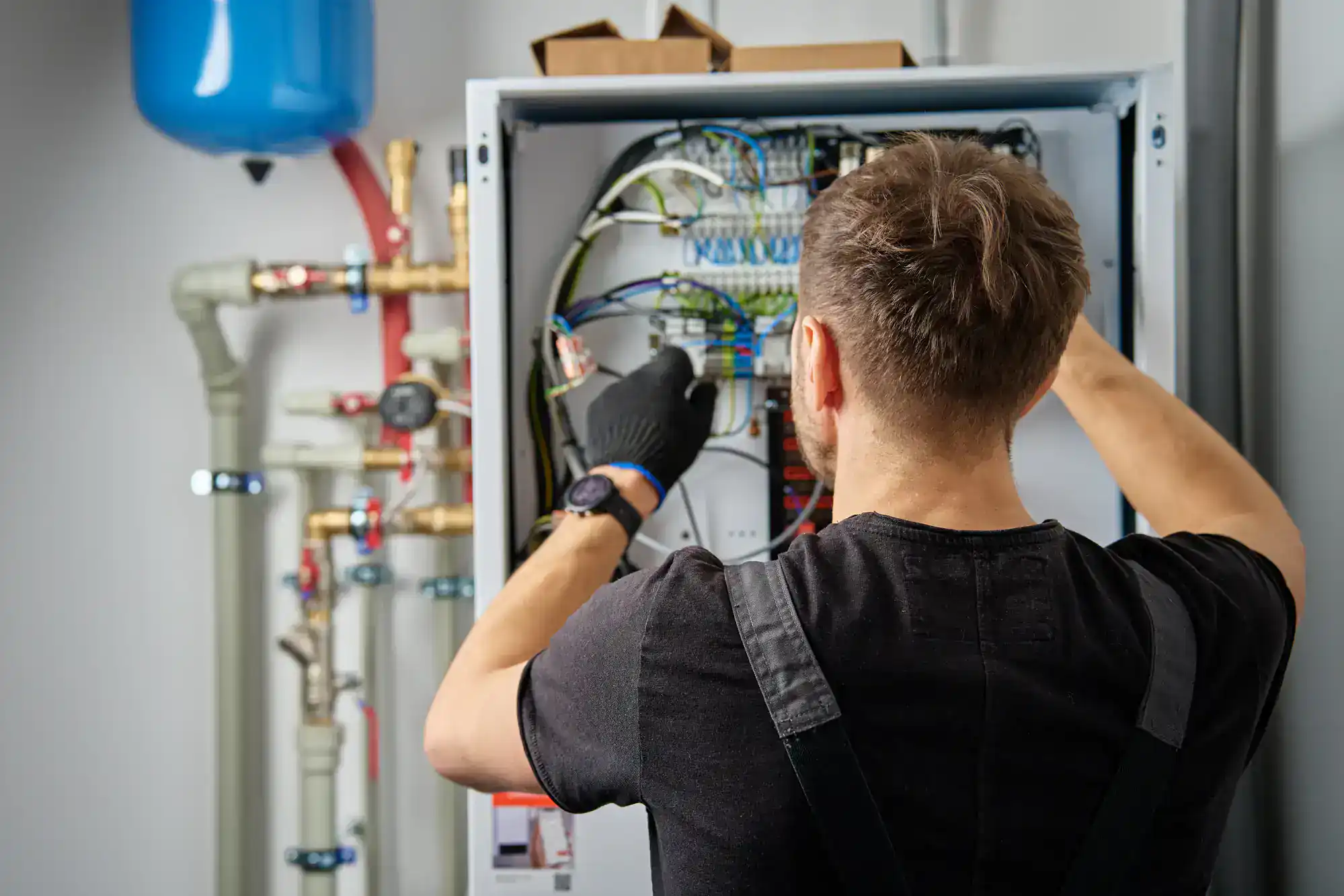
The automatic transfer switch is the component most homeowners don’t think about until something goes wrong. It sits between your electrical panel and the utility line, monitoring incoming power around the clock. The moment it detects an outage, it isolates your home from the grid — which is critical for the safety of utility workers restoring power — and simultaneously signals the generator to start.
Once the generator reaches stable output, the transfer switch routes power from the generator through your panel. When utility power comes back, the process reverses: the switch transfers your home back to the grid, the generator runs for a short cool-down period, and then it shuts itself off.
This sequence is worth understanding because it’s also where problems can develop in a generator that hasn’t been properly maintained. If the transfer switch has a wiring issue, a corroded connection, or a component that’s worn out from sitting idle, the generator may start but fail to actually power your home. We’ve seen this happen — the unit cranks, it runs, and the homeowner has no idea the house is still dark until they walk inside.
Modern standby generators also run a self-test cycle, typically about 12 minutes once a week. This automated exercise keeps the engine seals lubricated, charges the battery, and gives the unit a chance to surface any performance issues before an actual outage. If your generator has been sitting without running its exercise cycle — or if you’ve disabled it — that’s the first thing to check heading into fall.
The other thing worth knowing: the transfer switch is sized to match the generator and the load it’s supporting. An undersized transfer switch, or one that was installed without a proper load calculation, can trip or fail under real-world demand. That’s why the installation matters as much as the equipment itself.
Not all standby generators are set up the same way, and understanding which configuration you have changes what you can expect during an outage. Some systems are wired to power the entire home — every circuit, every appliance, including central air and heat. Others are connected only to a critical load panel, which covers a selected set of essential circuits: the furnace, the refrigerator, a few outlets, and maybe the water heater. Both are legitimate setups, but they serve different expectations.
A whole-home system typically requires a generator in the 20 to 24 kilowatt range for a standard 2,000 square foot house in Tarrant County. That’s enough to run central HVAC, lighting, kitchen appliances, and everything else simultaneously. An essential-circuit setup can work with a smaller unit, but if you flip on the wrong combination of appliances during an outage, you can overload it.
If you’re not sure which setup you have, the clearest way to find out is to pull up the documentation from your original installation — or have a licensed electrician review the transfer switch and panel connection. What you don’t want is to assume you have whole-home coverage, lose power during a January freeze, and discover your HVAC isn’t on the generator circuit.
For homeowners who are still deciding between the two configurations, the honest answer is that it depends on your home’s gas and electrical infrastructure, your panel capacity, and your budget. Essential-circuit systems installed in Tarrant County typically start around $8,000 to $10,000 all-in. Whole-home systems capable of running everything, including air conditioning and heat, generally run $12,000 to $15,000 installed. If your home needs gas line work or a panel upgrade as part of the project, costs can go higher — which is worth knowing upfront rather than after the fact.
One of the most common questions we hear is what the price actually includes. Generator installation isn’t just dropping a unit in the yard and flipping a switch. A proper installation involves a site evaluation to determine the best placement, a gas line connection, electrical panel work, automatic transfer switch installation, a concrete pad, permit pulling, city inspections, and final testing that simulates an actual outage to confirm the full start-transfer-shutdown sequence works correctly.
In Tarrant County, that complete process typically takes one to two days of active work once the equipment is on-site. But from the time you schedule a consultation to the day the system is fully operational, the realistic timeline is two to four weeks — accounting for permits, equipment delivery, and scheduling. That’s not a contractor padding the calendar. That’s just how the permitting and logistics process works.
The installed cost range of $8,000 to $15,000 covers most residential standby generator projects in Tarrant County, but several factors can move the number in either direction. Generator size is the most obvious variable — a 20 kW unit costs more than a 14 kW unit, and the right size depends on a load calculation, not just your home’s square footage.
The brands we install — Generac, Kohler, and Cummins — each have different price points and performance profiles, and we can walk you through the tradeoffs based on your specific setup.
Gas line work is another factor. If your existing gas line doesn’t reach the planned installation site, or if the line needs to be upsized to support the generator’s fuel demand, that adds to the project scope. The same applies to your electrical panel. Older Tarrant County homes — particularly those built before 1990 — sometimes have 100-amp panels that need to be upgraded to 200-amp service before a generator connection makes sense. We handle panel upgrades in-house, so that work doesn’t require a separate contractor or a separate contract.
Permits are not optional in Tarrant County, and any installer who tells you otherwise is cutting a corner that will eventually cost you. We pull permits, coordinate inspections, and make sure everything is code-compliant before we call a job complete. That’s not extra — it’s part of what a licensed installation looks like. It’s also what protects your homeowner’s insurance coverage and ensures the work holds up if you ever sell the home.
One thing worth knowing: a permanently installed standby generator adds an average of 3% to 5% to your home’s value. In the Keller, Southlake, and Colleyville real estate market, that’s a meaningful return on a system that also happens to keep your family warm when the grid fails.
Here’s the part most people don’t think about until it’s too late: you cannot order a standby generator the week before a freeze and expect to be protected. The two-to-four week timeline from consultation to completed installation is real, and it doesn’t compress when demand spikes. If anything, it stretches — because every other homeowner in Tarrant County who waited too long is calling at the same time.
During Winter Storm Uri, Tarrant County experienced 4,458,126 customer power outage hours — more than any other county in the DFW metro area. The entire tri-county area of Tarrant, Dallas, and Collin counties combined logged nearly 9.7 million outage hours during the onset of that storm alone. That’s not ancient history. It’s five years ago, and the Texas grid — while improved — is carrying more demand than ever as data centers and continued population growth push ERCOT closer to its limits each year.
The homeowners who are protected this winter are the ones who start the process in September or October. Not because there’s an artificial deadline, but because the math is simple: a consultation in late September, permits submitted in early October, equipment delivered mid-October, installation complete by early November. That’s the sequence that has you covered before the first hard freeze warning rolls across your weather app.
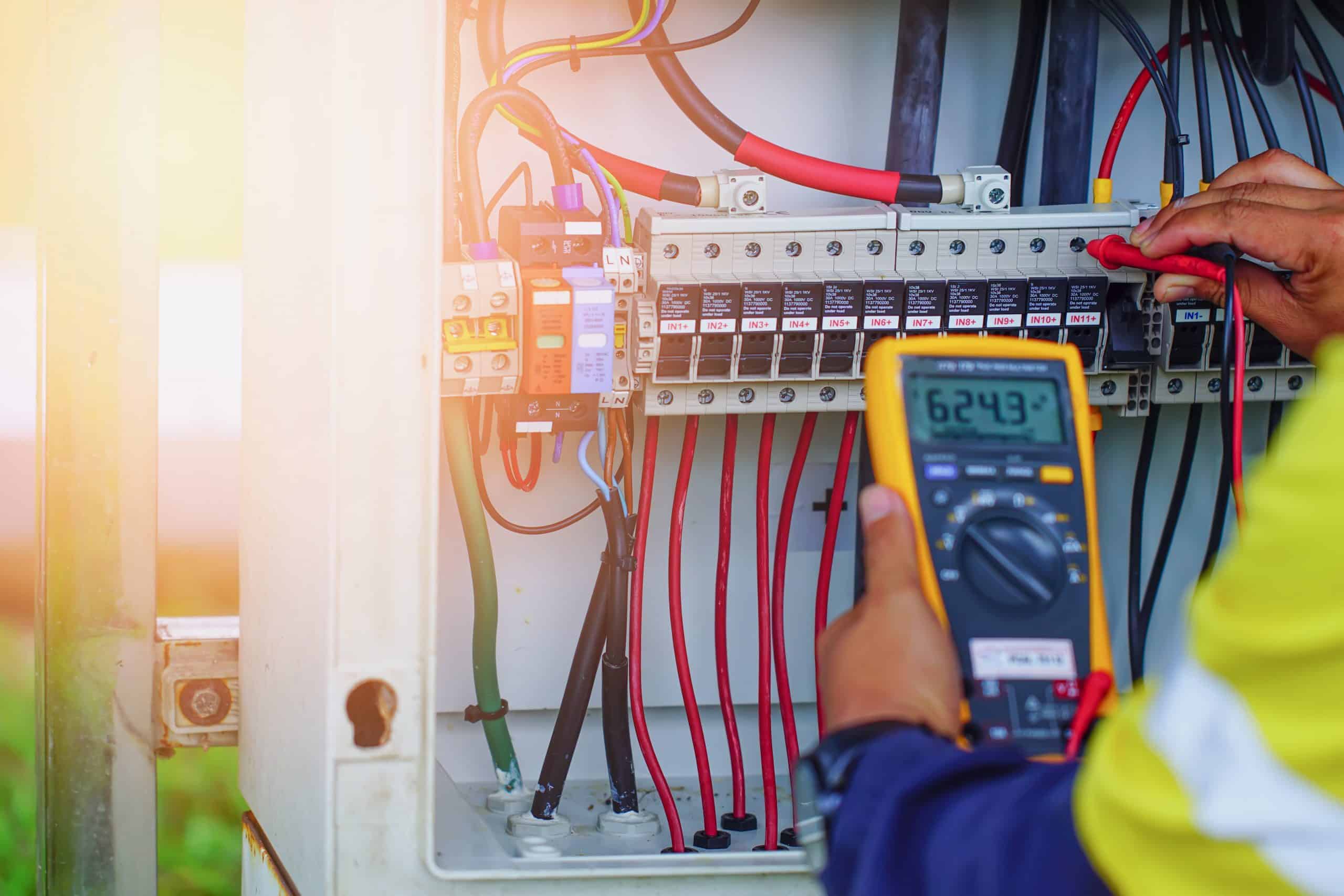
If you already have a generator and you’re not sure it’s ready, fall is also the time to schedule a service check. Annual maintenance — oil, filters, battery, and a full operational test — is the difference between a generator that starts when you need it and one that cranks and stalls at 2 a.m. on a January night when it’s 18 degrees outside. Generators should be serviced every 200 operating hours or at least once per year, whichever comes first.
The weekly exercise cycle your generator runs is a good sign, but it’s not a substitute for professional servicing. A 12-minute self-test tells you the engine starts. It doesn’t tell you the oil is clean, the battery has sufficient cold-cranking amps, or that the transfer switch is operating within spec. Those things require eyes on the unit.
Whether you’re still planning your first standby generator installation or you want to make sure the one you have will actually perform, the time to act is before the first freeze warning — not during it. The lead time is real, the permitting process takes time, and the demand spike that follows every major weather event means availability tightens fast.
We’ve been serving Tarrant County homeowners for over 25 years, and we’ve seen what happens to families who waited one season too long. We’re a second-generation, family-owned electrical contractor based in Keller, TX, fully licensed under Texas Electrical Contractor License TECL 25420, and we handle everything in-house — the generator, the transfer switch, the gas line, the panel upgrade if needed, and all permits and inspections. No subcontractors, no surprises, and no hidden fees.
If you’re ready to get a straight answer on what your home actually needs, reach out to Carroll Service Co. We’ll start with a site evaluation, give you a written estimate before any work begins, and get you on the schedule while there’s still time to be protected this winter.
Article details:
Share:
Continue learning: