Everything Tarrant County homeowners need to know before installing a whole-home standby generator — from sizing and fuel to permits and panels.
Share:
Summary:
Most homeowners in Tarrant County don’t start thinking seriously about backup generators until after something goes wrong. A three-day outage in February. A week of triple-digit heat with rolling blackouts. A freezer full of food you had to throw out. You tell yourself you’ll look into it when things calm down — and then life moves on until the next storm rolls through.
If that sounds familiar, you’re not behind. But there’s a lot of noise out there about generators, and most of it isn’t written with North Texas in mind. This guide is. Here’s what you actually need to know before you make a decision.
A home backup generator is a permanently installed power system that kicks on automatically when your utility power goes out. Unlike a portable unit you’d pull out of the garage and run extension cords from, a standby generator is wired directly into your home’s electrical system through an automatic transfer switch. The moment it detects a loss of power from Oncor, it starts the engine and restores power to your home — usually within seconds.
Most residential standby generators run on natural gas or propane. For homes with Atmos Energy natural gas service, which covers most of Tarrant County, a natural gas generator connects directly to your existing gas line. That means no fuel storage, no running out during a prolonged outage, and no trips to a gas station when every other neighbor is in line for the same can of fuel.
This is the question we hear most often, and it’s worth being honest about. Portable generators are cheaper upfront — entry-level units start around $450 — and they can power a few essentials in a pinch. But the limitations are real, especially in a Texas weather event.
With a portable unit, you have to be home when the power goes out. You have to pull it out of storage, add fuel, start the engine manually, and run extension cords to whatever you want to power. During Winter Storm Uri, gasoline was nearly impossible to find across Tarrant County. People were stranded without heat, not because they didn’t have a generator, but because they couldn’t fuel it.
A standby generator changes that equation entirely. It doesn’t require you to do anything. It monitors your power supply around the clock and responds on its own. Your HVAC keeps running. Your refrigerator stays cold. If you have a family member who depends on medical equipment — a CPAP machine, an oxygen concentrator, insulin that needs refrigeration — that continuity isn’t a convenience. It’s a necessity.
Consumer Reports describes home standby generators as “the gold standard in backup power,” and their testing backs that up. The tradeoff is cost. A standby generator unit typically runs $2,000 to $7,000 before installation, and installed costs for whole-home systems in Tarrant County generally range from $8,000 to $20,000 depending on the size of your home and the complexity of the installation. That’s a real number, and it deserves a real answer to the “is it worth it” question.
Here’s how most homeowners frame it: a single burst pipe from a winter freeze can cause more than $10,000 in water damage. A week in a hotel during a summer outage adds up fast. If you work from home, a lost day of productivity has a dollar value too. The generator’s cost spreads across years of protection. Whether it pencils out depends on your household, but the math is closer than most people expect.
This is the part most generator companies don’t tell you about upfront — and it’s one of the most important things to understand before you get a quote.
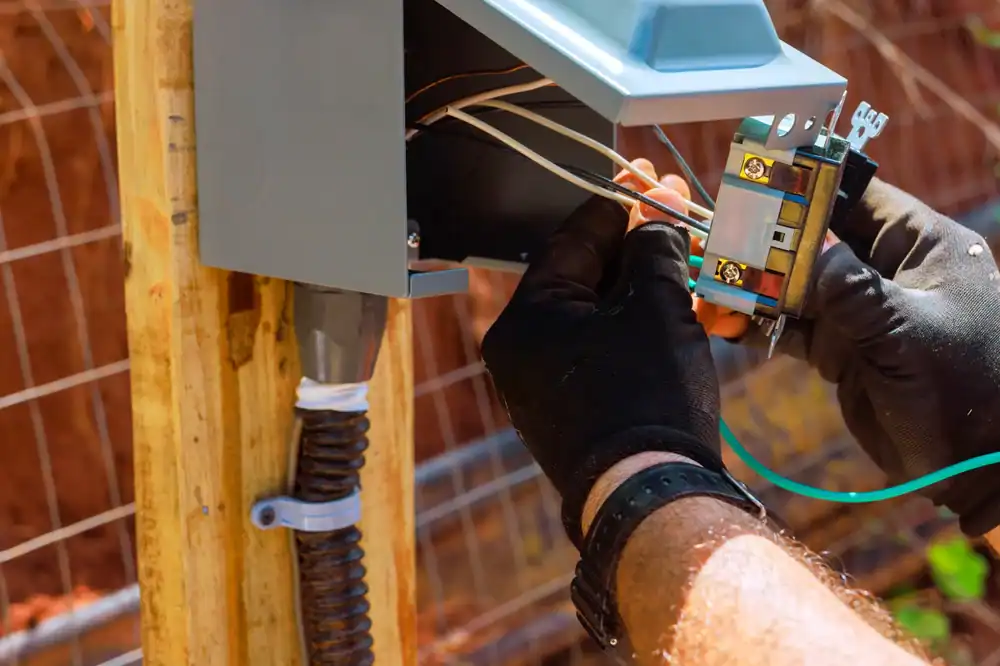
A whole-home standby generator connects to your electrical panel through an automatic transfer switch. That switch monitors incoming utility power and reroutes your home’s circuits to generator power during an outage. For that system to work safely and effectively, your panel needs to have the capacity to handle it.
Many homes in Fort Worth and the older neighborhoods throughout Tarrant County were built with 100-amp electrical service. That was standard for decades, but it wasn’t designed for the electrical loads most households carry today — multiple HVAC systems, EV chargers, home offices, large appliances, and smart home systems. When you add a whole-home generator to a panel that’s already running near capacity, you’re asking for problems.
We pay close attention to this during every generator consultation. If your panel is undersized, upgrading to 200-amp service before the generator installation isn’t just a recommendation — it’s often a requirement for the system to function correctly and pass inspection. The good news is that a panel upgrade and generator installation can typically be planned and permitted together, which reduces the overall disruption to your household.
If you’re in a newer home in Keller, Southlake, or Colleyville, you’re more likely to have a panel that’s already sized for modern demand. But even in newer construction, large homes with high electrical loads sometimes need a closer look before a generator can be properly sized. A professional load calculation — which we perform before recommending any system — takes all of this into account. There’s no guesswork, and there’s no oversizing a generator just to upsell you on equipment you don’t need.
One of the most common questions we get is simply: what am I signing up for? The installation process has more moving parts than most homeowners expect, and the timeline is longer than a typical electrical job — but it’s manageable when you know what’s coming.
From the initial consultation to a fully permitted, inspected, and operational system, most residential generator installations in Tarrant County take two to four weeks. The active installation work itself — the day your home is actually being worked on — typically takes one to two days. The rest of that window is permits, equipment delivery, and scheduling around weather and utility coordination.

In Texas, installing a standby generator requires a licensed electrical contractor. The Texas Department of Licensing and Regulation governs this work under the Texas Electrical Safety and Licensing Act, and the installation must comply with the National Electrical Code. Carroll Service Co holds Texas Electrical Contractor License TECL 25420 — a state-issued credential that’s publicly verifiable and legally required to perform this type of work.
Permits are not optional. An unpermitted generator installation can void your homeowner’s insurance, create liability problems if you sell your home, and leave you personally responsible for any code violations that surface later. We pull every required permit for every installation, and we coordinate directly with the relevant municipal inspectors so the work passes on the first visit.
For natural gas connections, we also coordinate with Atmos Energy on your behalf. Most homeowners don’t realize that connecting a generator to a natural gas line involves the utility, not just the electrician. We handle that communication, which means you’re not making calls to multiple companies or trying to schedule around multiple appointment windows.
The concrete pad for the generator unit, the automatic transfer switch wiring, the gas line connection, the permit applications, the final inspection — all of it is part of what we do. You don’t manage a single piece of paperwork. That’s just how a properly run installation works, and it’s what separates a system that holds up over time from one that creates headaches down the road.
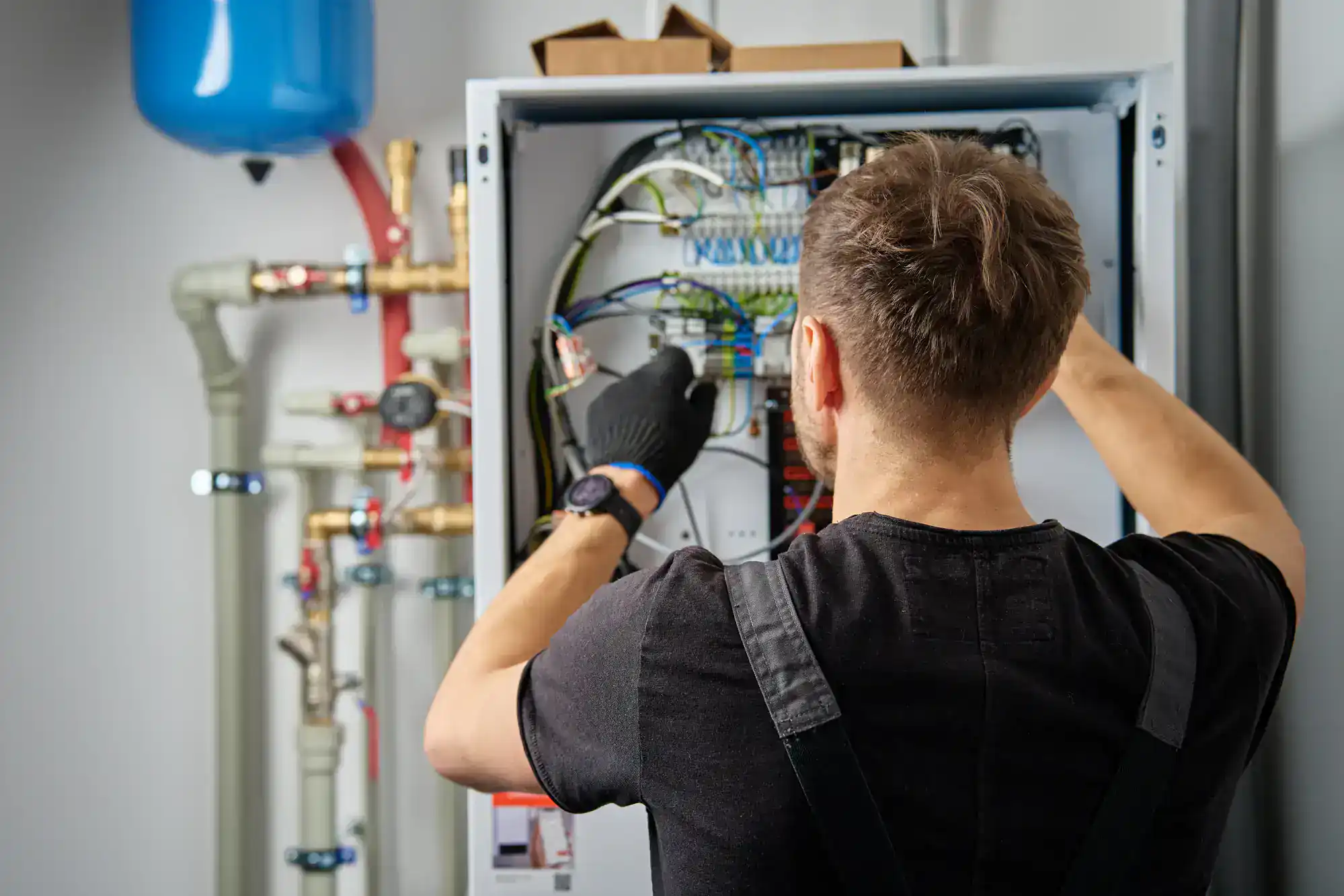
Before any generator goes in, we want to understand what we’re working with. A pre-installation electrical safety inspection is one of the most useful things you can do — not because it’s a formality, but because it gives you a clear picture of your home’s current electrical condition before you commit to a major installation.
In Tarrant County, we see a wide range of electrical infrastructure. Older neighborhoods in Fort Worth sometimes have wiring that was never updated after additions were built, or panels that were expanded piecemeal over the decades. Newer developments in Keller, Southlake, and Mansfield might have modern panels but circuits that are already loaded up. Neither situation is a dealbreaker, but both affect how a generator installation gets planned and priced.
An inspection also catches things that would otherwise surface mid-installation — things like a double-tapped breaker, an undersized neutral wire, or a grounding issue that needs to be resolved before the transfer switch can be properly installed. Finding those issues before the generator arrives on a truck is far better than finding them during the installation itself.
There’s another reason this step matters specifically in North Texas: the ERCOT grid is not going to get dramatically more reliable in the near term. Tarrant County currently ranks eighth among all 254 Texas counties for total power outages, and Oncor — the primary utility serving most of the county — has already implemented planned outages in some areas to upgrade aging infrastructure. If you’re investing in a backup power system, you want that system installed on an electrical foundation that’s actually ready for it. The inspection is how you confirm that.
We also use this visit to talk through generator sizing. A proper load calculation looks at your home’s actual electrical demand — not a rough estimate — and matches the generator output to what you need. An undersized generator overloads and shuts down when you need it most. An oversized one wastes fuel and money. Getting the sizing right from the start is one of the most important parts of the whole process, and it starts with understanding your home.
The 2021 freeze changed how a lot of Tarrant County homeowners think about grid reliability. If you’ve been meaning to look into a backup generator since then — or since the last time a summer storm left your neighborhood dark for three days — this is a reasonable time to stop waiting.
The process is more straightforward than most people expect when you work with someone who handles the permits, the utility coordination, and the inspection from start to finish. The harder part is usually understanding what your home actually needs before the generator gets ordered — which is why the conversation about your electrical panel matters as much as the conversation about the generator itself.
If you have questions or you’re ready to get a real assessment of your home’s setup, Carroll Service Co is based right here in Keller and has been doing this work throughout Tarrant County for over 25 years. Reach out and we’ll start with what your home actually needs — not what’s easiest to sell.
Article details:
Share:
Continue learning: