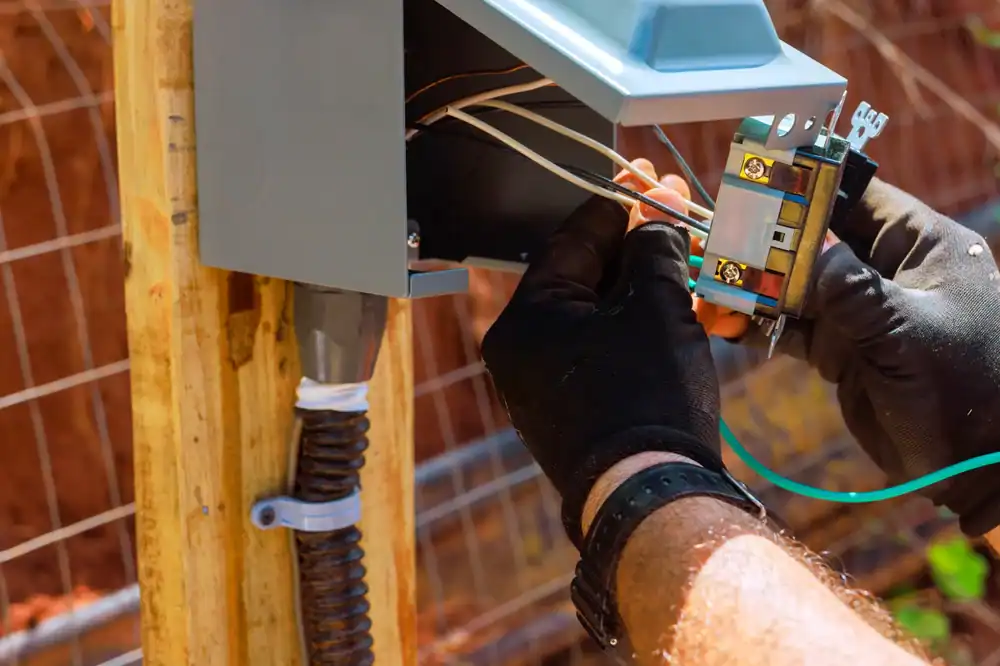
Thinking about a panel upgrade in Tarrant County? Here's what it actually costs, how the process works, and what to watch out for before you hire anyone.
Share:

Summary:
Most homeowners don’t think about their electrical panel until something forces them to. A breaker that won’t stop tripping. A new EV charger that the panel can’t support. An inspector who flags the box during a home sale. Whatever got you here, you’re probably looking for one thing nobody seems willing to give you: a straight answer on what this is going to cost and what the process actually looks like.
We’ve been installing electrical panels across Tarrant County since the late 1990s, and we hear the same frustrations constantly. So here’s the honest version — no filler, no runaround.
The national average for a new panel installation in 2024–2025 runs between $2,500 and $5,000, depending on the size of the panel, the complexity of the job, and what’s already in place. That’s a wide range, and it probably doesn’t tell you much about what you’ll actually pay in Tarrant County.
A 100-amp panel upgrade — common in older homes throughout Hurst, Euless, Bedford, and parts of Fort Worth that haven’t been touched since the 1980s — typically falls between $815 and $2,035. A 200-amp upgrade, which is what most modern Tarrant County homes need to comfortably run central HVAC, an EV charger, and today’s appliances, runs closer to $1,630 to $4,070.
Labor alone can account for $1,000 to $3,000 or more of that total, depending on how much work the existing wiring and service entrance require. Permits and the required inspection add roughly $150 to $300 on top of that — and yes, permits are required for this work in Tarrant County. We handle all of that.

Here’s what actually drives the cost up or down: the amperage you’re upgrading to, whether the service entrance needs to be replaced, how many circuits need to be moved or added, and whether there are any existing issues — like outdated wiring, a corroded meter base, or a panel that’s already been recalled — that need to be addressed before the new panel can go in.
Contractors who give you a number over the phone without seeing the panel are guessing. A real estimate requires someone to physically assess your current setup, run a load calculation, and account for what’s already there.
What a proper written estimate should include: the panel size and brand, the number of circuits, permit and inspection fees, labor, and any materials needed to bring the installation up to current code. If a quote doesn’t spell those things out, you’re comparing apples to unknowns when you shop around. We provide written, itemized quotes before any work begins — no surprises when the invoice arrives.
Homes in older Tarrant County neighborhoods like Ryan Place or the Mid-Cities corridor often have additional factors that affect cost — outdated wiring that needs to be brought up to code, or service entrances that haven’t been updated in decades. These aren’t reasons to panic, but they are reasons to have someone who knows this area’s housing stock take a look before quoting you a number.
A lot of panel upgrades aren’t driven by a failing panel — they’re driven by what the homeowner wants to add. Hot tub electrical installation is one of the most common triggers we see. A hot tub requires a dedicated 240-volt, 50 to 60-amp circuit, and most older panels simply don’t have the capacity or the available breaker slots to handle it safely.
The same applies to EV chargers, which need a dedicated 240-volt, 50-amp circuit of their own. If you’re adding both, you’re almost certainly looking at a panel upgrade before anything else can be connected.
High-efficiency HVAC systems, home additions, and smart home setups all add to the electrical load in ways that older 100-amp panels weren’t designed to handle. This is especially true in Tarrant County, where a significant portion of the housing stock was built between the 1970s and early 2000s — an era when 100-amp service was the standard and nobody was thinking about Level 2 chargers or whole-home automation.
The upgrade process itself isn’t as disruptive as most homeowners expect. A standard panel replacement typically takes four to eight hours from start to finish. Your power will be off during that window, but most jobs wrap up in a single day. We coordinate with Oncor for the utility disconnect and reconnect, pull the permit, schedule the inspection, and make sure everything passes before we consider the job done.
One add-on worth considering at the same time: a whole-home surge protector. An electrical panel surge protector installed at the service entrance protects every circuit in your home from voltage spikes — the kind that can come from lightning strikes, power line issues, or even large appliances cycling on and off. We offer the Powerworx Energy Management System, which can lower electric bills by up to 15% while also protecting your home’s electronics and appliances. It’s a natural pairing with a new panel, and it’s much easier to install during the same visit than to add later.
Not every panel problem requires a full replacement. Sometimes the issue is a single failing breaker, a loose connection, or a circuit that’s been overloaded by one specific appliance. Electrical service repair — fixing what’s there rather than replacing the whole panel — is absolutely the right call when the panel itself is sound and the problem is isolated.
The honest answer is that you won’t know which one you need until someone looks at it. We’re not in the business of recommending a full panel replacement when a repair will solve the problem.

There are situations where repair isn’t enough, and it’s worth knowing what they look like. If your panel is a Federal Pacific or Zinsco brand, replacement isn’t optional — these panels have known safety defects, they’ve been recalled, and most insurance companies in Texas won’t cover a home that still has one.
If your panel is more than 40 or 50 years old and has never been updated, it was designed for a fraction of today’s electrical load. Visible signs of overheating — scorch marks, a burning smell, breakers that feel warm to the touch — mean the panel needs to come out, not get patched.
Frequent tripping is worth paying attention to, but it’s not automatically a sign the panel is failing. Sometimes it means a specific circuit is overloaded, and redistributing the load or adding a circuit fixes the problem. Other times, especially in older homes throughout Tarrant County, it means the panel simply doesn’t have enough capacity for how the home is being used today. A proper load calculation tells you which situation you’re in.
The homes we see most often in this situation are in the older parts of Tarrant County — Hurst, Euless, Bedford, and parts of Fort Worth where the housing stock dates to the 1960s through 1980s. These homes were built well, but their electrical systems weren’t designed for modern life. We’ve also seen panels in newer homes that were undersized from the start, or that have had additions and outbuildings added over the years without the panel being updated to match.
Some panel problems don’t give you time to shop around. A panel that’s failed completely, a burning smell coming from the breaker box, or a situation where your insurance company has given you a deadline — these are emergencies, and they need to be treated like one.
We offer emergency electrical services with same-day response. When you’re worried about a potential fire in your walls, waiting three days for an appointment isn’t an option.
For Tarrant County homeowners dealing with an urgent panel situation, here’s what the process looks like: you call, we assess whether it’s a same-day emergency, and if it is, we get someone out to evaluate the panel and tell you exactly what needs to happen. If a full replacement is required, we’ll tell you what it costs, what the timeline looks like, and how we’ll handle the permit and utility coordination. If a repair will solve the immediate problem, we’ll do that instead and be honest with you about whether a full replacement makes sense down the road.
Even in an emergency, the permit and inspection process can’t be skipped. Any licensed contractor who offers to do panel work without a permit is cutting a corner that protects you, not them. A panel installation without a permit creates liability for the homeowner — it can affect your insurance coverage and create problems when you sell the house. We pull permits on every job, emergency or not, because that’s what the work requires to be done right.
We hold Texas Electrical Contractor License TECL 25420, carry full insurance, and back all of our work with a warranty on both parts and labor.
If you’ve made it this far, you’re probably ready to make a decision — or at least ready to talk to someone who will give you a real answer. Make sure whoever you hire is TECL-licensed, pulls permits, provides a written itemized quote, and warrants their work. Those four things alone will filter out most of the contractors you don’t want.
We’ve been doing this work in Tarrant County for over 25 years. We know the housing stock, we know what the older neighborhoods need, and we’re not going to recommend more work than your situation requires. Family-owned means the name on the license is the name on the truck.
When you’re ready to get a straight answer on what your panel installation will cost and what the process looks like, reach out to Carroll Service Co. We’ll take a look, tell you exactly what we find, and give you a written quote before any work begins.
Article details:
Share:
Continue learning: