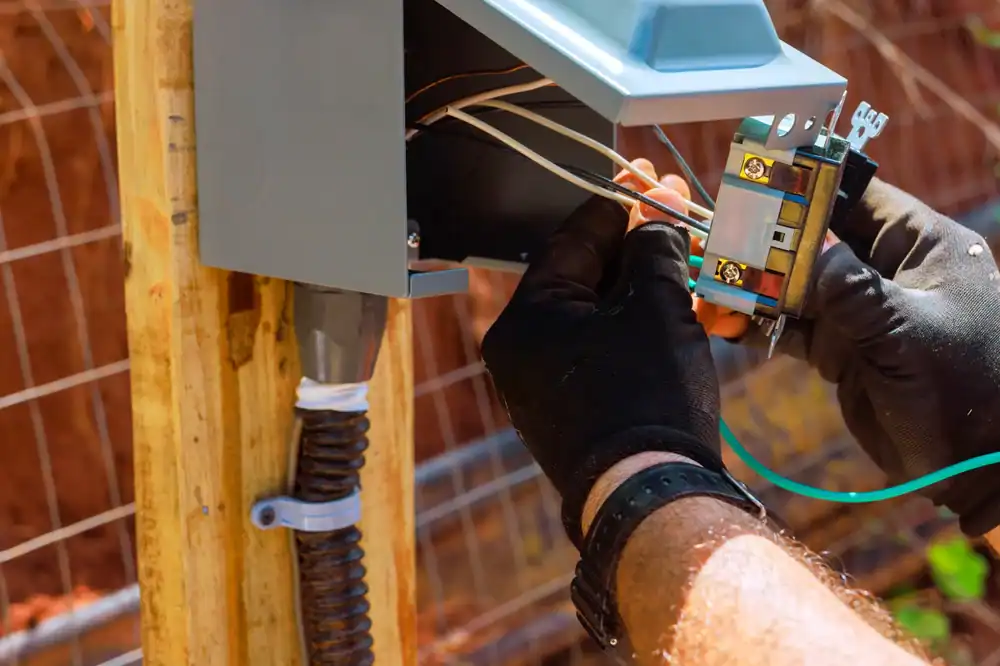
What does a breaker box replacement actually cost in Tarrant County? Here's a straightforward breakdown — no fluff, no hidden surprises.
Share:

Summary:
Your breakers keep tripping. Or maybe you caught a faint burning smell near the panel. Either way, something’s off — and now you’re trying to figure out what it’s going to cost to fix it before it becomes a bigger problem.
That’s a reasonable place to be. And you deserve a straight answer, not a vague range pulled from a national average that has nothing to do with Fort Worth.
We’ve been replacing electrical panels across Tarrant County for over 25 years. Here’s what you actually need to know — starting with what this job costs in the DFW market, and what makes those numbers move.
Nationally, the average cost to replace an electrical panel runs around $1,300 to $1,500. In Tarrant County, you’re typically looking at $1,500 to $3,500 for a standard residential replacement, depending on the scope of work. A straightforward 100-amp swap might land on the lower end. A full service upgrade from 100-amp to 200-amp — which includes coordinating with Oncor Electric Delivery to update your meter and service entrance — can push toward $4,000 or more.
Our starting price for breaker box replacement is $1,100. We put that number on our website because we think you should have a realistic baseline before you call anyone. Most electricians in Tarrant County won’t publish any pricing at all, which makes it harder for homeowners to know if a quote is fair.

A full panel replacement isn’t just swapping one box for another. When it’s done right, there’s a clear process behind it — and understanding what’s included helps you evaluate any quote you receive.
It starts with a proper evaluation of your current panel, your home’s load requirements, and whether there are any existing code violations that need to be addressed. From there, we pull the required permit from the City of Fort Worth Development Services Department before any work begins. That’s not optional — it’s the law, and it protects you. Unpermitted electrical work can void your homeowner’s insurance and create serious complications when you go to sell your home.
The actual installation involves shutting off the main power, transferring every circuit to the new panel, installing proper grounding (Texas code typically requires two 8-foot ground rods), and clearly labeling every circuit. We use UL-listed components from reputable brands — not the cheapest parts available — because the panel is the backbone of your home’s electrical system. Once the work is complete, we schedule the city inspection. You don’t have to manage any of that.
Most panel replacements in Tarrant County take between four and eight hours. That’s a full day without power, which is worth planning around — especially in the middle of a Texas summer when your AC is the only thing standing between you and 105-degree heat. We work efficiently because we know that’s not a comfortable situation for anyone.
The job wraps with a written warranty covering parts and labor. That’s not something every contractor offers, but it should be standard. A panel replacement should last decades — you shouldn’t have to wonder what happens if something goes wrong six months later.
The national average is a useful starting point, but it doesn’t account for what’s actually happening in Tarrant County’s housing stock. A lot of homes in established Fort Worth neighborhoods — Ryan Place, Fairmount, the Historic Southside, Berkeley — were built between the 1920s and 1960s. Many of them are still running on 100-amp panels, or in some cases, older fuse boxes that were never upgraded. Those panels weren’t designed for modern electrical loads: central HVAC, multiple refrigerators, EV chargers, smart home systems, and all the rest.
When you’re upgrading from 100-amp to 200-amp service, the cost goes up because it’s not just the panel — it’s coordinating the service entrance upgrade with Oncor, potentially replacing the meter base, and bringing the whole system up to current NEC standards. Texas adopted the 2023 National Electrical Code as of September 1, 2023, so any replacement we do has to comply with those current requirements.
There are also a few Tarrant County-specific factors that don’t show up in national cost guides. Panels in older homes are sometimes located in closets, bathrooms, or beneath staircases — all code-violating locations that require relocation as part of the replacement, which adds labor and materials. And if you’ve got a Federal Pacific Electric Stab-Lok panel or a Zinsco panel — both common in Tarrant County homes built between the 1950s and 1980s — that’s not a situation where you wait and see. Those panels have documented design flaws that make them genuine fire hazards, and most insurance companies won’t cover a home that still has one. Replacement isn’t optional at that point; it’s urgent.
Tarrant County also sits in what’s commonly called lightning alley. The spring and fall storm seasons bring serious surge risk, and panels that take a direct hit — or even a nearby strike — can be damaged in ways that aren’t always visible. If you’ve had a major storm recently and your panel is acting up, that’s worth having looked at sooner rather than later.
Not every panel problem requires a full replacement. A single breaker that keeps tripping can often be swapped out for $100 to $200. If the panel itself is in good shape, that’s a reasonable fix. But when multiple breakers are tripping, when the panel is warm to the touch, when you’re hearing buzzing or noticing a burning smell, or when your home simply can’t keep up with its own electrical demands — those are signs the panel itself is the problem.
Electrical panel repair costs average around $330 nationally for minor work. Once repair estimates start approaching $1,000, full replacement usually becomes the smarter investment — especially since labor costs are similar either way. You’re paying for a licensed electrician’s time regardless, so putting that money toward a new panel that will last another 25 to 40 years often makes more financial sense than patching something that’s already struggling.

There are a few situations where repair simply isn’t the right answer, and it’s worth knowing what they look like before you call anyone.
If your home was built before 2000 and you’ve never had the panel evaluated, there’s a reasonable chance it’s running on 100-amp service. That was the standard for decades, but it’s not enough for how most households use electricity today. Add a modern HVAC system, an EV charger, a home office, and a couple of high-draw appliances, and a 100-amp panel is working harder than it was ever designed to. Tripping breakers in that scenario aren’t a sign of a bad breaker — they’re a sign of a system that’s maxed out.
Age matters too, but it’s not the only factor. Panels in North Texas age differently than panels in milder climates. The combination of extreme summer heat, humidity fluctuations, and local pests — mud daubers, a type of wasp common throughout Tarrant County, are known to nest inside electrical panels and cause corrosion — can shorten a panel’s effective lifespan. A 20-year-old panel that’s been through a decade of Texas summers and a few severe storms may be in worse shape than a 35-year-old panel in a climate-controlled environment.
If you have a Federal Pacific or Zinsco panel, the answer is replacement — full stop. These aren’t panels with a minor flaw you can work around. The breakers in these units are documented to fail when they’re supposed to trip, which means an overloaded circuit keeps running instead of shutting off. That’s how electrical fires start. If you’re not sure what brand your panel is, it’s worth having someone take a look. We see these panels regularly in older Tarrant County homes, and we’ll tell you honestly what you’re dealing with.
Once you understand the baseline, it helps to know what actually moves the price in either direction. The biggest variables in any panel replacement project come down to amperage, location, code compliance requirements, and the condition of the existing system.
Amperage is the most straightforward factor. A 100-amp like-for-like replacement is the least expensive scenario. Upgrading to 200-amp service — which is what most modern homes need and what we recommend for any home adding significant new loads — costs more because of the additional work involved with the service entrance and utility coordination. A 400-amp service for a larger home or one with significant electrical demands is a more involved project and priced accordingly.
Where your panel is located matters more than most people expect. If it’s in a garage or on an exterior wall in an accessible spot, the job is straightforward. If it’s in a closet, a bathroom, or under a staircase — all locations that violate current code — it has to be moved as part of the replacement. That’s not us adding to your bill arbitrarily; it’s a requirement that protects you and ensures the work passes inspection.
Code compliance costs are real, but they’re also one-time. Things like AFCI and GFCI breakers, proper grounding, and updated service entrance components aren’t optional add-ons — they’re what makes the installation legal and safe. When you get a quote that seems unusually low, it’s worth asking whether those items are included, because skipping them is how some contractors keep their number down on paper and create problems for you later.
Finally, the condition of your existing wiring plays a role. If we open the panel and find aluminum wiring, deteriorated insulation, or connections that were done incorrectly at some point, addressing those issues is part of doing the job right. We’ll tell you what we find before we proceed — no surprises, no pressure.
If there’s one thing to take away from all of this, it’s that the right price for your panel replacement depends on your specific home, your current service, and what’s actually needed to bring everything up to code — not a number pulled from a national average.
In Tarrant County, most homeowners pay somewhere between $1,500 and $3,500 for a standard residential replacement. The job should include a permit, a city inspection, UL-listed components, proper grounding, and a warranty. If a quote you receive doesn’t account for those things, it’s worth asking why.
We’ve been doing this work in Tarrant County since 1999 — in older Fort Worth neighborhoods, newer Mid-Cities builds, and everything in between. If you want a straight answer about what your panel situation actually requires, we’re happy to take a look and give you an honest estimate before any work begins.
Article details:
Share:
Continue learning: