Thinking about installing a home EV charger in the Fort Worth area? Here's what to expect, what to ask, and who to call.
Share:
Summary:
You bought the car. Or you’re about to. And now you’re realizing that plugging into a standard garage outlet is going to add up to a very slow, very frustrating charging experience. Most EV owners figure this out within the first week.
The good news is that getting a proper home charger installed in Tarrant County, TX isn’t complicated — but it does require a licensed electrician who knows what they’re doing, a permit from your city’s building department, and a clear understanding of what your home’s electrical system can actually support. We walk you through all of it, including some DFW-specific details that most generic EV content skips entirely.
A Level 2 charger runs on a 240-volt circuit — the same type of circuit your dryer or oven uses — and delivers roughly 25 to 44 miles of range per hour. Compare that to a standard 120-volt outlet, which adds about 3 to 5 miles per hour, and the difference becomes obvious fast. For most daily drivers in Tarrant County, Level 2 charging means a full charge overnight rather than waiting 24 to 40 hours.
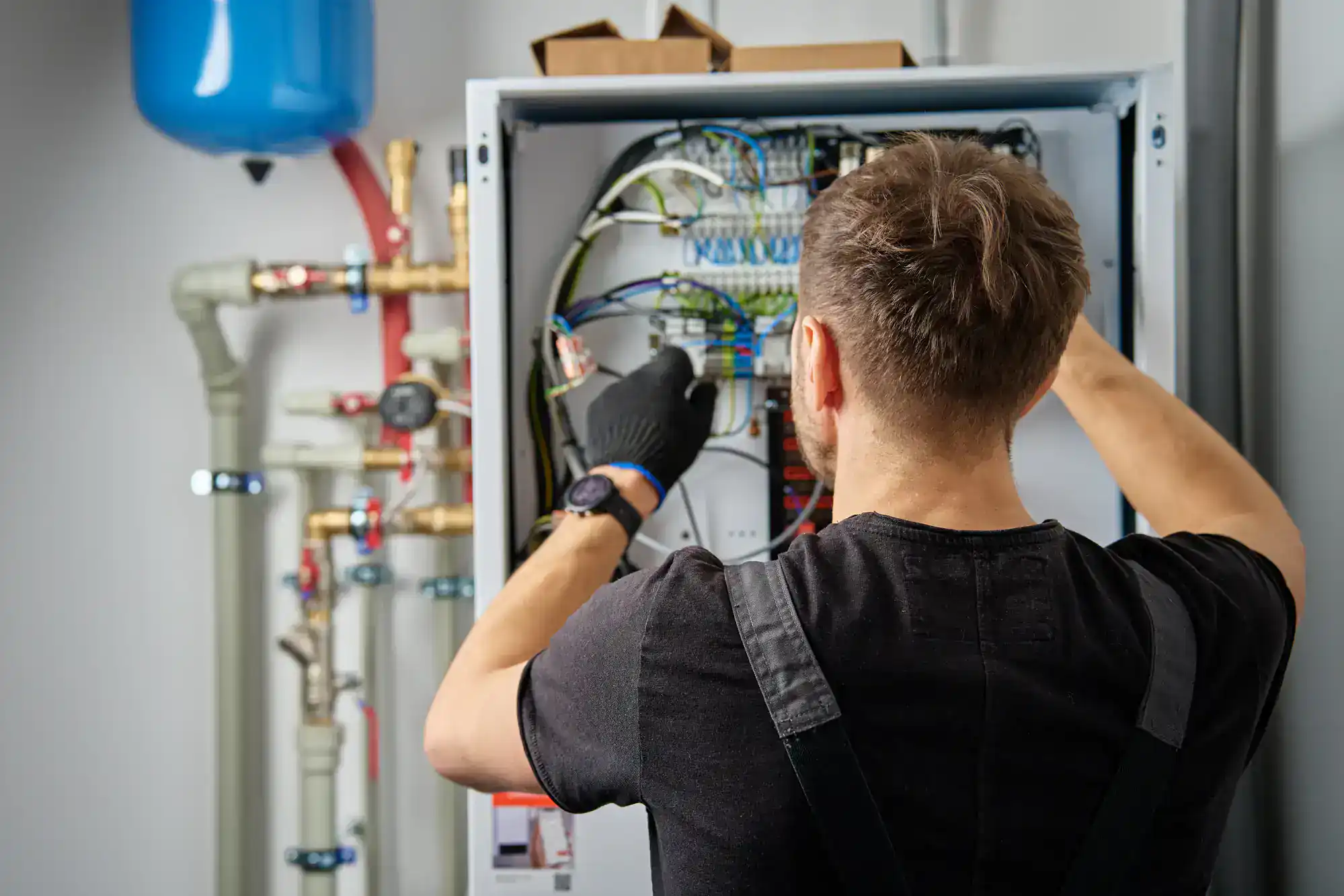
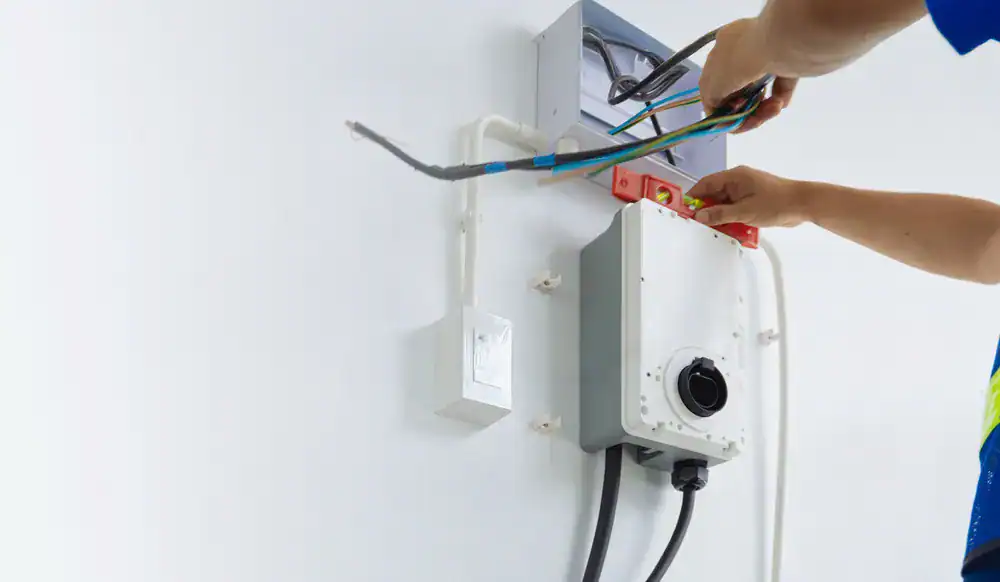
The installation itself typically takes two to four hours of actual work. A licensed electrician runs a dedicated circuit from your electrical panel to the garage or wherever the charger will live, installs the appropriate breaker (usually 40 to 50 amps for a Level 2 setup), and mounts the EVSE unit — either hardwired or via a NEMA 14-50 outlet, depending on your preference and the equipment you’re using.
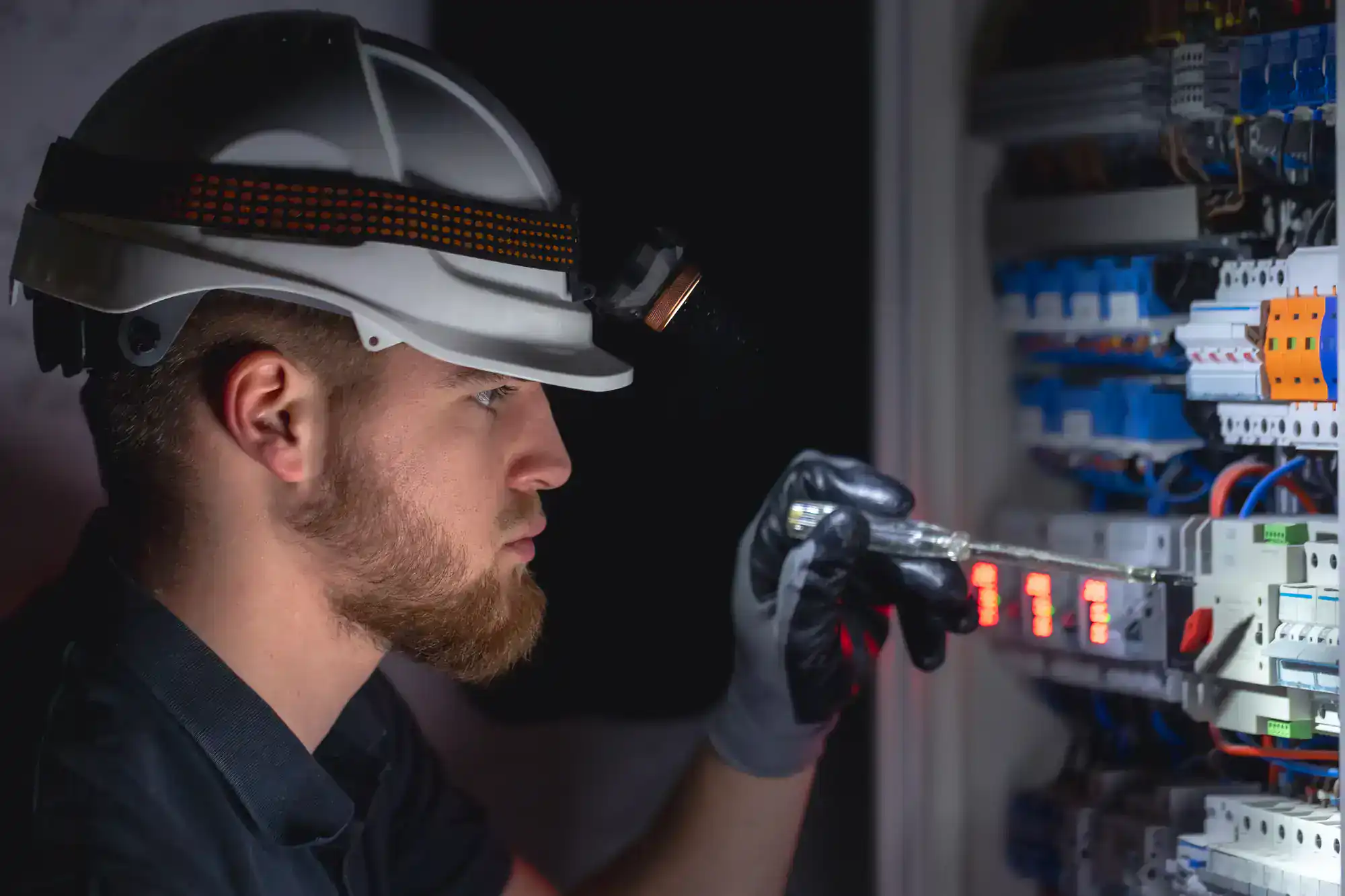
Before any of that happens, a qualified electrician should perform a load calculation to confirm your panel can handle the added demand. This step is what separates a proper installation from a shortcut, and it’s something we always do upfront.

This is the question most people don’t think to ask until they’re already mid-project — and it’s the one that can change the scope and cost of the job significantly. A 40-amp EV charging circuit draws real power, and not every home’s electrical panel is set up to handle it without some work.
Homes built before roughly 2000 are the most likely candidates for a panel assessment. In established neighborhoods across Tarrant County — think 1980s-era Keller subdivisions, older parts of North Richland Hills, or mid-century homes in Arlington — 100-amp service panels are common. That capacity was designed for a different era of electrical demand. Add a Level 2 EV charger on top of modern appliances, HVAC systems, and everything else running in a typical household, and you may not have the headroom you need.
A proper load calculation takes all of that into account. It’s not a judgment call made on the spot — it’s a methodical review of your panel’s current load versus its rated capacity, factoring in the new circuit you want to add. If your panel can support it, great. If not, you’ll know before work begins, and you can make an informed decision about whether a panel upgrade makes sense.
The reason this matters beyond just the technical side: skipping this step is how EV charger installations go wrong. An undersized circuit on an overloaded panel is a fire hazard. It’s also the kind of problem that doesn’t show up immediately — it shows up months later, under load, when it’s harder to trace and more expensive to fix. Getting it assessed upfront is just the smarter path.
We’ve been working in Tarrant County homes for over 25 years. We’ve seen the full range of panel configurations across this area, and we perform a thorough electrical assessment before every installation — so there are no surprises once work starts.
Yes — and this is one of the most important things to get right before hiring anyone for the job.
Adding a 240-volt circuit for an EV charger is a permitted electrical project in virtually every city in Tarrant County, TX. That means Fort Worth, Arlington, Keller, Southlake, Mansfield, Grapevine, and every other municipality in the county each require an electrical permit pulled through their local building department, followed by a final inspection from a city inspector before the job is considered complete.
Here’s why that matters in practical terms. If your installation isn’t permitted and inspected, it’s not code-compliant. That creates three immediate problems. First, an unpermitted installation can void your homeowner’s insurance coverage for any claim related to that circuit or equipment. Second, it disqualifies you from the federal Section 30C tax credit, which covers 30% of equipment and installation costs up to $1,000 for qualifying residential installs — money that’s simply gone if the work isn’t done properly. Third, utility rebate programs, including programs offered through Oncor — the transmission and distribution utility serving Tarrant County, TX — typically require a finalized permit as proof of a code-compliant installation. No permit, no rebate.
There’s also the home resale issue. Unpermitted electrical work shows up in inspections and can complicate or delay a sale, sometimes requiring the work to be redone at the seller’s expense.
Because permitting is handled city by city rather than at the county level, the process and timeline can vary depending on where you live in Tarrant County. We handle permit pulling as a standard part of every installation we do, not an optional add-on. That familiarity with local building departments means we navigate the process much faster than contractors who are doing it for the first time in an unfamiliar jurisdiction.
The DFW market has no shortage of people willing to install an EV charger. The challenge is knowing which ones are actually qualified to do it legally and safely.
In Texas, any electrical contracting work requires a Texas Electrical Contractor License (TECL) issued by the Texas Department of Licensing and Regulation. This isn’t optional — it’s the legal baseline. An unlicensed contractor cannot pull a permit, which means any work they perform is automatically non-compliant, regardless of how well it’s done. Beyond the license, look for contractors who carry liability insurance, warranty their labor, and can speak specifically to EV charger installation experience — not just general electrical work.

Most people approach hiring a contractor the same way: get a few quotes, pick the one that feels right, and move forward. For EV charger installation, a few specific questions can tell you a lot about whether a contractor actually knows what they’re doing.
Start with licensing. Ask for their TECL number and look it up with TDLR before committing. This takes about two minutes and confirms they’re legally authorized to perform electrical contracting work in Texas. We hold TECL 25420 — verifiable directly through the state.
Ask whether they pull permits as standard practice or treat it as an optional service. Any contractor who frames the permit as something you can skip to save time or money is telling you something important about how they operate. Permits protect you, not them.
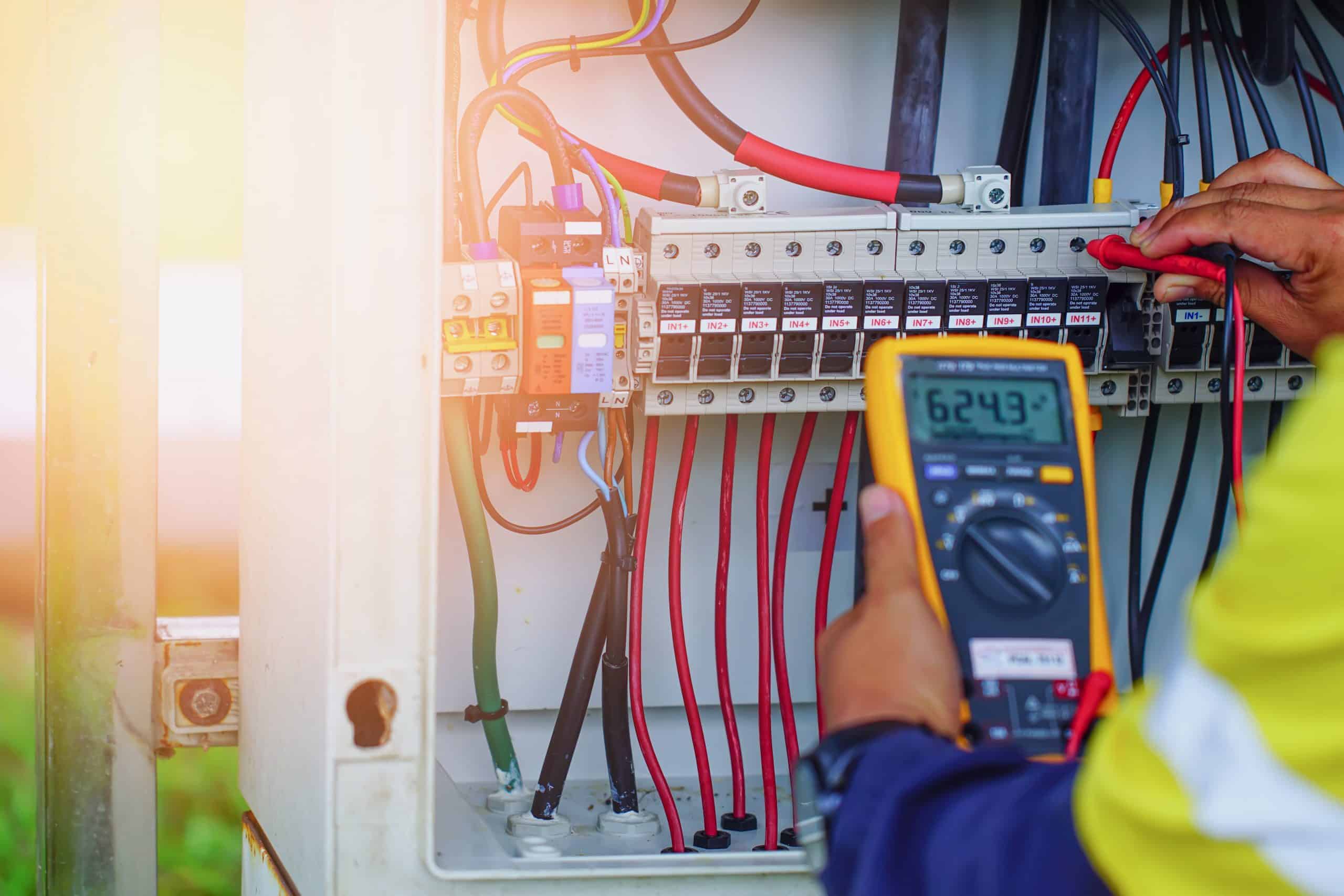
Ask about load calculations. A qualified electrician will want to assess your panel before giving you a firm quote. If someone is ready to name a price without knowing anything about your electrical system, that’s a red flag.
Ask about the equipment they work with. Most Level 2 chargers — whether it’s a Tesla Wall Connector, a ChargePoint unit, a Wallbox, or an Emporia — use the J1772 connector standard and are compatible with all non-Tesla EVs (and Tesla with an adapter). A knowledgeable contractor should be comfortable installing any of these, and shouldn’t push you toward a specific brand unless there’s a technical reason for it.
Finally, ask about the warranty. Labor warranties vary — make sure you know what’s covered and for how long before work begins. We warranty all work on both parts and labor, which is something we’re straightforward about from the start.
One thing that makes Tarrant County, TX a genuinely good market for EV ownership is the infrastructure around it — not just the physical charging network, but the financial ecosystem that makes home charging more affordable than most people expect.
On the utility side, Tarrant County falls within Oncor’s service territory. Oncor has historically offered EV-related programs and incentives for residential customers — worth checking directly with Oncor or your retail electricity provider before scheduling your installation, since rebate programs can change. What doesn’t change is the fact that a permitted, inspected installation is typically required to qualify. That’s another reason the permit step isn’t something to skip.
Texas also operates a deregulated electricity market, which means Tarrant County residents can shop for electricity plans through PowerToChoose.org. Several providers offer time-of-use rate structures specifically designed for EV owners, with lower rates during overnight hours when most home charging happens. If you’re adding a Level 2 charger and haven’t revisited your electricity plan recently, it’s worth doing — the savings can offset a meaningful portion of your monthly charging cost.
On the dealership side, the DFW metro has a strong EV retail presence. Tesla has a location in the Alliance area of north Fort Worth. Ford dealers throughout Tarrant County sell the F-150 Lightning and Mustang Mach-E. Rivian owners in the area, along with those driving Hyundai IONIQ 6 and Kia EV6 models, all need Level 2 home charging to make daily use practical. If you purchased your vehicle locally and your dealer didn’t connect you with a certified installer, that’s a gap we’re happy to fill.
And for homeowners who are thinking about the bigger picture: EV charging does increase your home’s electricity consumption, at least modestly. We also install the Powerworx Energy Management System, which can lower electric bills by up to 15%. It’s not something every EV owner needs, but for households where energy efficiency is a priority, it’s worth knowing the option exists.
The short version: Level 2 EV charger installation is a straightforward project when it’s done right — permitted, inspected, and sized correctly for your home’s electrical system. The complications arise when corners get cut, and those complications tend to be expensive.
If you’re in Tarrant County, TX and you want the job done by a licensed electrician who’s been working in this area for over 25 years, knows the local permitting landscape, and will tell you upfront what your home needs before any work begins, that’s exactly what we do. No hidden fees, no pressure, and all work warrantied on parts and labor.
Reach out to Carroll Service Co to schedule an assessment. We’ll take a look at your panel, walk you through your options, and give you a clear picture of what installation actually involves for your specific home and setup.
]
Article details:
Share:
Continue learning: