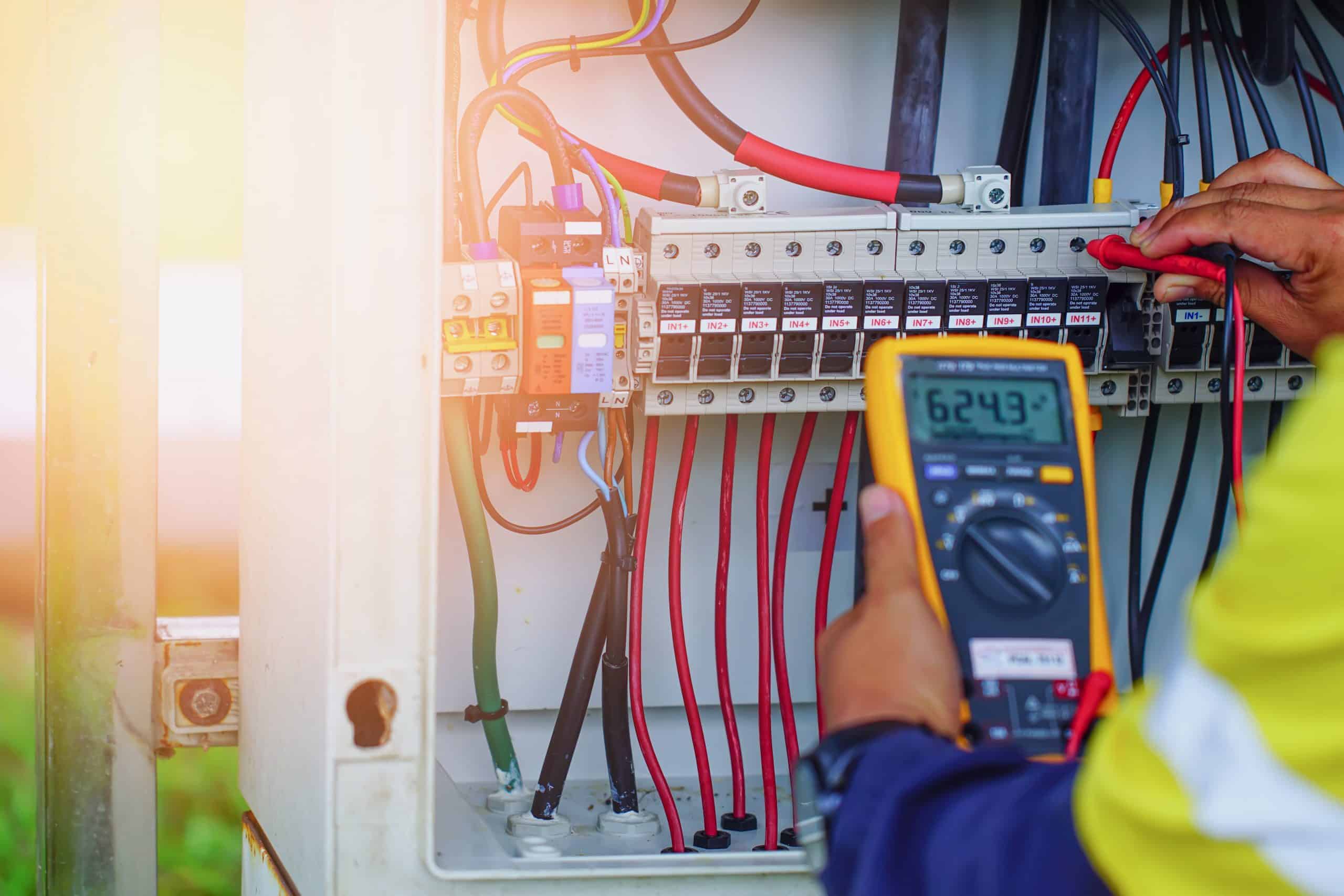
Whole house generator costs vary widely. Here's what actually drives the price in Tarrant County — and how to budget without getting blindsided.
Share:

Summary:
Most homeowners searching for whole house generator costs aren’t looking to buy right this second. They want to know if it’s realistic — what the real number looks like, what they’re actually paying for, and whether it’s worth it. That’s a fair place to start.
The published ranges you’ll find online ($5,000 to $15,000 and up) aren’t wrong, but they’re not very useful on their own. The actual cost depends on your home, your location, your fuel source, and who’s doing the work. In Tarrant County, there are also some local factors that shape the price in ways a national guide won’t tell you. Let’s break it down.
The cost of a whole house generator isn’t one number — it’s several numbers stacked together. The generator unit itself is just the starting point. From there, you’re looking at installation labor, the automatic transfer switch, any gas line work, a concrete pad, permits, and the inspection that follows. Each of those has its own price tag, and depending on your home’s setup, some will cost more than others.
The biggest variable is generator size, measured in kilowatts. A 14kW unit runs a medium-sized home through most outages. A 22kW or larger unit handles whole-home coverage including central air — which matters a lot in a Tarrant County summer. Sizing it wrong in either direction is a real problem, which is why a proper load assessment before installation isn’t optional.

Smaller standby generators in the 7–10kW range typically run $6,000 to $9,000 installed and are better suited for essential circuits — lights, refrigerator, a few outlets — rather than whole-home coverage. They’re a reasonable entry point for smaller homes or tighter budgets, but in a Tarrant County summer, running your central AC is usually non-negotiable, and most units in this range can’t handle that load reliably.
The 14–20kW range is where most Tarrant County homeowners land. These units run $9,000 to $13,000 installed and can power a full-size home including HVAC, the refrigerator, lighting, and most appliances simultaneously. If you have a home in the 1,500 to 2,500 square foot range — which covers a huge portion of the housing stock in areas like Haltom City, Watauga, and the established Mid-Cities neighborhoods — this tier is usually the right fit.
Larger homes in the 2,500 to 4,000 square foot range, or newer builds in fast-growing areas like Mansfield and Burleson with higher electrical loads, often need a 20–22kW system or above. Installed costs for these systems typically run $12,000 to $15,000 or more. If your home has multiple HVAC zones, a home office setup, or an EV charger, those loads factor into the sizing calculation too.
One thing worth knowing: older homes in Fort Worth’s historic neighborhoods — Fairmount, the Near Southside, parts of Southside — sometimes need a panel upgrade before a generator can be installed. The existing electrical infrastructure in homes built in the 1940s and 1950s wasn’t designed to handle today’s loads, let alone a generator connection. That adds cost, but it’s also work that needs to happen regardless. A qualified electrician will catch this during a site assessment.
Natural gas and propane are the two main fuel options for standby generators, and the choice affects both upfront and long-term costs. In Tarrant County, natural gas is the more practical option for most homeowners. The county has well-developed gas infrastructure, and connecting a generator to an existing gas line is typically straightforward. You’re not dealing with tank rentals, propane deliveries, or the risk of running out of fuel during a multi-day outage. The generator just runs off the same supply line as your furnace and water heater.
Propane becomes more relevant for homes that don’t have natural gas service — some rural or semi-rural properties in the outer parts of the county fall into this category. Propane systems require a dedicated tank, which adds $500 to $2,000 to the upfront cost depending on tank size and whether it’s above or below ground. The generator unit itself is similarly priced to a natural gas model, but the ongoing logistics are more involved.
Beyond fuel type, installation complexity is the other big cost variable. A straightforward installation — where the generator sits close to the electrical panel, the gas line is nearby, and the site is level — comes in at the lower end of the labor range. More complex installs, where the generator needs to be placed farther from the panel, requires a longer gas line run, or involves a home with an older or undersized electrical system, take more time and more materials. Labor for generator installation in this market typically runs $3,000 to $5,000 for standard installs, and higher for complex ones.
Permits are another line item that some homeowners don’t anticipate. In Fort Worth and across Tarrant County municipalities, generator installations require electrical permits — and in many cases, a separate gas permit as well. The permit cost itself is usually $100 to $500 depending on the city, but the more important point is that permitted work gets inspected. That inspection is what confirms the system was installed correctly and to code. Unpermitted work can void your homeowner’s insurance and create real problems when you go to sell the home. We pull permits as a matter of course and handle that process for you.
If you lived in Tarrant County during Winter Storm Uri in February 2021, you don’t need to be convinced that power reliability matters here. Millions of Texas households lost power for days — some for more than a week — in temperatures that dropped to single digits. Pipes burst. People died. And because Texas’s ERCOT grid operates independently from the national grid, there was no importing power from neighboring states to make up the difference.
That event changed how a lot of homeowners in this county think about backup power. It’s no longer an abstract “what if” — it’s a documented reality that happened here, in this community, and could happen again. Add in the summer heat advisories that push ERCOT near capacity every July and August, plus a tornado and severe storm season that runs March through June, and Tarrant County is genuinely one of the higher-risk markets in the country for extended outages.
The straightforward answer is yes — especially in this part of Texas. But it helps to look at the numbers honestly rather than just emotionally.
A whole house generator installed in Tarrant County typically runs $7,000 to $14,000 depending on size and complexity. That’s a real investment. On the other side of the ledger, industry research consistently shows that a standby generator adds roughly 3 to 5 percent to a home’s resale value. On a $400,000 home — which is a reasonable mid-range figure across much of Tarrant County right now — that’s $12,000 to $20,000 in added value. The installation can pay for itself in home equity alone, before you factor in a single outage.
Then there’s the cost of not having one. A multi-day outage in a Texas summer means hotel stays, spoiled food, and in some cases, real safety risks for anyone in the home who is elderly, very young, or dependent on medical equipment. A significant winter event like Uri can mean burst pipes and tens of thousands of dollars in water damage on top of everything else. When you add those potential losses to the resale value argument, the math gets easier.
There’s also the running cost to understand. A natural gas standby generator costs roughly $30 to $170 per day to operate, depending on the load. For a three-day outage, that’s $90 to $500 in fuel — a fraction of what a hotel stay plus spoiled groceries would run. Annual maintenance, which you should plan for, typically runs $150 to $300 per year and keeps the system running reliably when you actually need it.
The biggest mistake homeowners make when getting generator quotes is treating the lowest number as the best deal. In this market, a quote that comes in significantly below the range we’ve outlined here usually means something was left out — permits, a panel upgrade, proper load assessment, or the labor to do the gas line work correctly. You find out what was missing when the bill comes in higher than the quote, or when the city inspector shows up and the work doesn’t pass.
A trustworthy estimate starts with a site visit. There’s no way to accurately price a generator installation without seeing the home — the panel location, the gas line access, the proposed generator placement, the overall electrical load. Any contractor quoting over the phone without a site assessment is giving you a number they’ll likely revise later. What you want is a written estimate, after a proper assessment, that covers everything: equipment, labor, transfer switch, permits, and any related work like a panel upgrade if one is needed.
In Tarrant County specifically, ask any contractor whether they pull permits for all the municipalities they work in. Fort Worth, Arlington, Mansfield, and the other cities in the county each have their own permitting offices and inspection schedules. A contractor who has been working in this area for years knows those processes — who to call, how long scheduling takes, what inspectors look for. That local knowledge is worth something. It’s the difference between an installation that breezes through inspection and one that gets flagged and has to be redone.
We’ve been doing this work in the DFW area for over 25 years. We hold an A+ rating with the Better Business Bureau and have been recognized with multiple Angie’s List Super Service Awards — not because we talk about quality, but because we deliver it consistently. Every estimate we provide is written, itemized, and final. No surprises when the job is done. That’s not a policy we put on paper to sound good — it’s how we’ve operated since day one, because it’s what homeowners in this community deserve.
Here’s the short version: a whole house generator in Tarrant County costs between $7,000 and $14,000 for most homes, with the final number depending on size, fuel type, installation complexity, and local permit requirements. That range is real, and the only way to know where your home falls in it is a proper site assessment — not a phone quote, not a rough estimate based on square footage alone.
The investment makes sense for most homeowners in this market. Between the ERCOT grid’s known vulnerabilities, the memory of Winter Storm Uri, and summers that regularly push triple digits, this isn’t a luxury purchase — it’s practical protection for your home and your family.
If you’re ready to get a clear, honest number for your specific home, we’re a good place to start. Carroll Service Co is a family-owned electrical contractor that has been serving Fort Worth and the surrounding Tarrant County area for over 25 years — and we’ll give you a straight answer before any work begins.
Article details:
Share:
Continue learning: