Modern lighting installation is reshaping Texas homes with smart controls, energy-efficient LEDs, and outdoor landscape designs that boost value and curb appeal.
Share:
Summary:
Smart lighting controls have moved from luxury to standard in Texas homes. You’re no longer stuck walking to wall switches or dealing with timers that never quite sync up. Voice commands through Alexa, Google Assistant, or Apple HomeKit let you adjust lights without lifting a finger.
App-based control means you can dim your living room from the couch or turn off forgotten lights from your driveway. Automated schedules adapt lighting to your daily routine, so you wake up to gradually brightening lights instead of jarring switches. The real benefit isn’t just convenience—smart systems let you create custom scenes for different activities.
Bright task lighting when you’re cooking, softer ambiance during dinner, dimmed settings for movie nights. You control everything from one interface instead of managing multiple switches throughout your home. That’s the kind of flexibility modern lighting installation brings to DFW properties.

Understanding how smart lighting installation works helps you see why it’s worth the upgrade. The system starts with compatible fixtures or smart bulbs that connect to your home’s Wi-Fi network. Some systems use dedicated hubs, while others connect directly to your router. Once connected, you control everything through a smartphone app or voice assistant.
The setup takes minutes, not hours. You create rooms in the app, assign lights to each space, and start programming scenes based on how you actually use each area. No complicated wiring diagrams or technical expertise required—just straightforward configuration that makes sense.
Integration with other smart home devices takes functionality further. Your lights can work with motion sensors, so hallways illuminate automatically when you walk through at night. They sync with security systems to flash when alarms trigger. Some Fort Worth homeowners program lights to simulate occupancy when they’re away, enhancing security without extra effort. That kind of integration turns individual smart devices into a cohesive system that actually improves your daily life.
The energy savings add up quickly too. Smart systems track usage and show exactly how much electricity each fixture consumes. You spot energy hogs immediately and adjust accordingly. Automated schedules ensure lights aren’t running when nobody’s home. Many DFW residents report 10-15% reductions in lighting costs after switching to smart controls—savings that compound month after month.
Installation complexity varies by system type. Simple smart bulbs screw into existing fixtures and connect within minutes. Whole-home systems with integrated switches and dimmers require professional lighting installation to ensure proper wiring and code compliance. The investment pays off through convenience, energy savings, and increased home value when you sell.
Texas homeowners particularly appreciate remote access during summer vacations or winter trips. You can adjust lighting from anywhere, creating the appearance of occupancy without asking neighbors to stop by. When you’re at the beach in Galveston or visiting family in Houston, your Dallas home still looks lived-in. That peace of mind alone makes smart lighting controls worth considering for your next upgrade.
Voice control sounds like a gimmick until you’re carrying groceries into a dark kitchen or settling into bed and realizing you left the porch light on. Then it becomes essential. Simple commands like “turn off all lights” or “dim living room to 30%” eliminate the need to walk around your home before bed. You just say it, and it happens.
Custom voice commands let you trigger entire scenes with one phrase. “Movie time” might dim overhead lights, turn on accent lighting, and adjust color temperature to warm tones. “Good morning” could gradually brighten bedroom lights, turn on bathroom fixtures, and illuminate the kitchen for breakfast prep. You create commands that match your actual routines, not generic presets that almost work.
Automation takes voice control further by removing the need for commands altogether. Geofencing detects when you leave or arrive home, automatically adjusting lights based on your location. Sunrise and sunset schedules adapt lighting to natural daylight patterns, so you’re never coming home to a dark house or leaving lights on all day. The system learns your patterns and starts anticipating your needs.
Motion-activated lighting works particularly well in specific areas. Bathrooms, hallways, closets, and garages benefit from lights that turn on when you enter and shut off after you leave. You never fumble for switches with arms full of laundry or groceries. It’s the kind of small convenience that you don’t appreciate until you have it—then you wonder how you ever lived without it.
Integration with other smart devices creates powerful automation scenarios. When your smart thermostat detects you’ve left for work, it can trigger lights to turn off automatically. Security cameras can activate outdoor landscape lighting when they detect motion near your property. Smart locks can illuminate entry paths when you unlock your front door, so you’re never walking into darkness.
The learning capabilities of modern systems improve over time. They analyze your usage patterns and suggest automation rules based on how you actually use your lighting. If you consistently dim bedroom lights at 10 PM, the system offers to automate that action. These suggestions refine your setup without requiring technical knowledge or programming skills.
For Texas homeowners dealing with frequent power outages during storms, smart lighting systems can integrate with backup generators. When generator power kicks in, your lighting system automatically adjusts to essential fixtures only, conserving power for critical systems while maintaining basic illumination throughout your home. That’s the kind of intelligent adaptation that makes smart lighting installation worth the investment in storm-prone areas like Tarrant County and Dallas County.
LED recessed lighting has become the go-to choice for Texas homeowners wanting that clean, streamlined look. These fixtures sit flush with your ceiling, eliminating the visual clutter of hanging lights or bulky fixtures. The result is a modern aesthetic that makes rooms feel larger and more open.
The aesthetic appeal goes beyond just looking modern. Recessed lighting directs light exactly where you need it without fixtures competing for attention. Your architecture, furniture, and décor become the focal points instead of the lights themselves. This works especially well in homes with lower ceilings where traditional fixtures can make spaces feel cramped and dated.
Energy efficiency makes LED recessed lighting practical beyond aesthetics. These fixtures use 75% less electricity than old incandescent options while producing the same amount of light. In Texas summers when air conditioning already strains your budget, the reduced heat output from LEDs means your cooling system doesn’t work as hard to compensate for hot fixtures. That’s money saved on two fronts—lighting and cooling.
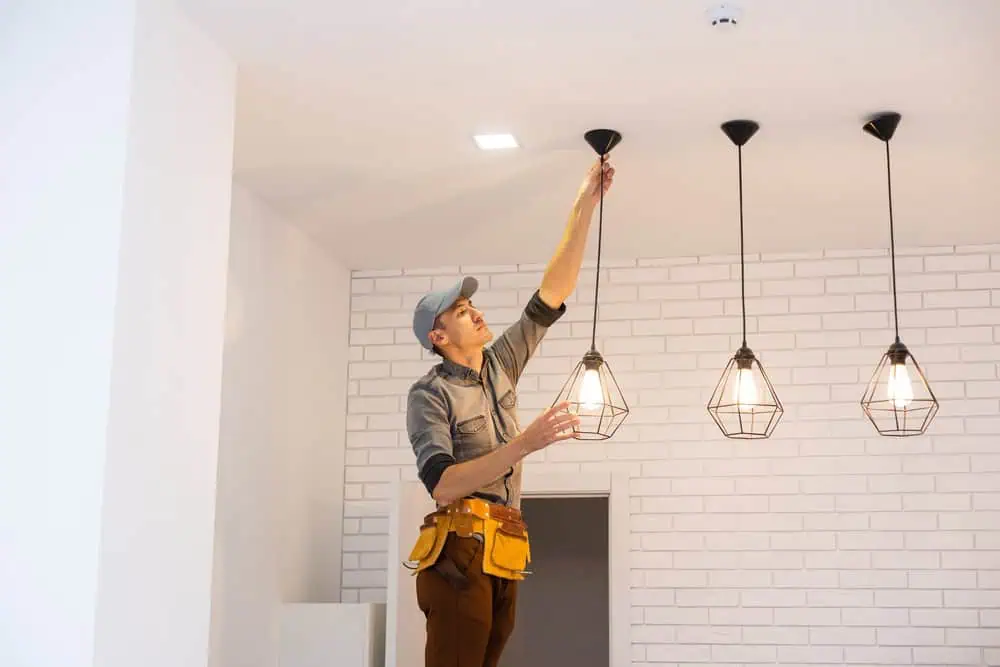
Proper spacing makes the difference between professional-looking recessed lighting and a ceiling full of random holes. The general rule places fixtures 4-6 feet apart for even illumination, but your specific layout depends on ceiling height, room size, and how you use the space. Get it right, and your lighting installation looks intentional and polished.
Start by identifying what each area needs. Kitchens require brighter task lighting over counters and islands, with more fixtures concentrated in work zones where you’re chopping vegetables or reading recipes. Living rooms benefit from evenly distributed ambient lighting supplemented by accent fixtures highlighting architectural features like fireplaces or built-in shelving. Hallways need fewer fixtures spaced to eliminate dark spots without over-illuminating transitional spaces that people just walk through.
Ceiling height affects both spacing and fixture selection. Standard 8-foot ceilings work well with 4-inch fixtures spaced 4 feet apart. Higher ceilings need 5 or 6-inch fixtures with slightly wider spacing to provide adequate coverage without creating harsh spotlights. Vaulted or cathedral ceilings require adjustable fixtures that aim light where you need it rather than straight down into empty air.
Insulation contact (IC) rating matters in Texas homes where attic insulation directly touches ceiling fixtures. IC-rated fixtures handle insulation contact safely without overheating—critical when your attic hits 150 degrees in July. Non-IC-rated fixtures require 3-inch clearance from insulation, which isn’t always practical in finished spaces. Always verify IC rating before installation to prevent fire hazards and code violations that can come back to bite you during home sales.
Dimming capability should be built into your plan from the start. Not all LED fixtures dim smoothly, and incompatible dimmers cause flickering or buzzing that drives you crazy. Verify that your chosen fixtures work with the dimmer switches you plan to install. Many homeowners add dimming to bedrooms, living areas, and dining spaces for flexibility in creating different moods throughout the day.
Color temperature selection impacts how your space feels. Warm white (2700K-3000K) creates cozy, inviting atmospheres in living rooms and bedrooms—the kind of light that makes you want to relax after a long day. Neutral white (3500K-4100K) works well in kitchens and bathrooms where you need clear task lighting for cooking or applying makeup. Cool white (5000K-6500K) suits garages and workspaces but feels too clinical for main living areas where you spend quality time.
Professional lighting installation ensures proper spacing, secure mounting, and code-compliant wiring. Cutting ceiling holes in wrong locations can’t be easily fixed without drywall repair and repainting. Electrical work requires permits in most DFW municipalities, and inspections verify everything meets current standards. We handle permits, inspections, and warranty requirements while ensuring your recessed lighting meets National Electrical Code standards that protect your home and family.
LED recessed lighting delivers measurable savings from the moment you flip the switch. A typical LED fixture uses 10-15 watts compared to 65-100 watts for older incandescent recessed lights. Multiply that across 10-20 fixtures in your home, and you’re looking at significant monthly reductions in electricity costs. The difference shows up on your utility bill immediately.
The math works in your favor over time. LED fixtures last 25,000-50,000 hours compared to 1,000-2,000 hours for incandescent bulbs. That translates to 10-20 years of use in typical homes before replacement becomes necessary. You eliminate the ongoing cost and hassle of buying and changing bulbs multiple times per year—no more trips to the hardware store or balancing on ladders to reach ceiling fixtures.
Heat reduction impacts your cooling costs more than you might expect. Traditional incandescent fixtures generate substantial heat that raises room temperatures, especially noticeable in Texas summers. Your air conditioning system works harder to compensate, running longer cycles and consuming more electricity. LEDs emit minimal heat, keeping rooms cooler and reducing the load on your HVAC system. That’s particularly valuable in DFW where cooling costs dominate summer utility bills.
Installation costs pay back faster than many other home upgrades. While professional lighting installation requires upfront investment, the combination of energy savings, reduced maintenance, and increased home value typically recoups costs within 3-5 years. Energy Star-certified fixtures may qualify for utility rebates through your local provider that further reduce initial expenses. Check with your Dallas or Fort Worth utility company for current programs.
Property value increases when you upgrade to LED recessed lighting. Buyers recognize modern, energy-efficient features and factor them into purchase decisions. Homes with updated lighting systems sell faster and command higher prices than comparable properties with outdated fixtures. Real estate professionals consistently cite lighting as one of the most cost-effective upgrades for improving marketability—you get more buyer interest and better offers.
Code compliance adds value beyond aesthetics and efficiency. Properly installed LED recessed lighting meets current electrical codes, passing inspections without issues during home sales. DIY installations or outdated fixtures can trigger code violations that delay closings or require expensive corrections before you can finalize the sale. Professional installation protects your investment and ensures smooth transactions when you’re ready to move.
Texas climate considerations make LED fixtures particularly valuable in this region. The combination of long, hot summers and frequent electrical storms means your lighting system faces demanding conditions year-round. LEDs handle temperature fluctuations better than older technologies and work seamlessly with whole-house surge protection systems that safeguard your entire electrical infrastructure. That reliability matters when summer storms roll through Dallas County and Tarrant County with lightning that can fry unprotected electronics and fixtures.
Outdoor landscape lighting transforms your property from something you only enjoy during daylight to a usable space well into the evening. Texas weather makes outdoor living popular most of the year, but without proper lighting, your patio, deck, or garden sits unused after sunset. Strategic lighting installation changes that completely.
The right outdoor lighting highlights your landscaping, illuminates pathways for safety, and creates ambiance that makes you actually want to spend time outside. It’s not just about security—though well-lit properties do deter intruders. It’s about extending your home’s functional space beyond four walls and making your outdoor investment worth every dollar you spent on it.
DFW homeowners are discovering that outdoor landscape lighting delivers immediate impact. Guests notice it when they arrive. You appreciate it every evening when you step outside. And buyers pay premium prices for homes with professional outdoor lighting that showcases the property even after dark.
Article details:
Share:
Continue learning: