Choosing between standby and portable generators for your Texas home? We break down costs, convenience, and safety to help you decide.
Share:
Summary:
The fundamental difference comes down to automation and installation. A standby generator is permanently installed outside your home, connects directly to your electrical system, and automatically kicks in within seconds when the power goes out. Think of it like having a backup power plant that runs itself.
A portable generator, on the other hand, sits in your garage until you need it. When an outage hits, you wheel it outside, start it up manually, and connect it to your home either through a transfer switch or extension cords. It’s backup power on demand, but it requires you to be home and take action.
Both will keep your essential systems running during outages, but they do it in very different ways. Your choice depends on how much convenience you want versus how much you’re willing to spend upfront.

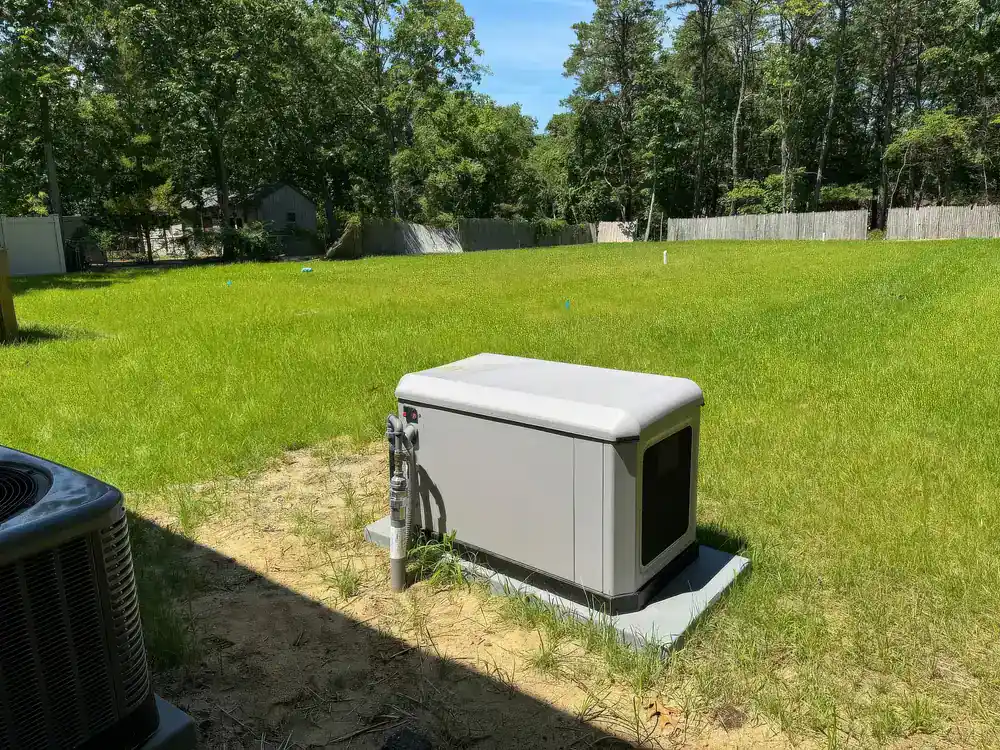
A standby generator becomes part of your home’s infrastructure. It sits on a concrete pad outside, usually running on natural gas from your existing line or a large propane tank. The system includes an automatic transfer switch that monitors your home’s power 24/7.
When the grid goes down—whether from Dallas County thunderstorms, Tarrant County ice storms, or ERCOT rolling blackouts—the transfer switch detects the outage within seconds and signals the generator to start. The whole process takes about 10 seconds, and your power is restored automatically. You might not even notice the lights flickered. When utility power returns, the system switches back and shuts down the generator automatically.
Most standby generators for DFW homes range from 14kW to 26kW, which can power your entire house or selected critical circuits. The larger units can handle everything from your HVAC system during Texas heat waves to your garage door opener simultaneously. They’re designed to run for days or even weeks if needed, as long as you have fuel supply—crucial during extended outages like Winter Storm Uri in 2021.
The installation requires permits and professional electrical work to connect to your main panel. In the Fort Worth area, this typically takes one to two days and must be done by a licensed electrician. The system also performs regular self-tests, usually running for 12 minutes weekly to keep the engine lubricated and batteries charged, ensuring reliability when North Texas weather strikes.
Portable generators give you flexibility and control over your backup power. These units typically range from 3,000 to 12,000 watts and run on gasoline, propane, or both. When you need power, you roll the generator outside, add fuel, start the engine, and connect it to your home.
The safest and most effective way to use a portable generator is with a transfer switch installed by an electrician. This device lets you select which circuits in your home receive generator power and prevents dangerous backfeeding into Oncor’s electrical lines. Without a transfer switch, you’re limited to plugging appliances directly into the generator with extension cords.
Most portable generators will power your refrigerator, some lights, and a few other essentials for 8-12 hours on a tank of fuel. You’ll need to refuel regularly during extended outages and store gasoline safely when not in use. The generator must stay at least 20 feet from your home to prevent carbon monoxide poisoning—a serious concern in Texas where homes are often tightly sealed for energy efficiency.
Setup and operation are entirely manual. When the power goes out, you need to be home, move the generator into position, connect everything, and start it up. When the outage ends, you reverse the process and store everything away. It’s more work, but it costs significantly less than a standby system and gives you portable power for camping or job sites.
The cost difference between these options is substantial and goes beyond the initial purchase price. A portable generator suitable for essential home backup typically costs $800 to $3,000 for the unit itself. Add a transfer switch installation for $1,500 to $3,000, and you’re looking at a total investment of roughly $2,300 to $6,000.
Standby generators represent a much larger upfront investment. In the Fort Worth and Mid-Cities area, you can expect to pay $13,000 to $20,000 for a complete system including installation. That covers the generator, automatic transfer switch, permits, electrical connections, and professional setup. The price varies based on your home’s size, electrical requirements, and fuel connection complexity.
However, standby generators can add value to your home and may qualify for insurance discounts. Many Texas insurers offer 3-5% premium reductions for homes with professionally installed backup power systems. The systems can also recoup up to 54% of their cost in increased home value, especially in areas prone to weather-related outages like the DFW metroplex.

Fuel costs vary significantly between generator types and directly impact your long-term expenses. Portable generators running on gasoline typically consume 12-20 gallons per day depending on load. At current Texas fuel prices, that’s roughly $40-70 per day of operation. You’ll also need to store extra gasoline safely, which requires stabilizer and proper containers—a challenge during widespread outages when gas stations may be closed.
Standby generators connected to natural gas offer more predictable operating costs. A 20kW unit running at half load uses approximately 200-300 cubic feet of natural gas per hour. Based on average Texas natural gas rates, that translates to about $3-5 per hour of operation. For propane systems, expect to pay $50-80 per day depending on tank size and usage.
The convenience factor also has hidden costs. With portable generators, you need to be available to start, monitor, and refuel the system. If you’re traveling when an outage occurs, your generator can’t help. Standby systems work whether you’re home or away, protecting your property and preventing food spoilage or frozen pipe damage automatically—particularly valuable for Texas homeowners who travel frequently.
Maintenance costs are generally higher for standby generators due to their complexity, but they’re also more reliable when properly serviced. Most manufacturers recommend annual professional maintenance, which typically costs $200-400 in the DFW area. Portable generators require more frequent oil changes and maintenance after every 100 hours of operation, plus seasonal preparation for Texas weather extremes.
Texas weather makes safety considerations especially important when choosing backup power. Portable generators pose carbon monoxide risks and must be positioned at least 20 feet from your home, even during severe weather. Setting up a generator in the middle of a Dallas thunderstorm, Fort Worth hailstorm, or ice storm isn’t just inconvenient—it can be dangerous.
Standby generators eliminate these safety concerns through permanent outdoor installation with proper ventilation. They’re designed to operate in all weather conditions and start automatically regardless of external conditions. You stay safely inside while your backup power system handles the work, whether it’s 100-degree heat or freezing rain.
The convenience difference becomes crucial during extended outages. Portable generators typically provide 8-12 hours of runtime per fuel tank, requiring regular refueling during long outages. In 2021, when Winter Storm Uri left many Texas homes without power for days, portable generator owners faced the challenge of finding fuel and refueling in dangerous conditions while roads were impassable.
Standby generators connected to natural gas can run indefinitely as long as gas service continues. Even propane systems can operate for days without intervention using appropriately sized tanks. The automatic operation means your home maintains power for heating, cooling, and essential systems without any action required from you—critical when Texas weather makes it unsafe to go outside.
Noise is another factor to consider, especially in suburban neighborhoods throughout Tarrant and Dallas counties. Portable generators typically operate at 65-75 decibels, similar to a running lawnmower. Standby generators are engineered for quieter operation, usually running at 50-60 decibels, comparable to normal conversation levels and more respectful of neighbors.
Your decision ultimately depends on your budget, lifestyle, and how much convenience you value during outages. If you’re comfortable with manual operation and want to minimize upfront costs, a portable generator with a proper transfer switch provides reliable backup power for essential needs during typical Texas outages.
For homeowners who want seamless, automatic protection and can invest in a permanent solution, standby generators offer superior convenience and whole-home coverage. They’re particularly valuable if you travel frequently, have medical equipment that requires power, work from home, or simply want the peace of mind that comes with fully automatic backup power during unpredictable Texas weather.
Consider your specific situation: How often does your area experience outages? Are you typically home when they occur? Do you have the physical ability to set up and maintain a portable unit safely? Would your family be comfortable and safe with partial power, or do you need whole-home coverage during extended outages?
When you’re ready to move forward with either option, we have the experience and expertise to help you make the right choice for your Fort Worth home. With over 25 years serving the DFW and Mid-Cities area, we can handle the professional installation that ensures your backup power system works safely and reliably when you need it most.
Article details:
Share:
Continue learning: