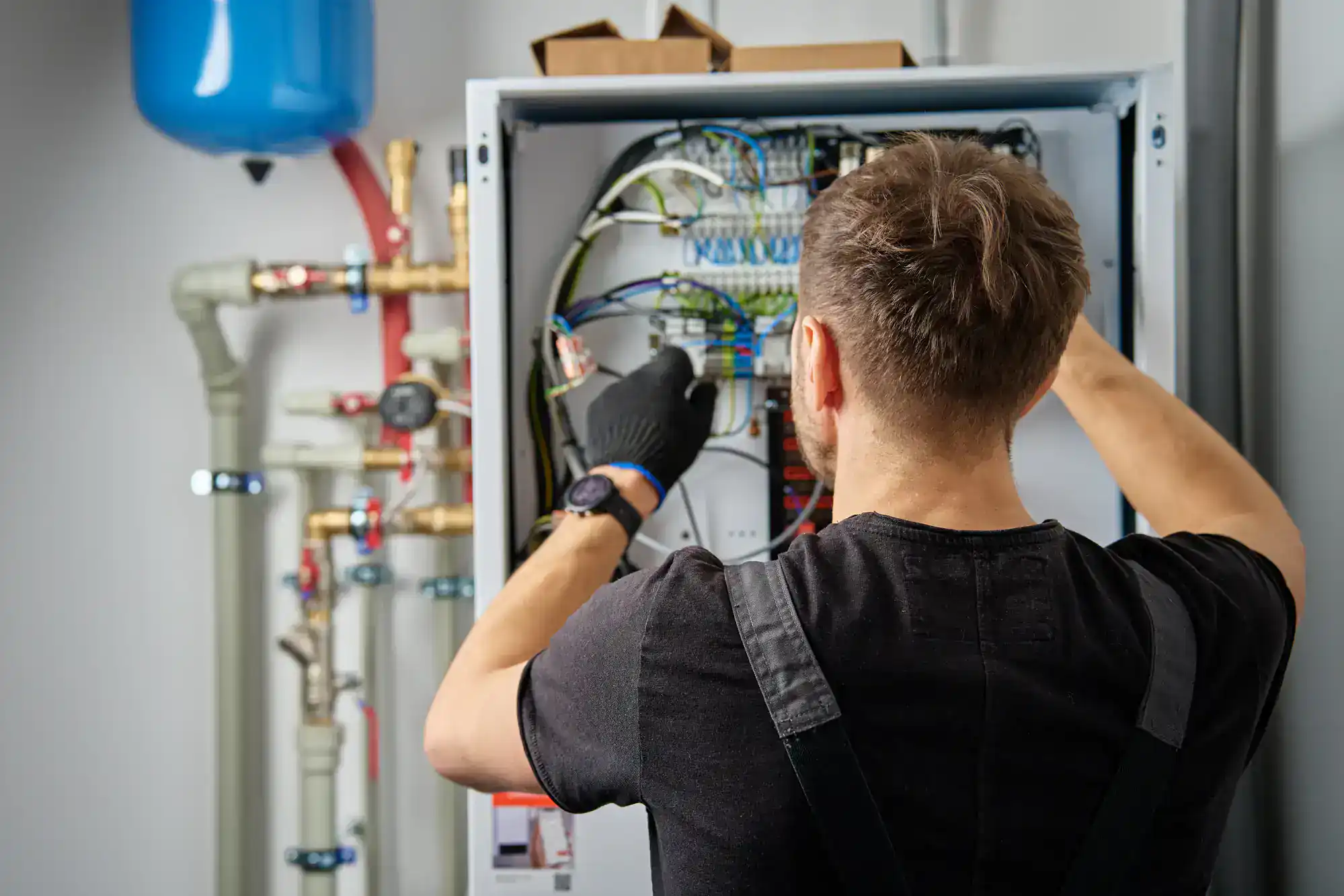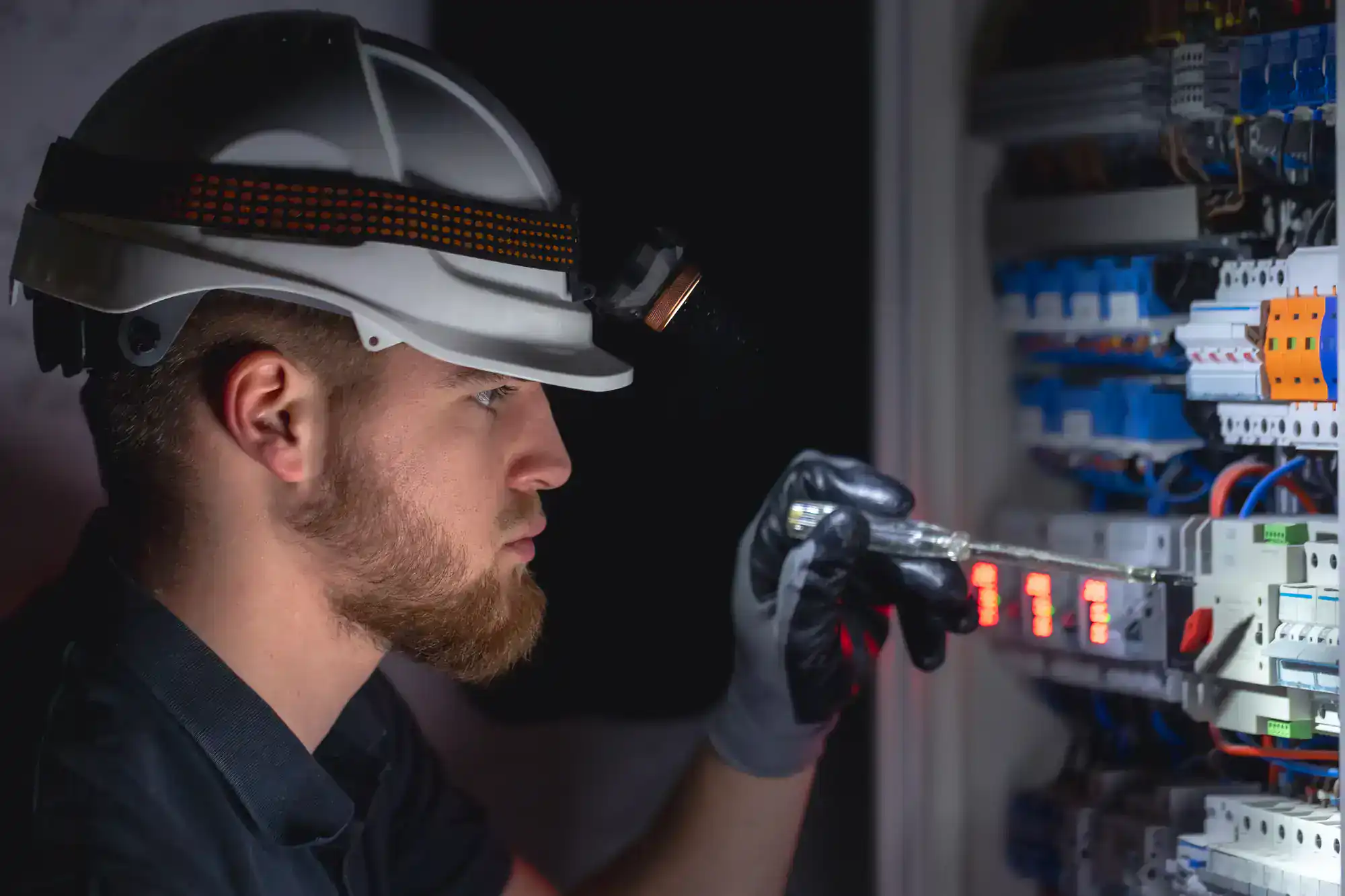
Holiday lighting puts real strain on home circuits. Here's what can go wrong, what damage it causes, and when it's time to call a pro.
Share:
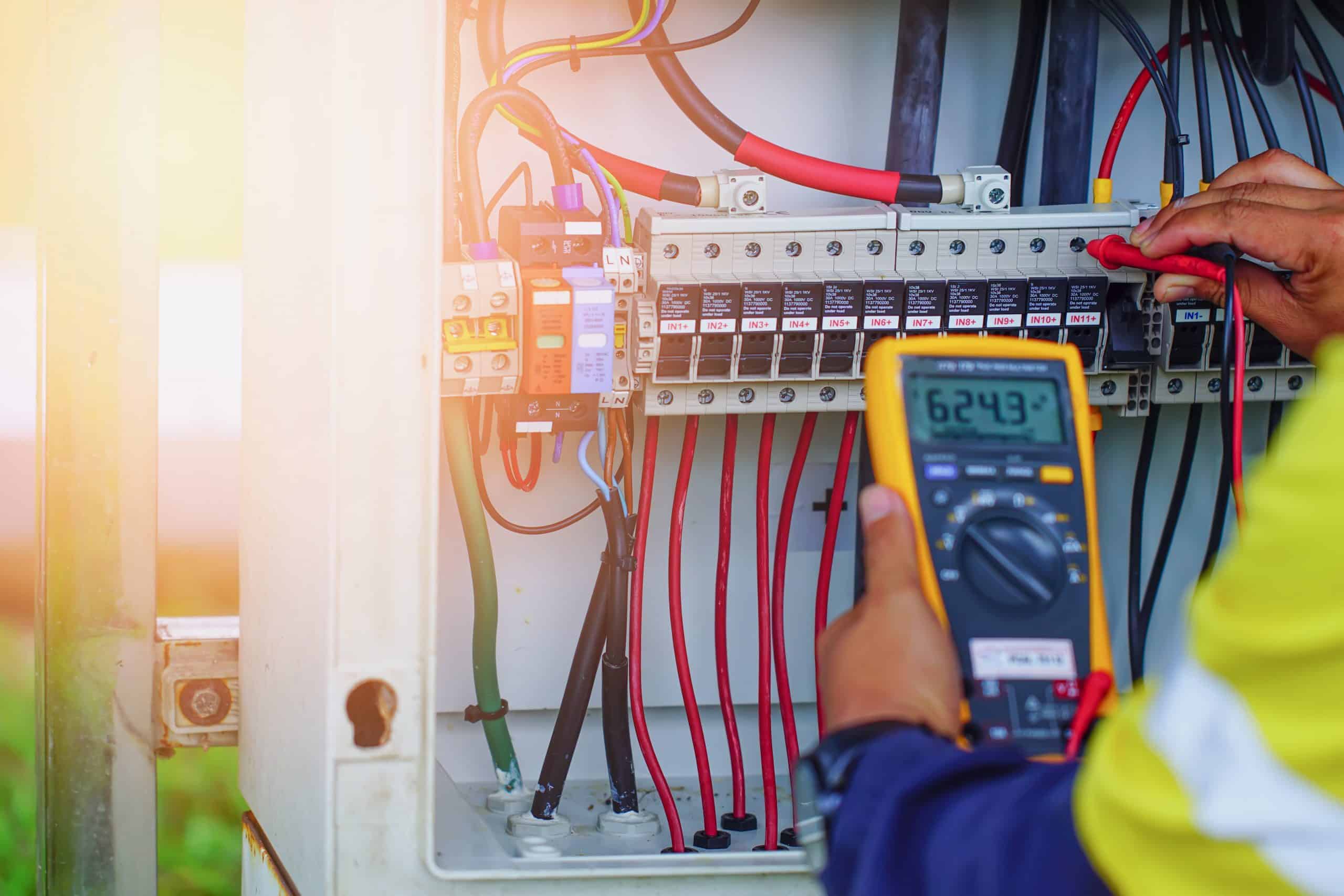
Summary:
Every December, the same thing happens in neighborhoods across Tarrant County, TX. Someone plugs in the last strand of lights, heads inside, and thirty minutes later hears the familiar click of a tripped breaker. They reset it, maybe move a few plugs around, and call it good. But here’s the thing — resetting the breaker doesn’t undo what just happened to your wiring. It just restores power. The damage, if there is any, is still there. This post is about what holiday lighting actually does to your electrical system, what repairs it can cause, and how to tell when a professional needs to take a look.
Every circuit in your home is rated to handle a specific amount of electrical load — measured in amps. A standard 15-amp household circuit can safely carry around 1,440 watts of continuous load before it starts operating in risky territory. That sounds like a lot until you start adding up everything plugged into the same circuit: the outdoor outlet powering your light display, the garage fridge on the same line, the extension cord running to the inflatable in the front yard.
Holiday lighting doesn’t just add to your electrical load — it stacks on top of everything that’s already running. When you exceed what a circuit can handle, the wiring heats up. Under normal conditions, the breaker trips before anything gets seriously damaged. But “normal conditions” assumes a breaker that’s in good shape, wiring that’s in good shape, and an overload that happens fast and hard enough to trigger it.

The breaker is a last-resort safety device, not a continuous monitor. It’s designed to cut power when a circuit is pushed hard enough, fast enough. What it doesn’t catch is the slow burn — repeated near-overload conditions where the circuit is running hot but not quite hot enough to trip the breaker. That’s where the real risk lives.
When wiring runs hot over and over again, the insulation surrounding it can degrade. It scorches, becomes brittle, and in some cases begins to crack. This happens inside your walls, behind your outlets, and in your panel — places you can’t see without opening things up. The lights still work. The breaker doesn’t trip. Nothing looks wrong. But the wiring has been compromised, and now you have a latent fire hazard sitting in your walls.
Many houses in Tarrant County, TX — especially those built in the ’80s and ’90s in communities like Hurst, Euless, North Richland Hills, and Bedford — were wired for the electrical demands of that era. Two televisions, a microwave, maybe a desktop computer. Not projection displays, smart plugs, EV chargers, and a 200-light-per-strand LED setup running off three daisy-chained extension cords. The infrastructure simply wasn’t designed for the load modern households put on it, and holiday season is when that mismatch tends to reveal itself.
There’s also a common misconception about LED holiday lights. Because they draw less power than old incandescent strings, many people assume they can safely chain as many together as they want. That’s not how it works. Most manufacturers recommend connecting no more than three strands end-to-end. Beyond that, the connections themselves can overheat regardless of how efficient the bulbs are. The wattage per strand is lower, but the problem at the plug and connector points remains.
When a circuit overloads, a few different things can take the hit depending on how severe the event was and how long it lasted. The breaker itself is one of them. Breakers are mechanical devices with a finite number of trips in them. A breaker that’s been tripped repeatedly — especially under heavy load — can weaken over time and become less reliable. It may start tripping at lower loads than it should, or in worse cases, it may stop tripping when it should.
The outlets on an overloaded circuit are another common casualty. If you’ve ever noticed an outlet that feels warm to the touch after a heavy load, that warmth is a warning. Outlets are rated for specific amperage, and sustained heat can damage the internal components, loosen connections, or degrade the plastic housing. A warm outlet after plugging in holiday decorations isn’t something to ignore — it’s a sign the outlet needs to be looked at by someone who can actually open it up and assess the condition.
Wiring damage is the hardest to detect and the most serious. Scorched insulation inside walls doesn’t announce itself. You won’t smell it most of the time, and you won’t see it. What you might notice are subtler signs: lights that flicker when other appliances kick on, outlets that feel slightly warm even under light use, or a faint burning smell near a wall or outlet that disappears quickly. Any of these, especially after a holiday lighting incident, are worth taking seriously.
The repair scope depends on what was damaged. A weakened breaker is a straightforward replacement. A damaged outlet is typically a quick fix. Wiring damage inside walls is more involved — it may require opening sections of drywall to inspect and replace the affected runs. In Texas, electrical work requires a licensed contractor holding a Texas Electrical Contractor License (TECL). Unlicensed electrical work can void your homeowner’s insurance and create liability issues that far outweigh the cost of doing it right.
Sometimes the damage from a holiday overload isn’t subtle. An outlet stops working entirely. A section of the house loses power. There’s a burning smell that doesn’t go away. In those situations, you don’t want to wait until Monday morning — and you shouldn’t have to.
Electrical problems that involve burning smells, warm outlets, or partial power loss are legitimate emergencies. They warrant a same-day call, not a wait-and-see approach. We can diagnose these issues quickly — in most cases, identifying whether the problem is isolated to a single breaker or outlet, or whether there’s something more significant going on in the panel or wiring, is faster than homeowners expect.

There’s a version of this where you reset the breaker, redistribute the load across different circuits, and everything is fine. That happens. But there are specific situations where calling a licensed electrician isn’t optional — it’s the right move.
If your breaker has tripped more than once this season from holiday lighting, that’s worth a call. One trip can be a simple overload. Repeated trips on the same circuit suggest the circuit is consistently being pushed past its limit, and that the wiring and breaker have been under sustained stress. If you’ve got an outlet that was part of the overloaded circuit and it now feels warm, makes a slight buzzing sound, or has visible discoloration around the faceplate, that outlet needs to be inspected before you use it again. And if you noticed a burning smell — even briefly — near an outlet or wall during or after the overload, treat that as an emergency and don’t use that circuit until it’s been checked.
For homeowners in Tarrant County, TX’s older neighborhoods — parts of Fort Worth like Fairmount and Mistletoe Heights, or established suburbs like Keller, Grapevine, and Colleyville — there’s an additional layer to consider. Many of these homes are still running on 100-amp panels, which were standard at the time of construction but are genuinely undersized for modern electrical demands. If your panel is original to an ’80s or ’90s build and you’re regularly tripping breakers during holiday season, the issue may not be the lights. It may be the panel.
A panel evaluation is a reasonable next step in that scenario. Sometimes the answer is simply a dedicated circuit for the outdoor outlets you use most heavily. A dedicated circuit means that outdoor load has its own breaker and its own wiring run, completely separate from the rest of the house. It’s a relatively straightforward electrical installation that eliminates the overload problem permanently, rather than managing it season after season.
If you’ve already had an overload event this season and you’re not sure what state your electrical system is in, the most useful thing you can do is have it looked at before you assume everything is fine. We can assess the affected circuit, test the breaker, inspect the outlets, and determine whether there’s any wiring damage that needs to be addressed.
The scope of electrical service repair after a holiday overload typically falls into a few categories. Breaker replacement is the most common — if the breaker was tripped hard or repeatedly, replacing it with a new one restores proper protection to the circuit. Outlet replacement is also common, particularly for outlets that show signs of heat damage or have loose connections as a result of the overload. These are relatively quick repairs that make a meaningful difference in the safety of the circuit going forward.
In cases where wiring damage is suspected — based on symptoms like persistent flickering, warm walls, or a burning smell — the repair becomes more involved. We’ll need to identify the affected section of wiring, which may require opening drywall to inspect and replace the damaged run. It’s not a small job, but it’s a necessary one. Leaving scorched wiring inside a wall and hoping it doesn’t become a problem is not a strategy.
For homeowners who are tired of managing this problem every December, dedicated circuit installation is the permanent fix. Rather than running holiday lighting off whatever outlet is closest, a dedicated outdoor circuit gives that load its own protected line. It’s the same principle behind why your kitchen has dedicated circuits for the refrigerator and dishwasher — high-draw equipment gets its own line so it doesn’t compete with everything else.
The other thing worth considering after a significant overload event is whole-house surge protection. Overloads and power restoration after a trip can send voltage spikes through your system that damage electronics and appliances downstream. A whole-house surge protector installed at the panel catches those spikes before they reach your devices — something that pairs well with any post-overload electrical repair work.
The honest takeaway here is that most holiday lighting overloads are preventable — and most of the damage they cause is fixable. But neither of those things is true if you ignore the warning signs or assume a reset breaker means a clean bill of health.
If your home is running on an older panel, if you’ve had repeated breaker trips during past holiday seasons, or if you noticed anything unusual this year — warmth at an outlet, a brief burning smell, lights that flicker more than they should — October is the right time to have it looked at. Not December, when every licensed electrician in Tarrant County, TX has a three-week backlog.
Carroll Service Co has been handling exactly these kinds of electrical repairs for homeowners and businesses throughout Tarrant County, TX for over 25 years. We’re licensed under Texas Electrical Contractor License TECL 25420, we warranty all work on both parts and labor, and we’re available 24/7 for situations that can’t wait. If you want to know where your electrical system actually stands before the holidays, we’re a straightforward call away.
Article details:
Share:
Continue learning: