A practical breakdown of home generator types, how to size one correctly, and what Tarrant County homeowners should know before making a decision.
Share:
Summary:
Most people don’t think seriously about a home generator until the power goes out. In Tarrant County, that usually means the middle of a July heat wave, a spring thunderstorm that took out the lines on your street, or — for anyone who lived through Winter Storm Uri — three days without heat in February. By then, the decision feels urgent, and urgent decisions rarely go well.
This guide is for the homeowner who wants to think it through before that moment arrives. We’ll cover the main types of generators, how to figure out what size you actually need, and what the installation process involves — so when you’re ready to move forward, you’re not starting from scratch.
There are three categories of generators worth knowing: portable generators, inverter generators, and home standby generators. Each one serves a different purpose, and the right choice depends on how much of your home you need to power, how often you expect to use it, and how much involvement you want during an outage.
Portable generators are the most common starting point. They’re relatively affordable, widely available, and can run a few essentials — a refrigerator, some lights, a window AC unit — if you’re willing to manage them manually. Standby generators are a different category entirely. They’re permanently installed outside your home, connected to your gas line and your electrical panel, and they turn on automatically the moment the grid goes down. No extension cords. No manual startup. No running outside in a storm.

The appeal of a portable generator is straightforward — lower upfront cost and no permanent installation. You can buy one at a hardware store, store it in the garage, and pull it out when you need it. For a weekend camping trip or a brief outage where you just need to keep the fridge cold, they get the job done.
But there are real limitations that don’t always get discussed at the point of sale. Portable generators run on gasoline, which means you need a supply on hand — and gasoline goes stale after about 30 days without a stabilizer. During a major storm event, gas stations across Tarrant County frequently run out of fuel within hours of a widespread outage. If you haven’t already filled your cans, you may be out of luck at the exact moment you need the generator most.
There’s also the carbon monoxide issue, and it’s serious. Portable generators must be run outside, at least 20 feet from any window, door, or vent. Every year, people are killed by CO poisoning from generators running in garages or too close to the house. It’s not a remote risk — it’s one of the leading causes of generator-related deaths in the U.S.
The more practical limitation for most homeowners is what a portable generator actually can’t power. It can’t run your central air conditioning, your electric water heater, or any appliance that’s hardwired into your electrical panel — not without a transfer switch, which requires a licensed electrician to install anyway. Running extension cords through windows isn’t a real solution for a multi-day outage.
A permanent standby generator eliminates most of these problems. It’s connected to your home’s natural gas line, so fuel isn’t a concern. It monitors the grid continuously and starts automatically — typically within 10 to 30 seconds of detecting an outage — before you’ve even reached for a flashlight. It powers your home’s circuits directly through a transfer switch, which means your AC runs, your lights come on, and your refrigerator never skips a beat. For Tarrant County homeowners who rely on CPAP machines, home medical equipment, or simply can’t afford to lose a day of remote work, that automatic response isn’t a luxury — it’s the whole point.
Most homes in Fort Worth and the surrounding Tarrant County cities have access to natural gas service, and for those homes, a natural gas standby generator is almost always the right call. The gas line runs continuously — even during electrical outages, your gas service typically stays on — which means a natural gas generator has essentially unlimited runtime. You’re not refueling. You’re not rationing. The generator runs as long as it needs to.
Propane is the alternative for homes without gas service, particularly in more rural parts of Tarrant County or newer developments that haven’t been connected to the municipal gas network. Propane systems work well, but they require an on-site tank and periodic refills. The sizing of that tank matters — a 500-gallon propane tank sounds like a lot until you’re running a whole-house generator through a five-day winter outage.
Dual-fuel generators, which can run on either natural gas or propane, offer flexibility but come at a higher equipment cost. For most Tarrant County homeowners with existing gas service, a natural gas standby system is the most practical and cost-effective long-term solution. It’s one less thing to manage, and in this market — where summer heat waves and winter ice storms have both proven they can knock out the grid for days — low-maintenance reliability matters.
One thing worth noting: the gas line connection for a standby generator isn’t a DIY project. It requires a licensed plumber or gas fitter, and in most Fort Worth municipalities, it requires a permit. This is one of the reasons we coordinate the entire installation — gas connection, transfer switch, electrical panel integration, permitting — rather than just selling you the equipment and handing you a phone number for someone else to handle it.
Sizing is where most generator purchases go wrong. A 6,500-watt portable generator sounds powerful until you realize your central air conditioner alone draws 3,000 to 5,000 watts — and that’s just the running load, before you account for the startup surge that happens every time the compressor kicks on.
Whole house generator sizing isn’t complicated once you understand the framework, but it does require looking at your actual home rather than applying a generic rule. The goal is to add up the running wattage of every circuit you want to power, account for the higher starting wattage of motor-driven appliances, add a 20% buffer for safety margin, and then choose a generator that meets or exceeds that number.

Start with the appliances that matter most. Central air conditioning is typically the biggest draw — plan for 3,000 to 5,000+ watts depending on your system’s tonnage. An electric water heater adds roughly 3,500 watts. Your refrigerator runs around 750 to 950 watts but surges to 1,800 watts or more when the compressor starts. A furnace fan draws about 800 watts. A sump pump adds another 1,000 watts. Lights, in a modern home with LED bulbs, add relatively little — a single bulb can draw as few as 6 watts.
The number that trips people up is starting wattage. Motor-driven appliances — air conditioners, refrigerators, sump pumps, well pumps — require a surge of power when they first start up, often two to three times their running load. Your generator needs to handle that peak, not just the steady-state draw. If your system can’t absorb that surge, the generator will bog down or shut off under load, which defeats the purpose.
For a typical 2,000 square foot home in Tarrant County running central air, a refrigerator, lights, and basic appliances, you’re generally looking at 20 to 24 kilowatts of standby capacity for full home backup. Partial-home systems — covering only essential circuits like the AC, refrigerator, and a few outlets — can be sized smaller, typically in the 15 to 17 kW range, at a lower installed cost. The right answer depends on what you actually need running and what you’re willing to live without during an extended outage.
This is why a professional load assessment matters more than an online calculator. We give you a ballpark starting point, but a real assessment accounts for your specific panel configuration, your appliance mix, your gas line capacity, and whether your existing electrical infrastructure can support the system you’re considering. Older homes in Fort Worth’s established neighborhoods — Ryan Place, Fairmount, the Historic Southside — sometimes need a panel upgrade before a standby generator can be properly integrated. That’s not a complication to dread; it’s just something worth knowing before you commit to a system size and budget.
A full home generator installation is more than placing a unit in the backyard and plugging it in. The process has several components, and understanding them upfront helps you ask the right questions and avoid surprises.
First, the generator needs a stable surface — typically a concrete pad poured specifically for the unit. Placement matters too. Per NFPA 37 standards, the generator must be located outdoors with proper clearance from windows, doors, and vents. Your yard layout, the location of your gas meter, and local setback requirements all factor into where it goes.
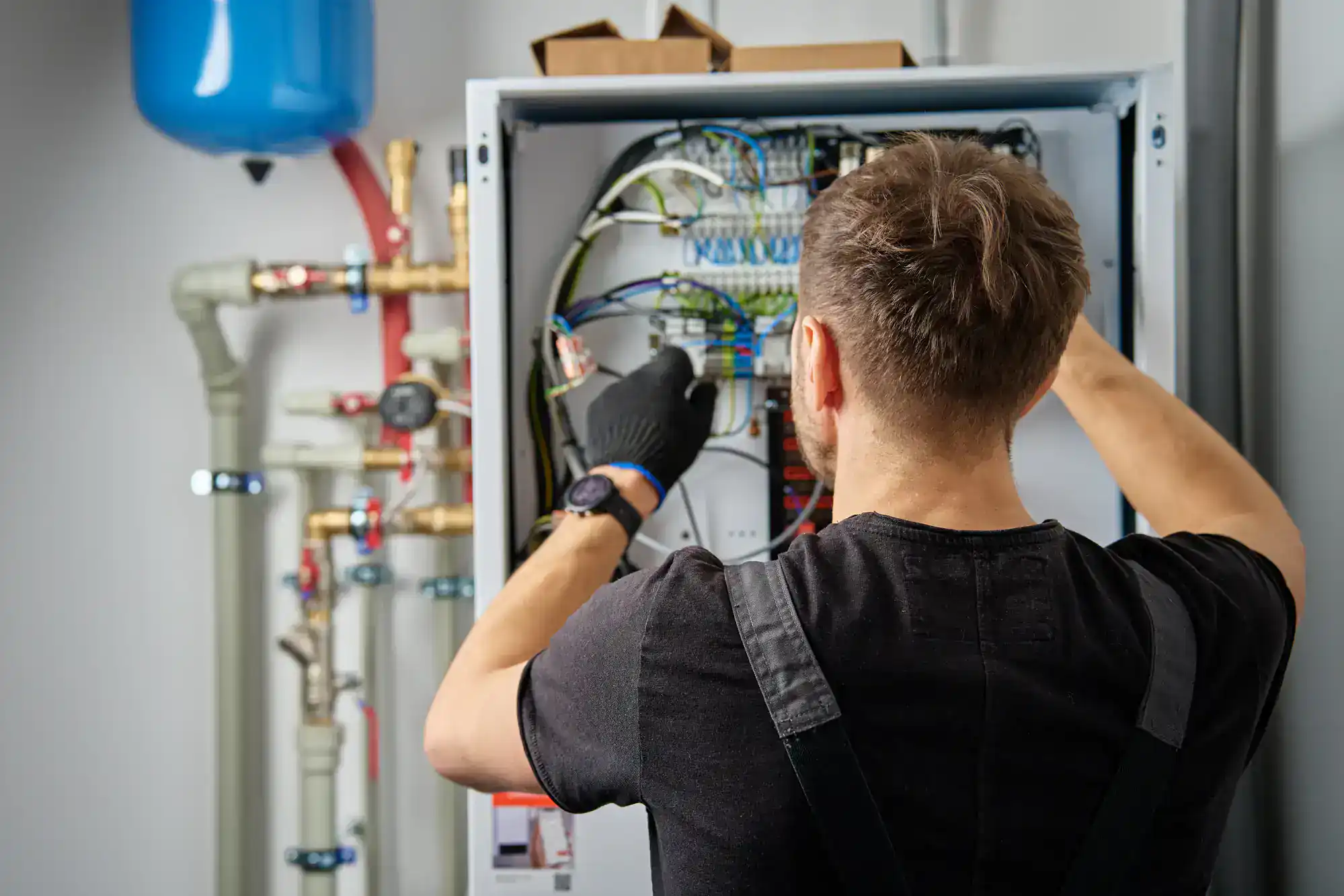
The automatic transfer switch is the component that makes a standby system actually work. It’s hardwired between your utility connection and your main electrical panel, and it does two things: it isolates your home from the grid during an outage (protecting utility workers and your equipment), and it connects your home to the generator. Without it, you don’t have a standby generator — you have an expensive piece of equipment sitting outside with no way to power your home safely.
The gas line connection runs from your home’s existing gas service to the generator. Depending on your current line size and pressure, this may require an upgrade to support the generator’s fuel demand. This work requires a licensed plumber and, in most Tarrant County municipalities, a separate plumbing permit in addition to the electrical permit.
Speaking of permits — yes, generator installation in Fort Worth and the surrounding Tarrant County cities requires permits. Electrical permits, often plumbing permits, and sometimes a building permit depending on the municipality. This is not optional, and skipping it creates real problems: code violations, insurance complications, and potential issues when you sell the home. We handle all permitting and inspection coordination as part of our installation process, so you don’t have to navigate that yourself.
From site evaluation to final inspection, a typical standby generator installation takes one to three days of on-site work. The timeline from first call to completed installation depends on equipment lead times and permit processing — which is one more reason not to wait until after the next major storm, when backlogs across the DFW market can stretch weeks.
A standby generator that hasn’t been serviced in three years is not a backup power system — it’s a liability. The most common reason generators fail during an actual outage is deferred maintenance: old oil, a clogged air filter, a fuel system issue, or a transfer switch that hasn’t been tested. Most standby generators run a brief automatic self-test once a week, which helps catch obvious problems, but it doesn’t replace annual professional servicing.
That annual service should include an oil and filter change, fuel system inspection, spark plug check, battery test, transfer switch operation test, and a full load run to confirm the system performs under real conditions. It’s not a long appointment, and it’s far less expensive than an emergency repair call during a January ice storm when every generator technician in Tarrant County is already booked.
If you’re thinking seriously about backup power for your home — whether you’re starting from scratch or trying to figure out what size and type makes sense for your specific situation — we’re glad to help. We’ve been doing this work in Fort Worth and across Tarrant County for over 25 years, and we’ll give you a straight answer about what your home actually needs, not a sales pitch for the most expensive system on the lot.
Article details:
Share:
Continue learning: