

Hear from Our Customers

You flip a switch and the lights come on. Your breakers stop tripping every time you run the dryer and microwave at the same time. Your panel can actually handle the load your home puts on it now—not what it needed back in 1985.
That’s what happens when your electrical system gets the attention it needs. Most homes in Fort Worth built before 1990 weren’t designed for today’s electrical demands. You’ve added central air, a second fridge, computers in every room, phone chargers everywhere. The wiring and panel? Still the same.
We bring your system up to speed. That means fewer outages, no more flickering lights, and the capacity to run your home the way you actually live in it. You’re not dealing with constant resets or wondering if something’s about to catch fire. Everything just works.
Carroll Service Co has been handling electrical work in Fort Worth and the Mid-Cities for over 25 years. We’re a second-generation, family-owned business, which means you’re not getting a call center or a rotating crew. You’re working with licensed electricians who know Fort Worth’s housing stock, the clay soil issues that loosen connections, and the code requirements that apply here.
We hold an A+ rating with the Better Business Bureau and multiple Super Service Awards. Every electrician on our team is licensed and insured. We handle the permits, the inspections, and the follow-through. You get clear pricing before we start, no surprise charges, and work that passes inspection the first time.

You call or submit a request. We schedule a time that works for you—often same-day if it’s urgent. When we arrive, we assess the issue, explain what’s going on in plain terms, and give you a clear estimate before any work starts.
Once you approve, we get to work. If it’s a panel upgrade, we handle the permit application with the city, coordinate the inspection, and make sure everything meets current code. If it’s a repair, we troubleshoot the root cause—not just the symptom—so you’re not calling us back in two weeks for the same problem.
After the work is done, we walk you through what we did and answer any questions. If an inspection is required, we schedule it and make sure it passes. You get documentation for your records, and we’re available if anything comes up down the road.
Ready to get started?
We handle electrical repairs, panel upgrades, breaker replacements, GFCI outlet installations, whole-house surge protection, recessed lighting, and backup generator installations. Every job includes upfront pricing, licensed and insured electricians, and code-compliant work.
Fort Worth’s clay soil shifts with temperature swings, which loosens electrical connections over time. We check for that. Homes built in the 60s and 70s—especially in Ridgmar and Westcliff—often have aluminum wiring that creates fire hazards as connections degrade. We address it properly, not with a quick patch.
If your home was built before 2000, your panel likely can’t handle modern electrical loads. We size panels correctly so you can add an EV charger, upgrade your HVAC, or install a generator without overloading your system. Generator installations get done right the first time—properly sized, permitted, and connected so they actually work when the power goes out.
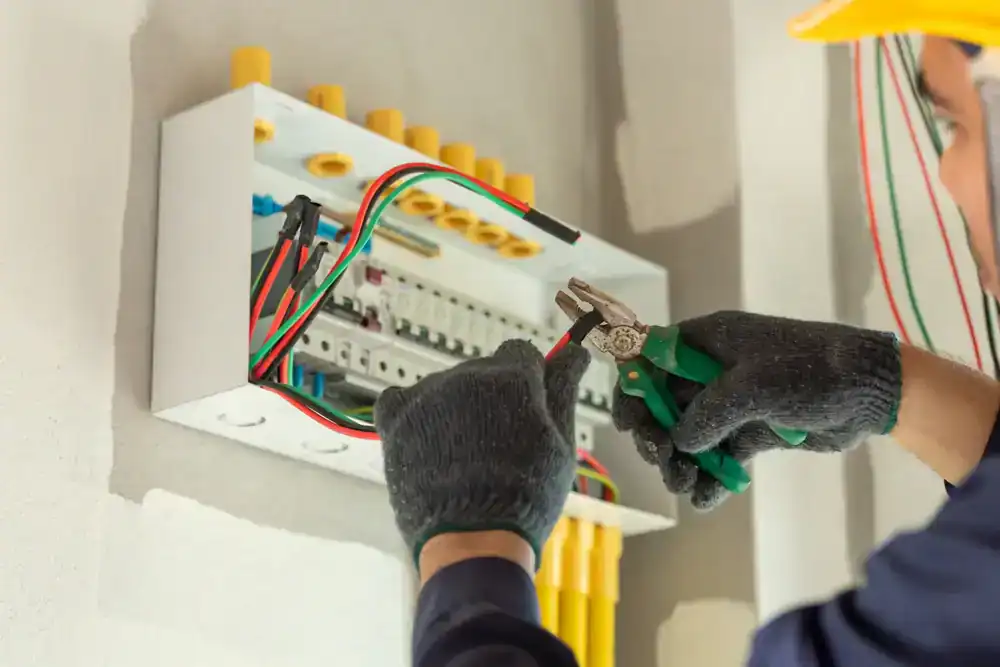
If your breakers trip regularly, your lights dim when you turn on appliances, or your panel is over 25 years old, it’s time to look at an upgrade. Most Fort Worth homes built before 1990 have 100-amp or 150-amp panels, which can’t handle today’s electrical demands.
You’re running central air, multiple computers, kitchen appliances, EV chargers, and more. That load adds up fast. When your panel can’t keep up, breakers trip to prevent overheating—which is a safety feature, but it’s also a sign your system is maxed out.
An upgrade typically means moving to a 200-amp panel, which gives you room to grow and eliminates the constant resets. We assess your current load, calculate what you actually need, and size the panel accordingly. The work includes pulling permits, coordinating inspections, and making sure everything meets current Fort Worth electrical code.
If you smell burning, see sparks, or lose power to part of your home, turn off the breaker to that area if it’s safe to do so. Don’t touch anything that’s sparking or smoking. Call us right away—we offer 24-hour electrician services for emergencies.
Electrical fires can start fast, especially in older homes with outdated wiring or overloaded circuits. If you’re not sure whether it’s an emergency, err on the side of caution and call. We can walk you through what to check and get someone out quickly if needed.
Our typical response time for Fort Worth locations is 60 to 90 minutes. We’ll assess the situation, make it safe, and either complete the repair on the spot or schedule follow-up work if it requires permits or parts. Emergency calls get priority, and we don’t charge extra just because it’s after hours.
Most panel upgrades take four to eight hours, depending on the complexity of your system and whether we need to upgrade the meter base or service line. The work includes shutting off power temporarily, installing the new panel, reconnecting all circuits, and testing everything before we turn it back on.
We coordinate with Oncor to disconnect and reconnect power at the meter. You’ll be without power for a few hours during the installation, so plan accordingly—charge devices, avoid scheduling it on a day when you need to work from home, and consider staying elsewhere if it’s mid-summer and you rely on AC.
After installation, we schedule the city inspection. Once it passes, you’re good to go. The entire process from start to finish, including permits and inspections, usually wraps up within a week. We handle all the scheduling and coordination so you don’t have to chase down inspectors or utility companies.
Yes. GFCI outlets prevent electrocution by shutting off power the instant they detect a ground fault. They’re required by code in any area where water and electricity might meet—bathrooms, kitchens, garages, outdoor outlets, and anywhere within six feet of a sink.
Fort Worth’s humidity and temperature swings cause GFCI outlets to fail more often than in other climates. If your outlet won’t reset or trips constantly, it needs replacement. That’s not optional—it’s a safety issue. A faulty GFCI won’t protect you if something goes wrong.
We install GFCI outlets where code requires them and test them to make sure they’re working correctly. Replacement typically costs $125 to $175 per outlet, depending on location and whether we need to update the wiring. If your home was built before 1990 and you haven’t updated your outlets, you’re likely missing GFCIs in areas that now require them.
Most Fort Worth homes between 2,000 and 3,000 square feet with central air need a 20kW generator to cover essential loads. That includes your HVAC, refrigerator, lights, and a few outlets. If you want to run everything without thinking about it, you’ll need a 22kW or larger unit.
The sizing depends on your electrical panel, your total load, and what you want to keep running during an outage. We calculate your actual needs rather than guessing. Undersized generators overwork themselves and fail early. Oversized generators waste fuel and cost more upfront.
Installation includes running a gas line (if you’re using natural gas), installing a transfer switch, connecting the generator to your panel, and pulling permits for inspection. The whole process takes a few days once the generator arrives. We handle everything from sizing to final inspection so it’s done right and ready when the power goes out.
It depends on what’s broken. A simple outlet replacement might run $125 to $200. A breaker replacement costs $150 to $300 depending on the type. Rewiring a room starts around $1,500 and goes up based on square footage and access.
We give you a clear estimate before we start any work. No hidden fees, no surprise charges. If we find additional issues while we’re troubleshooting, we’ll explain what’s going on and give you options before moving forward.
Some companies charge a trip fee just to show up, then tack on diagnostic fees and inflated labor rates. We don’t operate that way. You get transparent pricing, a breakdown of materials and labor, and a timeline for completion. If the job requires permits, we factor that into the estimate so there are no surprises when the bill comes.