
Hear from Our Customers
You stop resetting breakers in the middle of dinner. You stop worrying whether your panel can handle the AC and the dryer at the same time. You plug in what you need, when you need it, without doing mental math about what else is running.
That’s what happens when your electrical system is sized right and wired correctly. No more flickering lights when the HVAC kicks on. No more outlets that feel warm to the touch. No more wondering if you’re one surge away from a real problem.
Your home should support how you actually live—not force you to work around outdated wiring and undersized panels. When the electrical work is done right, you don’t think about it anymore. It just works.
We’re a family-owned electrical contractor that’s been serving Pantego and the Mid-Cities for over 25 years. We’re fully licensed and insured, and we’ve built our reputation on showing up when we say we will and doing the work right the first time.
Most of the homes in Pantego were built in the ’70s, ’80s, and ’90s. That means a lot of 100-amp panels trying to power modern life. We’ve upgraded hundreds of them. We know what passes inspection in Tarrant County, and we know how to get it done without leaving your power off all day.
We hold an A+ rating with the BBB and multiple Super Service Awards from Angie’s List. Not because we’re perfect, but because we show up, communicate clearly, and stand behind our work with real warranties.

First, we come out and look at what’s going on. We check your panel, test your circuits, and figure out whether you need a repair, an upgrade, or something else entirely. You get a clear explanation of what we found and what it’ll take to fix it—no guessing, no upselling.
If you decide to move forward, we pull the permits and schedule the work. For a panel upgrade, your power will be off for about four to six hours. We coordinate the timing with you so it’s not in the middle of your workday or when you’ve got a house full of people.
Once the work’s done, we call for inspection. The inspector comes out, checks everything, and signs off. You get a copy of the permit and the inspection report. If anything needs adjustment, we handle it—no extra charge. That’s how it should work.

Ready to get started?
Every job starts with a safety inspection. We’re looking at your panel, your grounding, your wiring, and anything else that could cause problems down the road. If we see something that’s not up to code or could become a safety issue, we’ll tell you.
For panel upgrades, we use commercial-grade components and UL-listed parts. These aren’t the same materials you’d find at a big-box store. They’re built to last decades, not years. We also install whole-house surge protection on most upgrades—it’s cheap insurance against the kind of power surges North Texas storms bring every summer.
Pantego homes often need rewiring in additions or older sections of the house where the insulation on the wiring has deteriorated. We handle that too, along with recessed lighting installations, generator hookups, and emergency repairs. All of our work comes with a warranty that covers both parts and labor for two to five years, depending on the scope. You’re not on your own once we leave.
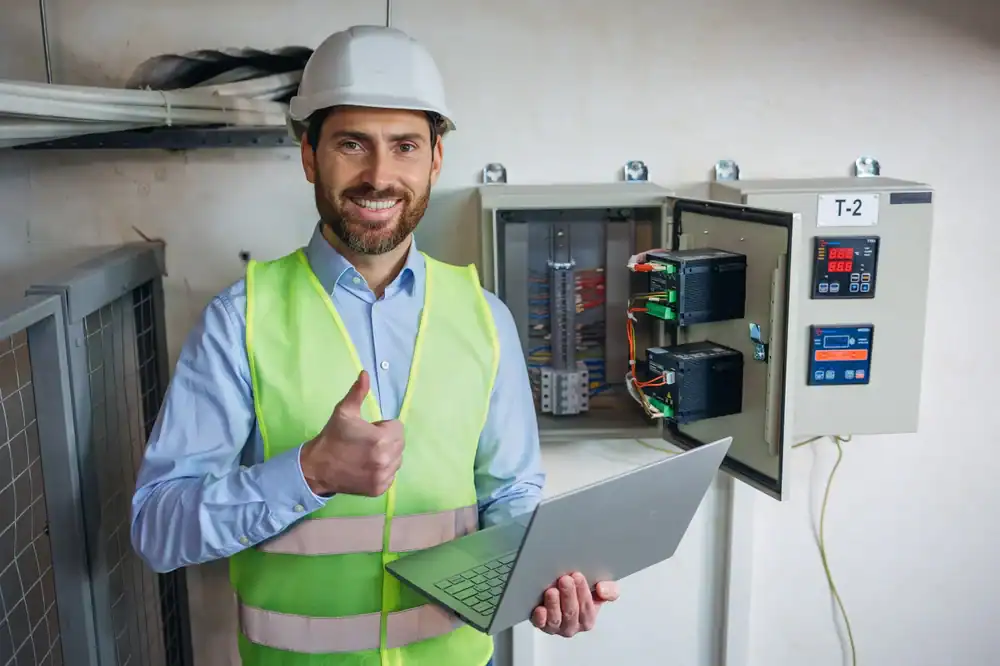
If your breakers trip regularly, that’s the most obvious sign. But there are others. If your panel is warm to the touch, if you smell burning plastic near it, or if you see rust or corrosion inside, those are all red flags.
Most homes in Pantego were built with 100-amp or 150-amp panels. That was fine in 1985. It’s not fine now. Between central air, electric dryers, dishwashers, microwaves, computers, and everything else you’re plugging in, you’re probably pushing 200 amps or more on a regular basis. When your panel can’t handle the load, breakers trip. When breakers trip too often, they wear out. When they wear out, they stop protecting you.
If your home was built before 1990 and you’ve never upgraded the panel, it’s worth having someone look at it. We’ll tell you whether you need an upgrade now, or whether you can wait a few years.
Texas law allows homeowners to do electrical work on their own primary residence. That doesn’t mean it’s a good idea. If you do the work yourself, you’re responsible for getting it inspected and making sure it meets code. If it doesn’t, you’ll have to redo it.
More importantly, if something goes wrong—if there’s a fire, or someone gets hurt—your homeowner’s insurance may not cover it if the work wasn’t done by a licensed electrical contractor. And if you ever sell your home, unpermitted electrical work can kill a deal or force you to hire someone to bring it up to code before closing.
Electrical work isn’t like painting a room. The stakes are higher. A licensed contractor knows the current NEC codes, knows what the local inspectors are looking for, and carries insurance that protects you if something goes wrong. That’s worth paying for.
A typical panel upgrade takes four to six hours. Your power will be off during that time. We schedule it at a time that works for you—usually mid-morning or early afternoon on a weekday when most people are out of the house.
We coordinate with Oncor to disconnect and reconnect your service. Once we’re done with the installation, we call for inspection. In Tarrant County, inspectors usually come out within a day or two. If they find something that needs adjustment, we fix it right away at no extra cost.
The whole process, from start to finish, usually takes about a week. That includes permit approval, installation, and inspection. If you need it done faster, we can sometimes expedite the permit, but that depends on the city’s schedule.
A repair is when something specific is broken—a breaker that won’t reset, an outlet that’s not working, a circuit that’s shorting out. We fix the problem, test it, and you’re back in business. Repairs usually cost between $125 and $300, depending on what’s involved.
An upgrade is when your panel or wiring can’t handle what you’re asking it to do. If you’re tripping breakers regularly, if your panel is outdated or unsafe, or if you’re adding new circuits for a renovation or an EV charger, you need an upgrade. Panel upgrades typically run between $1,800 and $3,500, depending on the size and complexity.
Sometimes people call us for a repair and we find out the real issue is an undersized panel. We’ll explain what’s going on, give you options, and let you decide. If a repair will get you by for a few more years, we’ll tell you that too. We’re not here to sell you something you don’t need.
Yes, most electrical work in Pantego requires a permit. Panel upgrades, new circuits, rewiring, and generator installations all need permits. The permit has to be pulled by a licensed electrical contractor—homeowners can’t pull their own electrical permits in most Texas cities.
The permit process protects you. It ensures the work gets inspected and meets code. If you ever sell your home, buyers and their lenders will want to see permits for any major electrical work. If you don’t have them, it can delay or kill the sale.
We handle the permit process from start to finish. We pull the permit, schedule the inspection, and make sure everything passes. You get a copy of the signed-off permit for your records. That documentation matters when it’s time to sell or if you ever need to file an insurance claim.
If your power goes out during a storm, check your breaker panel first. Sometimes a surge will trip the main breaker. If that’s the case, you can reset it. If it won’t reset, or if you smell burning, don’t keep trying. Call us.
For true emergencies—sparking outlets, burning smells, panels that are hot to the touch, or wires that are exposed—call us right away. We offer 24/7 emergency service and typically respond within 60 to 90 minutes to Pantego and the Mid-Cities. Electrical emergencies don’t wait for business hours, and neither do we.
If you’re worried about storm-related outages, whole-house surge protection and a backup generator are worth considering. Surge protection costs a few hundred dollars and protects everything in your home. A generator costs more upfront, but it keeps your power on when everyone else’s is out. Both are smart investments in North Texas, where summer storms and winter freezes knock out power regularly.