
Hear from Our Customers
Your breakers stop tripping every time you run the AC and microwave at once. Your lights don’t flicker when a storm rolls through. Your panel isn’t hot to the touch, and you’re not wondering if that burning smell is normal.
Most electrical problems in Brazoria County homes come down to three things: outdated panels that can’t handle modern loads, surge damage from Gulf Coast lightning, or wiring that was never meant to power today’s electronics. You’re running 200-amp worth of demand through a 100-amp system, or your home still has aluminum wiring from the 70s.
When your electrical system is right, you don’t think about it. You plug things in, flip switches, and everything works. That’s what proper electrical work looks like—boring, reliable, and safe. No drama, no second-guessing whether you need to unplug the coffee maker before running the dryer.
Carroll Service Co has been handling electrical work in Texas since before the DFW building boom. We’re fully licensed, insured, and we’ve seen what happens when electrical work gets done cheap or fast instead of right.
Brazoria County has its own electrical challenges. Humidity accelerates corrosion on connections. Salt air from the Gulf affects outdoor components. Storm season means surge protection isn’t optional—it’s the difference between replacing a $50 breaker or a $3,000 HVAC control board.
We pull permits, use UL-listed components, and follow current NEC codes because that’s what keeps your home safe and your insurance valid. Our work passes inspection the first time because we know what inspectors look for in Brazoria County, TX.

You call with a problem—breakers tripping, outlets not working, panel buzzing, whatever it is. We schedule a time that works for you, show up when we say we will, and diagnose what’s actually wrong. Not what might be wrong or what could eventually become a problem. What’s wrong right now.
We explain what needs fixing, why it needs fixing, and what it costs before we do anything. If your panel needs upgrading from 100 to 200 amps, we tell you what that involves: permit, inspection, timeline, cost. If you just need a few circuits added, we tell you that too.
Then we do the work. We use commercial-grade components because they last decades longer than residential-grade parts. We follow code because that’s not optional. We clean up when we’re done, and we make sure everything works before we leave. If the job requires inspection, we schedule it and make sure it passes.

Ready to get started?
Electrical work in Brazoria County means dealing with real conditions. High humidity, salt air if you’re near the coast, and summer temperatures that push AC systems to their limits. Your electrical system handles all of it, and when it’s sized right and installed correctly, it handles it without issue.
Panel upgrades bring your home up to modern capacity. Most older homes in Brazoria County were built with 100 or 150-amp service. That worked fine before central AC, electric dryers, computers, and phone chargers. Now you need 200 amps minimum, sometimes more if you’re adding EV charging or a backup generator.
Whole-house surge protection costs a few hundred dollars and saves thousands when lightning hits nearby. Brazoria County gets plenty of storms, and every close strike sends voltage spikes through your electrical system. Surge protection stops those spikes before they fry your electronics, appliances, and HVAC controls.
Rewiring old homes removes aluminum wiring, knob-and-tube, or undersized copper that can’t safely handle current loads. Code-compliant wiring uses proper gauge wire, correct breaker sizes, GFCI protection where required, and AFCI protection in living areas. It’s not exciting, but it’s what keeps your house from burning down.
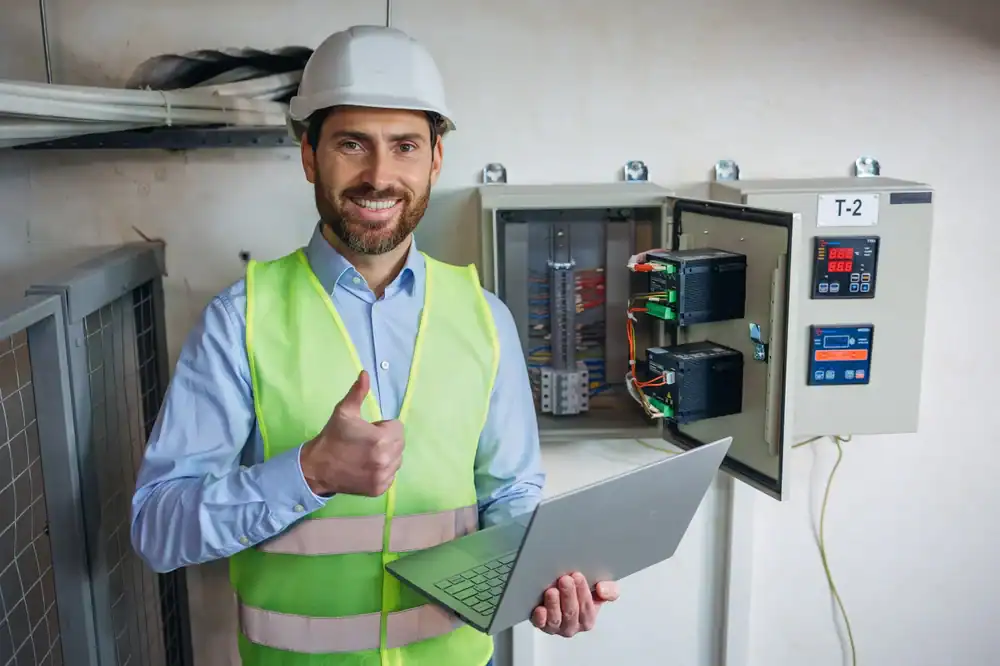
Your breakers trip frequently, especially when running multiple appliances. Your panel feels warm or hot to the touch. You see rust or corrosion inside the panel box. Your lights dim when the AC kicks on. You’re adding new circuits and there’s no space left in the panel.
Most homes built before 1990 in Brazoria County have 100 or 150-amp service. That’s not enough for modern electrical loads. Central AC alone can pull 30-40 amps. Add a dryer, range, water heater, and regular household circuits, and you’re maxing out the system.
If you’re planning any major renovations, adding EV charging, or installing a backup generator, you’ll need a panel upgrade. The work requires a permit and inspection, takes about a day for most homes, and brings your electrical system up to current code. It’s not cheap, but it’s a lot cheaper than dealing with electrical fires or damaged equipment from overloaded circuits.
A licensed electrical contractor in Brazoria County, TX carries a Texas electrical contractor license, which requires passing state exams, proving experience, and maintaining insurance. A handyman doesn’t need any of that to advertise electrical services.
Licensed contractors pull permits for work that requires them, follow NEC and local electrical codes, and schedule inspections. When something goes wrong—fire, injury, insurance claim—your insurance company will ask who did the work and whether it was permitted. Unpermitted work done by unlicensed people voids your coverage.
The work itself looks the same from the outside. The difference shows up when an inspector looks at it, when you try to sell your house, or when something fails. Licensed contractors use proper materials, correct wire sizing, appropriate breaker ratings, and code-compliant installation methods. That’s not optional—it’s what keeps electrical systems safe and legal.
Whole-house surge protection typically costs $300-600 installed, depending on the unit and your panel setup. It installs at your main panel and protects everything in your house from voltage spikes coming through the power lines.
Brazoria County gets serious thunderstorms, especially during spring and summer. Every time lightning strikes near a power line, it sends voltage spikes through the electrical grid. Those spikes can fry circuit boards in your HVAC system, damage appliance controls, kill electronics, and shorten the life of anything with sensitive components.
One HVAC control board replacement costs $500-1,500. A new refrigerator control board runs $300-800. A whole-house surge protector costs less than replacing one major appliance and protects everything in your house for 20+ years. The math is pretty straightforward—it’s worth it if you have anything you don’t want to replace after the next big storm.
Brazoria County follows the National Electrical Code (NEC) with some local amendments. GFCI protection is required in bathrooms, kitchens, garages, outdoor outlets, and anywhere within six feet of a water source. AFCI protection is required in most living areas including bedrooms, living rooms, and hallways.
Kitchens need at least two 20-amp circuits for countertop outlets, and those circuits can’t power anything else. Bathrooms need dedicated 20-amp circuits. Smoke detectors must be hardwired and interconnected. Outdoor outlets need weather-resistant covers.
Any electrical work beyond simple repairs requires a permit. Panel upgrades, circuit additions, rewiring, generator installations—all need permits and inspections. The inspector checks wire sizing, breaker ratings, grounding, bonding, GFCI/AFCI protection, and proper installation methods. Work that doesn’t pass has to be corrected and re-inspected. That’s why using a licensed electrical contractor who knows local code requirements matters—the work passes inspection the first time.
Most residential panel replacements take 6-8 hours for the actual work. Your power will be off during installation, usually 4-6 hours of that time. The utility company has to disconnect and reconnect service, which adds time depending on their schedule.
The process starts with pulling a permit from Brazoria County. We schedule the work, coordinate with the utility company for disconnect/reconnect, and order the new panel and components. On installation day, we disconnect the old panel, mount the new one, transfer all circuits, install new breakers, verify all connections, and restore power.
After installation, the county inspector has to approve the work before it’s final. Most inspections happen within a few days of calling them in. If you’re upgrading from 100 to 200-amp service, the utility company may need to upgrade the meter base and service lines, which can add a day or two to the timeline. Total time from permit to final inspection is usually 1-2 weeks, depending on inspector and utility schedules.
Undersized service is the biggest issue. Homes built before 1990 typically have 100-amp service, which can’t handle modern electrical loads. You’re trying to run central AC, electric dryer, electric range, water heater, computers, TVs, and everything else through a system designed for much less.
Aluminum wiring shows up in homes built during the 1960s and 70s. Aluminum expands and contracts more than copper, which loosens connections over time and creates fire hazards. It’s not illegal, but it needs special handling and most insurance companies want it replaced or remediated.
Humidity and salt air accelerate corrosion on connections, breakers, and panel components. A panel that looks fine on the outside can have serious corrosion inside. Corroded connections create resistance, which creates heat, which eventually causes failures. Regular inspections catch these problems before they become dangerous, especially in coastal areas of Brazoria County where salt air exposure is constant.